












1
"The worst thing the educational system does is to train you that the way to win is by hacking bad tests."
Write to us at:
We look forward to hearing from you.
— Marco and Francesco
Episode 15 · August 31, 2026 · 36min
In Buona Compagnia is an Italian podcast. This is the English version of the episode: the video has English subtitles, and the transcript, reflections and sources are translated. Wherever we read from the essays, the English uses Paul Graham's original words. Versione italiana →
In the essay The Lesson to Unlearn (December 2019), Paul Graham argues that the most damaging thing we learn in school is aiming only to get good grades. In his view, school tests created by an authority can be hacked: you can copy, or study past exams to predict the questions. So we end up spending most of our time trying to get around bad tests.
This problem matters. Paul noticed it when the founders arriving at Y Combinator asked him what the secret was for getting venture capitalists to invest in their companies. They had lots of ideas: launching the product on a Tuesday, putting on a big event, or getting influential people to talk about their product.
Paul Graham would answer that the most important thing was to make a product people really wanted. But many founders found this answer hard to accept and kept thinking about strategies like picking the right day for the launch, or other tactics.
Paul writes that he too had been trained to win by hacking bad tests. He had always hated big companies, but if someone had asked him why, he couldn’t have given a good answer, until he understood that this was exactly it: there you win by hacking bad tests imposed by an authority.
One question that made us think is this: instead of asking ourselves whether we like a job, we could ask how far, in that job, you win only by hacking bad tests.
The other essay we read is called Life is Short. One of the lines that struck us most is where Paul says that life really is short and, as a result, we should expect its shortness to take us by surprise. You take things for granted, and then they’re gone. You always think you’ll write that book or climb that mountain, and at some point you realize the window has closed. That’s why we need to learn not to put off what we really want.
We close this episode talking about What Doesn’t Seem Like Work? Here Paul writes that one of the most important clues for figuring out what we really want to do is to ask ourselves: “What seems like work to other people that doesn’t seem like work to you?”
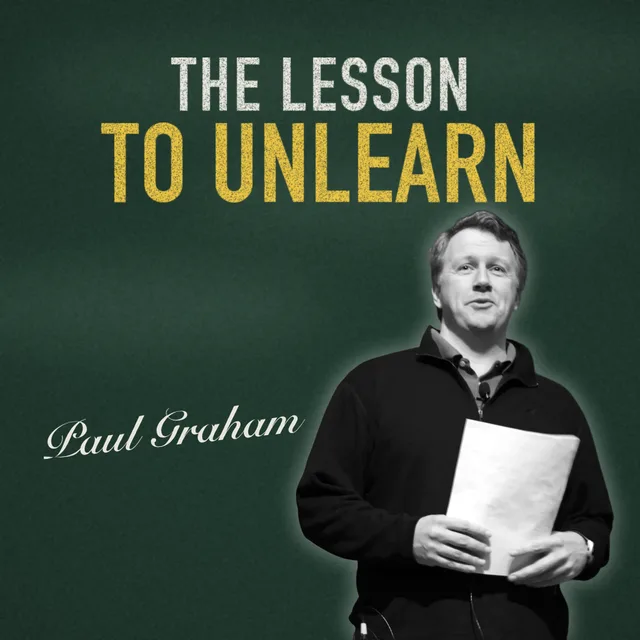
Paul Graham
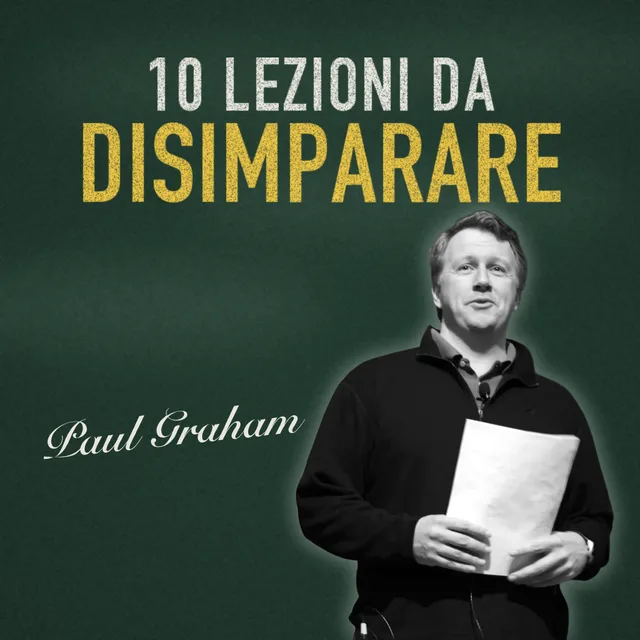
Paul Graham: 10 Lessons to Unlearn for a Young Entrepreneur
Now playing
Paul Graham: 10 Lessons to Unlearn for a Young Entrepreneur
"The worst thing the educational system does is to train you that the way to win is by hacking bad tests."
"The way you get lots of users is to make the product really great. Then people will not only use it but recommend it to their friends."
"One heuristic for distinguishing stuff that matters is to ask yourself whether you'll care about it in the future. Fake stuff that matters usually has a sharp peak of seeming to matter."
"Relentlessly prune bullshit, don't wait to do things that matter, and savor the time you have."
"If life is short, we should expect its shortness to take us by surprise. And that is just what tends to happen. You take things for granted, and then they're gone. You think you can always write that book, or climb that mountain, or whatever, and then you realize the window has closed."
"If something that seems like work to other people doesn't seem like work to you, that's something you're well suited for."
"The usual way to avoid being taken by surprise by something is to be consciously aware of it."
"We should always stand outside ourselves and ask: is this really how I want to be spending my time?"
"The stranger your tastes seem to other people, the stronger evidence they probably are of what you should do."
"Cultivate a habit of impatience about the things you most want to do."