


1
"To look far ahead, ever further ahead, must be our motto."
Write to us at:
We look forward to hearing from you.
— Marco and Francesco
Episode 12 · June 30, 2026 · 53min
In Buona Compagnia is an Italian podcast. This is the English version of the episode: the video has English subtitles, and the transcript, reflections and sources are translated. The quotes from the book are our own translation from the Italian: Confessioni di un sognatore has no English edition. Versione italiana →
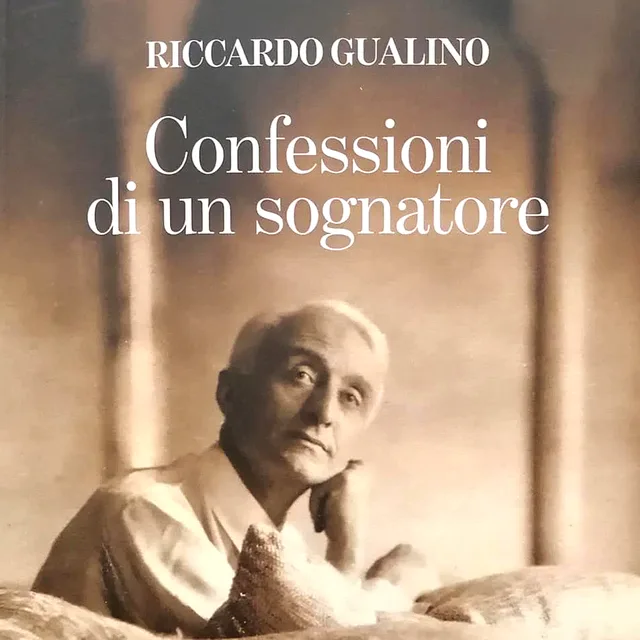
Riccardo Gualino (Biella, 1879) set off at 17 with a first salary of 50 lire and within twenty years became one of the richest men in Europe. Confessioni di un sognatore (Confessions of a Dreamer) is his autobiography, written in 1945 and kept shut in a drawer for more than seventy years, until 2021.
The son of a goldsmith, with no degree, he learned everything on the job: first in the timber trade in Genoa, then by building a forestry empire between Russia and Romania. The First World War and the Bolshevik Revolution took everything from him. And he started again: first with an import-export business, bringing coal and steel from the United States to a Europe at war, in partnership with Agnelli, then with SNIA Viscosa, which in 1925 produced 11% of the world’s artificial silk and was the first Italian company ever listed in London and New York.
One idea struck us above all. Gualino did not build for money: he wanted money in order to build. He dreamed of remaking Turin, of bringing factories to the South of Italy, of linking Turin, Genoa and Milan with high-speed trains, already in the 1920s. For him, the billions were only the instrument of a dream.
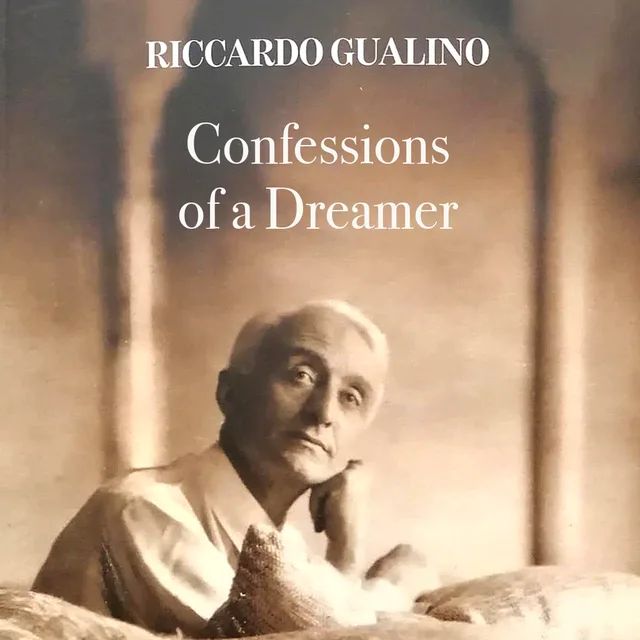
Riccardo Gualino
The forgotten Italian who became one of the richest industrialists in Europe
Now playing
The forgotten Italian who became one of the richest industrialists in Europe
"To look far ahead, ever further ahead, must be our motto."
"Buying is easy: all you need is money, and to pay. Buying well is difficult."
"If I had to choose a motto that summed up my most fervent desires, I would write: 'Create and be first.' Because nothing gives as much satisfaction as building amid the thrill of being first. These are, however, labors and thrills that wear you out."
"The beauty of money lies in the power it gives to whoever holds it: to conceive a great undertaking, to see thousands of men transform poor tracts of land into centers of work and well-being with new industries. These are joys of the imagination; but if to make these dreams come true you need money, and you have it, then it is a source of happiness. He who has created something can claim to have lived: even if unfortunate, he will always be worth more than an indifferent spectator."
"My passion is to build, to raise something that lasts. Nothing is more interesting to me than making a factory rise from bare ground, studying its organization, equipping it with the most modern systems, seeing a factory working at full pace that transforms raw material harmoniously, in a practically perfect way, into finished products through countless intermediate stages of processing, like a symphony or a work of art. Order and rhythm: these are the pillars on which a large company can be made to prosper."
"In the world of business, of whatever kind, the most scrupulous order is the best guide."
"No building, however imposing, can stand if its foundations are not solid; indeed, the mightier it appears to the eye, the firmer its foundations must be."
"From that venture I learned that even experience must be constantly watched over: a healthy, sturdy tree is not enough to gather good fruit from it; you have to tend it, prune it, defend it from the attacks of insects, to have ripe and not wormy fruit on the table."
"If I want to draw a moral from this affair, it may show that even the most capable, the coolest-headed individuals, with their feet most firmly on the ground, can make serious errors of judgment, just as professional dreamers, perhaps a little mad, sometimes see far."
"Have the courage to dare. Dare to act, dare to throw your heart over the obstacle, dare to burn the ships behind us."