1
We weren't fighting to win, but to avoid losing. With a strategy like that, losing was a certainty.
Write to us at:
We look forward to hearing from you.
— Marco and Francesco
Episode 8 · April 24, 2026 · 1h 11min
In Buona Compagnia is an Italian podcast. This is the English version of the episode: the video has English subtitles, and the transcript, reflections and sources are translated. Phil Knight wrote Shoe Dog in English, but we read the Italian edition, so the quotes from the book are our own translation from the Italian and may differ from his original wording. Versione italiana →
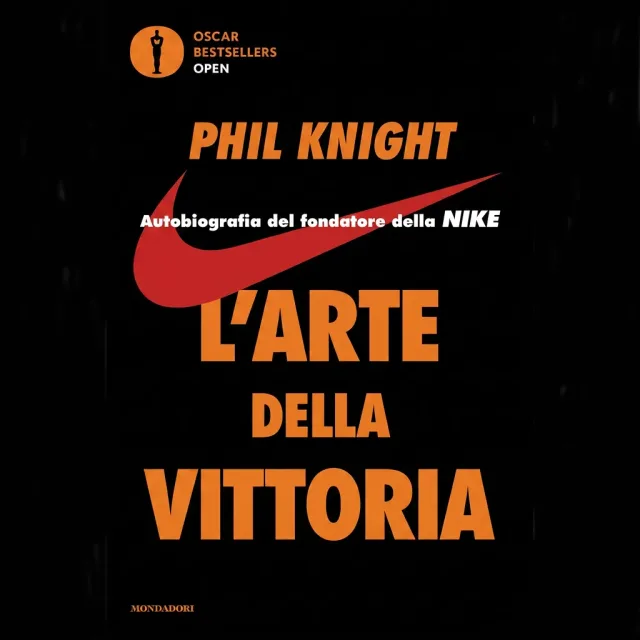
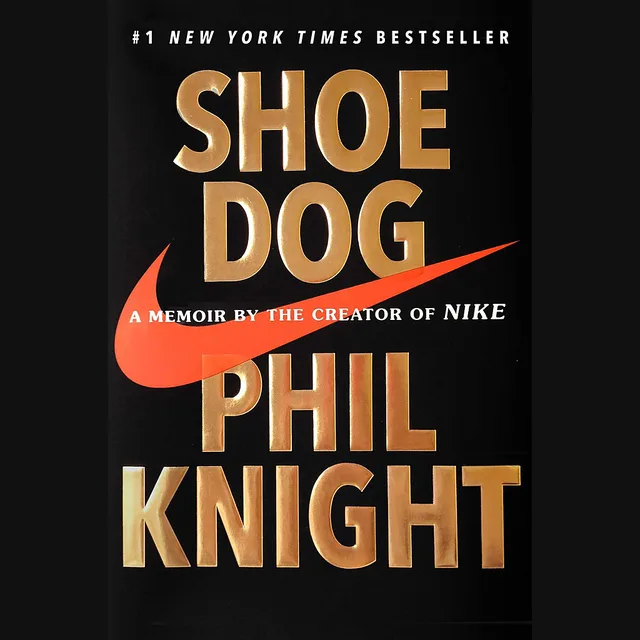
“Let everyone else call your idea crazy. You keep going your own way, don’t stop”: that’s what Phil Knight told himself that morning in 1962, at 23, when he decided to import Japanese running shoes into America. Shoe Dog is his memoir.
The crazy idea starts as a research paper at Stanford. Phil flies to Japan, and in front of the Onitsuka executives he makes up, on the spot, the name of a company that doesn’t exist: Blue Ribbon. He gets the deal and goes back to Oregon to wait. The first shipment is just 12 pairs of shoes: that’s how Nike begins.
For the next twenty years he lives on the edge of the cliff. A partnership with his coach, Bowerman. His first employee, Jeff Johnson, who insists on working full-time while the company sinks “like the Titanic.” The waffle sole that Bowerman invents in his kitchen, pouring polyurethane into his wife’s waffle iron, will become one of Nike’s biggest successes. A lawsuit against Onitsuka, a 25-million-dollar bill from American customs, a 75,000-dollar crisis that nearly destroyed Nike.
On 2 December 1980 Nike goes public at 22 dollars a share, and Phil is worth 178 million. In the last pages he writes: “When I talk about betting on people, you could say it was always only about that.”
Phil Knight
NIKE: How a Stanford Assignment Became a Sports Empire
Now playing
NIKE: How a Stanford Assignment Became a Sports Empire
We weren't fighting to win, but to avoid losing. With a strategy like that, losing was a certainty.
People assume competition is always a good thing, that it always brings out the best in people, but that's only true for those who manage to forget it. What you have to learn is the art of competing, what you had to learn was the art of forgetting. You have to forget your limits, you have to forget your doubts, your pain, your past.
You have to forget that inner voice that screams or begs: "Not one more step." And if by chance it isn't possible to forget it, you have to come to terms with it.
Lessons seem intangible, but they are still an asset, one worth taking risks for.
I had the painful feeling that our time was short, shorter than we thought.
As short as a morning run, and I wanted mine to have meaning and purpose, to be creative and important, but above all different.
At that moment I asked myself whether there was a way, without being an athlete, to feel what athletes feel, to play all the time instead of working, or to work with such relish that it would essentially be the same thing.
I thought the only answer was to find a prodigious, improbable dream that seemed worthy, fun, fitting, and to chase it with an athlete's total dedication and determination.
Like it or not, life is a game. Whoever denies this truth, whoever refuses to play, is left on the sidelines.
And that wasn't what I wanted. More than anything, it was exactly what I didn't want.
Let everyone else call your idea crazy; you keep going your own way, don't stop, don't even think about stopping until you get there, and don't worry about where "there" is. Whatever happens, don't stop.
That's the early, prophetic, urgent advice I managed to give myself out of the blue, and that somehow I managed to follow. Half a century later, I'm convinced it's the best advice, maybe the only advice, any of us should ever give.
I realise that for some people doing business means chasing profit at all costs, full stop. But for us, saying our only purpose was to make money was like saying the only purpose of a human being is to make blood.
Yes, the human body needs blood, it needs to make red blood cells, white blood cells and platelets and to redistribute them evenly and without hitches to the right places at the right time.
That daily activity of the body, though, is not our mission as human beings; it's a basic process that allows us to reach our higher goals, and life always strives to transcend the basic processes of living.
At a certain point in the late 1970s, I did it too: I redefined winning, I expanded it beyond my original definition of not losing or simply staying alive. All that was no longer enough to sustain me and my company. Like all great companies, we too wanted to create, to contribute, and we had the courage to shout it out.
When you make something, when you improve something, when you bring something into being, when you add a new thing or service to other people's lives, making them happier or healthier or safer, better, and when you do it incisively and efficiently, brilliantly, the way things should always be done, even though they rarely are, you take part more fully in the great drama of all humanity, instead of just living.
You help others live more fully, and if that's doing business, fine, then call me a businessman. Maybe I'll get used to it.
I was having less success as a salesman. I had been completely unable to sell encyclopedias, so why was it so different with shoes? And here he writes that he realised he believed in running, and that for him it wasn't selling. He was convinced that if everyone managed to run a little every day, the world would be a better place.
He believed those shoes were the best for running, and so people, sensing this passion, this conviction, wanted a bit of this conviction for themselves too, that these really were the best shoes for running. And so he writes: conviction is irresistible.
Money, when it started coming in by the shovelful, affected all of us. Not much and not for long, because none of us was ever motivated by money, but that's the nature of money. Whether you have it or not, whether you want it or not, whether you like it or not, it tries to define your life. Our job as human beings is to not let it.
Companies judged the ad innovative and bold: it didn't focus on the product but on the spirit behind the product, something never seen before in the 1970s.
So the advertising didn't focus on the product but on the spirit behind the product, and Nike's spirit was always a spirit of nonconformity, of the underdog, of competing with yourself, the spirit of a true runner.