






01 Intro
Have you ever had an idea so crazy, so stupid, so ridiculous, that you never wanted to tell anyone about it?
Like, you were embarrassed even to think it?
Yes, something like that, but you were embarrassed even to tell your dad, and when you did tell him this crazy idea, he'd answer, I don't know, you're a real idiot, what a crazy idea you've had.
Exactly, that's just how he answered him.
And that's how one of the biggest running shoe and sportswear companies was born.
Which, though, for its first 20 years was always on the verge of bankruptcy.
Pretty much always up to its neck in debt. Crazy.
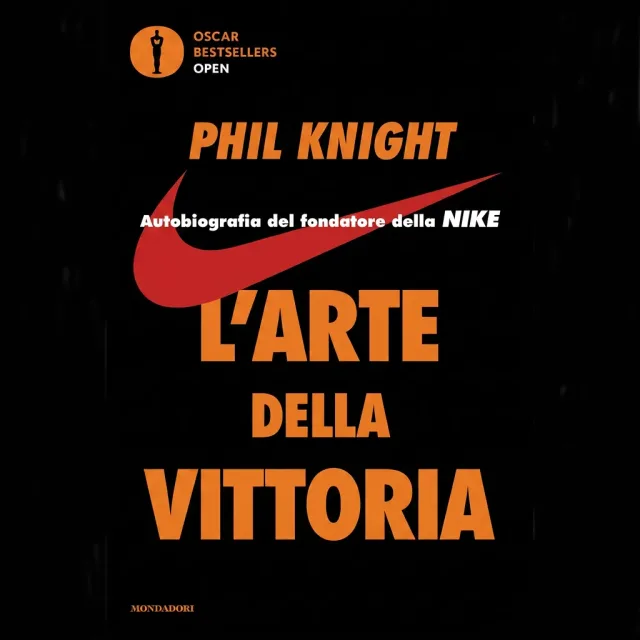
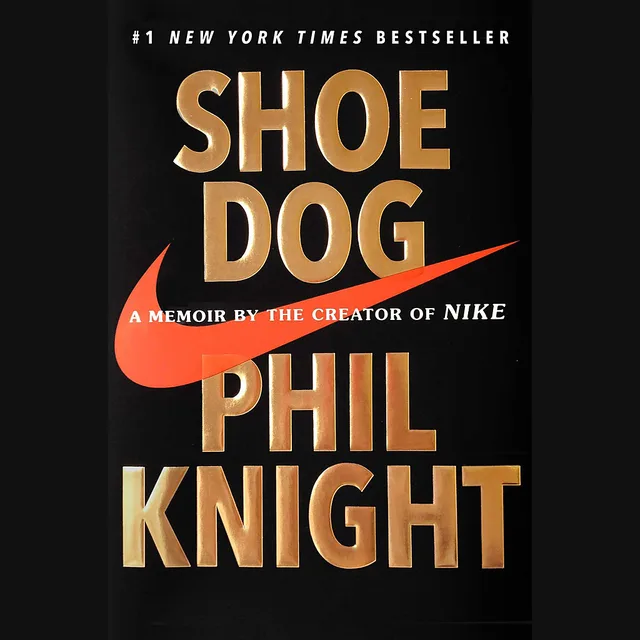
Okay, shall we start? Go on, let's start, let's go! In this new episode of In Buona Compagnia we read Shoe Dog (in Italian, L'arte della vittoria), the autobiography of Phil Knight, the founder of Nike. Every month we pick a book written by someone who, in our view, did really great work in their life, and we share ideas and reflections that could be useful to us, for our lives and for our work.
Before we start, we want to tell you two things. The first is that if you'd like to receive the key reflections from every episode, exclusive insights we don't share anywhere else, and even a little hint about the next book we'll be looking at, well, sign up for our newsletter. The link is in the description.
And if you'd like to discuss this episode with other listeners, meet people who share your interests and build a community where we can organize events in the future, for example a live event, come join us on Slack. That link is in the description too. And with that, enjoy the episode.
02 "Let everyone else call your idea crazy"
So, for this episode I think we can start from the first pages, they were written by Phil, they're his thoughts, and I think they're beautiful. And here he writes one of the main pieces of advice, maybe the only one, really the most important of all. He writes: "It would have been hard for me to say who or what exactly I was, or what I might become. Like all my friends, I wanted to be successful. Unlike them, I didn't know what that meant. Money, maybe a family, kids, a house. I had the painful feeling that our time was short, as short as a morning run, and I wanted my time to have meaning and purpose, to be creative and important, but above all different. I wanted to leave a mark on the world, I wanted to win. No, not exactly, I simply didn't want to lose."
"The world was so tormented by war, suffering and misery that the only answer was to find a prodigious, improbable dream that seemed worthy, fun, fitting, and to chase it with an athlete's total dedication and determination. Whoever denies this truth, whoever refuses to play, is left on the sidelines. And that wasn't what I wanted. Which brought me back, as always, to my crazy idea. Maybe, I thought, do it."
So, that morning in 1962, Phil is 23, I told myself: "Let everyone else call your idea crazy. You keep going your own way, don't stop, don't even think about stopping until you get there. And don't worry about where 'there' is. Whatever happens, don't stop. That's the early, prophetic, urgent advice I managed to give myself out of the blue, and that somehow I managed to follow. Half a century later, I'm convinced it's the best advice, maybe the only advice, any of us should ever give."
03 The crazy idea: selling Japanese shoes in America
So his crazy idea is to go to Japan and start selling shoes.
To import a Japanese shoe made by Onitsuka, which was the Tiger.
And his thesis, let's say, was that just as Japanese cameras had managed to break into a market once dominated by the Germans, the same thing could happen with shoes. A market also dominated by the Germans, with Adidas and Puma. So at Stanford he's given this assignment, for a university course, and he writes: "It was one of my last classes, a seminar on entrepreneurship. I had done a research paper on shoes that had turned from the usual assignment into a total obsession." And the professor, he writes, "thought my crazy ideas deserved top marks. But that was the end of it, or at least it should have been."
It's a crazy idea not only because of creating a company from nothing, but also because of traveling to Japan, because he writes that doing something like that back then, this is 1962, was out of the ordinary. 90% of Americans had never left home, and most of those who had, had gone just a couple of kilometers from where they lived. On top of that, saying something like this to his dad was out of the ordinary, because he writes that the thing his dad respected more than anything else was respectability. He wanted to be respected. So a son who goes off to Japan is not a respectable thing, it's something, he writes, that hippies do, a stupid thing, an idiotic thing.
04 Why his father approves the trip around the world
In fact this crazy idea was actually an integral part of his dream of traveling the world. And he writes: "I wanted to visit the most beautiful and amazing places on the planet, because before starting my own personal journey through life, I thought, let me understand the great journey of humanity." And his plan was to travel the world, make a small, short stop in Japan to find this blessed factory, and bring his crazy idea to life. So the first obstacle was his father, because obviously he needed his father's approval. And the money. And the money. And he writes: "I knew that 26 out of 27 new businesses failed, and that my father knew it too." So he goes to talk to his father, actually expecting the worst, but in fact his father goes along with it. Partly because one of his father's little dreams was to go around the world himself.
And here he writes: "I thanked him. I left right away, before he changed his mind. Only later did I realize that this trip of mine was a way," as you said, "of becoming different from him, less respectable, but maybe not less respectable, maybe just less obsessed with respectability."
05 Hawaii, the encyclopedias and the real start of the trip
So he gets his father's approval and starts planning this trip with a friend, Carter. And on 7 November 1962 it all begins. And the first stop is Hawaii. They get to Hawaii, and the first thing Phil says when he sees the sea, the sun, the boats is: "Well, we should stay here, there's no hurry to leave." So here the founder of Nike starts selling encyclopedias door to door, to find himself a little job and support himself in Hawaii. "Here in Hawaii life was sweet, life was paradise, except for one small detail. I just couldn't sell encyclopedias, I was hopeless. The more their eyes dropped, the shyer I became." After spending a long time in Hawaii, basically selling encyclopedias and surfing all the time, Phil stops for a moment and realizes it's time to get back to the plan.
He buys a ticket and flies to Japan.
06 How Phil invented "Blue Ribbon" in the meeting room
And after a whole series of ups and downs he manages to get in touch with this factory. They call the office, ask for a meeting, and it's accepted. And he writes: "Everything depended on my rising to those occasions. If I didn't, if I made even the tiniest little mess, I'd be condemned to selling everyday things, mutual funds or other junk I didn't care about at all, for the rest of my life." He sits down in the meeting room and opens with: "Gentlemen." As soon as he says "gentlemen," the other guy, the Onitsuka representative, says to him: "Excuse me, Mr. Knight, but which company do you work for?" I mean, in all this chaos, had he even thought about a company name and how to introduce himself? And he writes: "Ah, right, good question, which company do I work for?" And so he has to invent one, and this won't be the last time, he has to invent a name on the spot, and what comes to mind is Blue Ribbon. Blue Ribbon comes to mind because in his room he had a wall covered with blue ribbons, and it's the first thing that comes to mind, so that's the name he gives. So what does he do? He simply recites, from the top, the presentation he had given at Stanford. So, talking about the Tigers, about the fact that the American market was booming, that demand wasn't fully met, and that Japanese shoes like the Tiger, sold at a lower price than Adidas and Puma, could be a hugely profitable venture for the Japanese company.
Abracadabra, the Onitsuka executives answer: "Well, actually we've been thinking about entering the American market for a long time."
And so he gets the rights to represent Tiger in America. Before going back to Oregon, though, he's technically completed his mission, and he starts traveling around the world.
07 Before the Buddha in Bangkok: "What is my place in the world?"
And there's a part where he goes to Bangkok, and in front of this big statue of the Buddha he asks himself: "But why am I here? What are my intentions?" So already from there you can see he's searching for himself, he's always asking himself: "Who am I? What am I doing? What is my place in the world, really?" And what I thought is that now you see Phil, you see Nike, but we don't see that 24-year-old kid who had left Oregon to go to Japan, standing in front of the statue of the Buddha and asking himself: "But what is my place in the world?"
08 The first 12 pairs of shoes and the year of waiting
And on 24 February 1963, his twenty-fifth birthday, he comes home. He comes home, he'd struck a deal with Onitsuka, and already the first problems start to arrive, and they'll never stop, because four months after he'd gone to talk to the Japanese, the shoes still hadn't arrived.
The cost of the shoes for an order, I think of 12 shoes, was 50 dollars, and when he was in Japan he phoned his father and asked him to send a money order to Onitsuka. I mean, I don't know what those 50 dollars would be worth now, but anyway, Nike started from 12 pairs of shoes.
And he writes: "Until the shoes arrived, if they ever arrived, I needed to find something to fund my finances." Thanks to his Stanford degree he finds a job as an accountant, but that's not the important part, in my view. What matters is that he comes back after he's seen the world. Especially at a time when people didn't go more than 100 km from their front door. So after seeing the world, after going all the way to Japan to try to make his dream come true, he ends up back in Oregon, in Portland, his hometown, in the house he grew up in, in the room he'd always slept in, and he writes it: among people stuck in their daily routine, while he has really seen the world. "And on my lunch break I fed the pigeons while I ate." "Isn't it incredible that just a year ago I was surfing at Waikiki? The best moments of my life are already behind me. My trip around the world was my peak."
But it's nice, because that's all he can see. He has no idea what it is, what's going to happen next. And here he writes: "I spent 1963 questioning the pigeons and writing letters." One letter he wrote was to Carter, and he wrote to him: "Dear Carter, are you still in Shangri-La, that is, Hawaii? I'm an auditor, and every now and then I think about blowing my brains out." Then in 1964, Phil is 26, and before Christmas the first shoes arrive from Onitsuka. Exactly twelve pairs of shoes. It's written here, and it's incredible how much he can love shoes. He says those shoes were the most beautiful thing he had ever seen. More beautiful than Paris, Florence.
09 How Phil brought Bowerman in with a 51-49 deal
That same year he starts the company, and he goes to someone very important for our story, which is Bowerman. Bowerman was his coach when he was a runner, but in fact he's one of the best coaches in all of America, he coached more runners who went under the four-minute mile than any other coach. So he goes to see Bowerman at this house he had up in the mountains in Oregon and proposes a 50-50, and Bowerman answers no, let's do 51-49 in Phil's favour.
What we see happening with Nike, with Phil, isn't only because he's Phil Knight, but above all because of all these people he knew.
Exactly, this is the most beautiful thing of all, because right in the very last pages he writes: "When I talk about betting on people, you could say it was always only about
this." Only about that, because Bowerman is one of the most important people in Nike's success. If it hadn't been for him, Nike definitely wouldn't have had the success it had, partly because, as we'll see, he's going to invent a revolutionary pair of shoes.
10 Why selling shoes wasn't "selling"
So on this afternoon in '64 they make the deal and it all begins. That same day Phil writes to Onitsuka asking to become the exclusive distributor of Tiger for the western United States, and orders 300 pairs of shoes to be shipped as soon as possible at $3.33 a pair, which came to about 1,000 dollars. And obviously he didn't have those 1,000 dollars, and who does he go back to? He goes back to his father. And when he comes knocking on his dad's door again, this time his dad wasn't as happy as the first time, when he let him, so to speak, leave for his trip around the world. And Phil writes: "He didn't mind giving me a hand getting started, but he didn't want me coming back to him year after year. What's more, he thought this shoe business was a joke. He hadn't sent me to Oregon and to Stanford so I could become a door-to-door shoe salesman." "Fooling around, that's what he called it. Phil, he asked, how long are you planning to keep fooling around with those shoes? I shrugged, I don't know, Dad." And in April '64 Phil rents a little truck, goes to the port, goes to customs and picks up the shoes. This is really nice, because he orders the shoes in cellophane, not in shoeboxes, because he didn't have the money to order the boxes too, otherwise the shipping would have been too expensive. Meanwhile Onitsuka writes back telling him he could become the official seller for the western United States, and he writes: "I didn't need anything else. To my father's great horror and my mother's delight, I closed down my accounting license." And all spring he did nothing but sell shoes, literally like a door-to-door peddler, driving around in his car selling shoes. And here he makes a little reflection on running that I think is really essential, and maybe it's really the soul of the whole thing. "I believed in running, I was convinced that if everyone managed to run a little every day, the world would be a better place. And I believed those shoes were the very best for running in. People, sensing my conviction, wanted some of it for themselves. Conviction is irresistible."
And he makes this reflection because he says: "But how is it possible that now I can sell shoes? I couldn't even sell, I couldn't sell anything." And he says it wasn't selling as such, it wasn't the word "selling," that doesn't exist, because he believed so much in these shoes, that they could really make a difference, that it was just a transfer of emotion from one person to another, people believed in this thing and bought the shoes.
And in fact by 4 July, still in '64, he had sold all the shoes. All the shoes. First shipment.
And so then he places another order. An order for 900 shoes.
For 3,000 dollars.
He tries going back to his dad, but his dad tells him.
Bank's closed.
The bank is closed.
11 The letter that made his world fall apart
But he acts as guarantor so he can get a loan from another bank, the First National Bank of Oregon, and he writes: "My father's much-vaunted respectability was finally paying off, for me at least. I had a highly respected partner, a proper bank and a product that sold itself. I was going through a good period." So he buys this new shipment, goes back to selling out of his little car, driving around like a peddler, and this is where he meets, or rather meets for the second time, another character who'll be essential to our story, Jeff Johnson. So he goes to sell shoes at this race, at this track, and over there he sees this guy Johnson, who used to run with him. Yes, he'd also studied at Stanford. And he says: "Oh, hi, how are you? And what are you up to?" "Oh, I'm selling shoes." Phil tells him: "Oh, me too." And Phil asks him: "What shoes are you selling?" And he's selling Adidas. At which Phil explodes: "How can you sell Adidas? Come and work with me, let's sell Tigers." At first Johnson doesn't accept, and that's the end of it.
And here he writes: "Ah, what a great life, a truly wonderful life. I was happy, maybe happier than I'd ever been." And then he writes: "And happiness can be dangerous, it dulls the senses. So I wasn't prepared for that terrible letter."
12 "We'll sink together like the Titanic": Johnson becomes the first employee
And the letter he gets is from a wrestling coach on the East Coast. This guy had come back from Japan, he'd talked to Onitsuka, and he had become the exclusive distributor for America. And he reads the letter, his world falls apart, and he writes: "My business was only two months old and I was already tangled up in a legal battle." He writes a letter to Onitsuka, they don't answer, and at first he thinks about giving up. Oh well, I wrote them a letter, they don't answer me, that's it, it's over. And then he writes: "In early September, however, I changed my mind. I couldn't give up, not yet, and not giving up meant going back to Japan, and I had to force Onitsuka to put its cards on the table." And he just ups and leaves for Japan again, on his own. Right, and these, I think, are almost five lines that I really liked. "People assume competition is always a good thing, that it always brings out the best in people, but that's only true for those who manage to forget it. The art of competing, I'd learned from running, was the art of forgetting. And now I was reminding myself of it. You have to forget your limits. You have to forget your doubts, your pain, your past. You have to forget that inner voice that screams and begs, 'Not one more step.' And if it's not possible to forget it, you have to come to terms with it. You have to compromise with it. And for me, the thought of losing was unbearable." He goes to Japan, he goes to talk to Onitsuka, and in the end he manages to win back the 13 western states, which became exclusively his. After this success another one comes, because in '65 he gets back in touch with Johnson, because Johnson starts writing to him, and he writes because he's starting to see lots of people wearing Tigers, and other retailers are very excited about Tigers.
So Phil asks Johnson again to come work for him, and this time Johnson accepts.
But in '65 running wasn't even a sport, so going out for a 5 km run was something for strange people, who probably had some obsession to work off. But, as you were saying earlier, Johnson has a family, a wife, a child, and he tells him: "Yes, I want to work for you, but I want to earn a living if I go and work for you." And Phil answers him straight: "Look, it's technically and mathematically impossible." And he writes: "I did everything I could to talk him out of that idea. I never missed a chance to try to dampen his enthusiasm for me and for my company. Besides not answering his letters, I never phoned him, never went to see him and never invited him to Oregon." And after Phil writes him this letter, where he tells him he was 11,000 dollars in debt to the Bank of Oregon, after he gives him this news, Johnson answers telling him he wanted to become a full-time employee. And Phil answers: "Unbelievable. Blue Ribbon is sinking like the Titanic, and this guy answers that he wants a first-class cabin. All right, I thought, if we were going to fail, we'd fail together." And so, in the summer of 1965, Jeff Johnson becomes, definitively and officially, Blue Ribbon's first full-time employee.
13 Why Phil was always in debt (and why it was the right strategy)
You said he was in debt, he was always in debt, and he'll stay in debt for pretty much most of his life, because he believed in exponential growth, so every dollar the bank lent him he spent on another shipment of shoes, bigger still, bigger still, and so he had no cash at all.
Exactly, and that's exactly why for his first year of sales he reports 8,000 dollars in sales, but he starts having problems with the bank, because, as you were saying, he has no cash, and so the bank tells him he was growing too fast. And he answers: "But what does it mean that I'm growing too fast? It's like telling a runner in the middle of a race that he's pushing too hard." "Mr. Knight, they kept repeating, you have to slow down, you don't have enough capital to grow like this. And to those blessed bank officers, this was crazy. Reinvesting all the money in the company, they described it, is that such a reckless choice? Having cash on hand and doing nothing at all with it made no sense to me. Sure, it would have been a more cautious, prudent, sensible choice. But along the road there were plenty of cautious, prudent, sensible entrepreneurs who had stayed right where they were. I wanted to keep my foot on the accelerator." And the officer who, let's say, was in charge of his account was called Wallace, and he writes: "What a wonderful satisfaction it would have been for me to tell Wallace where he could stick his capital, and then walk out and take my company somewhere else." But he couldn't do it, because in 1965, in America, you couldn't live in one state and have an account with a bank based in another state.
And so in Oregon, which was much smaller, there were only two banks.
One had already turned him down, the only one left was the First National Bank of Oregon, so if that bank threw him out, it was over.
14 "Don't tell people how to do things, tell them what to do"
And so with all these problems, plus the uncertain future of Blue Ribbon, which could go under any day, he decides: "Well, I think I'd better find myself a job, a real, steady job." And so he finds a job as a professor
teaching courses on auditing, accounting. During this period Johnson, who had gone full-time, keeps bombarding, bombarding, bombarding Phil with letters, about absolutely anything, surely even about when he goes to the bathroom. "I saw this person, the sizes are selling well, I've got this idea here, I've got that idea there." And Phil writes that in the past, when he was at Stanford, teaching himself on the side, he had studied the greatest heroes of the past, including Churchill and Kennedy. And what he had learned from them is that none of them was a chatterbox, but above all they shared the same philosophy, which he sums up in one sentence: "Don't tell people how to do things, tell them what to do and they'll surprise you with their ingenuity." And in fact that's exactly what happens with Johnson, because he doesn't answer him. But Johnson is there, working things out, working things out, working things out, and he comes up with an incredible stroke of genius. Johnson worked seven days a week selling and promoting Blue Ribbon. And when he had nothing to do, which was basically never, he starts building a customer file. Every new customer had their own card, with their personal details, their shoe size, their footwear preferences. And so the file let Johnson keep track of everyone, know when their birthday was, know what they ran, in which event, when, how, why, what their results were. And so, say, when a customer finished a marathon, he'd send them a letter of congratulations. When it was their birthday, they'd send them a birthday letter.
And also, when you said "don't tell people what to do and they'll surprise you with their ingenuity," he writes that he doesn't know if this was a good idea, but it worked for Johnson. So maybe if it had been somebody else.
If he'd been overbearing in controlling Johnson, maybe it would have been the opposite. But also if there had been someone other than Johnson, someone who, seeing that Phil didn't answer his letters, would have said: that's it, listen, I'm leaving, bye-bye. Here comes another incredible gem, because in the meantime Johnson has separated from his wife, he has to pay maintenance, alimony, medical bills, his children's school fees, and so he writes to Phil, this time really seriously, that he really needed to know Blue Ribbon's real prospects, but above all how Phil saw the future. Phil decides to answer this letter, and he writes to him: "Blue Ribbon was probably destined to turn, over the years, into a big sporting goods company." And in fact here in my notes I wrote, I mean, this guy was thinking at most of a sporting goods company, and it became 20,000 times bigger than he imagined. And then he goes on: "It won't be easy, but it's worth trying. Now, that last sentence was absolutely true. It was worth trying. If Blue Ribbon had failed, I'd have been left without a cent and it would have been a huge blow, but I'd still have the precious lessons I could apply to my next company. The lessons seemed intangible, but they're still an asset, one worth taking risks for. Starting a company was the one thing compared to which life's big risks, so getting married, gambling in Las Vegas, wrestling a crocodile, seemed like safe bets. But my hope was that failure, if it came, would come quickly, so as to leave me enough time and enough years to put into practice all the lessons I had learned so painfully."
15 The East Coast office that didn't exist
And then he tells Johnson: "All right, you want to work full-time? All right, you have to sell 3,250 pairs." Which Phil thought was impossible.
Actually he tells him to sell those pairs to grant one of Johnson's requests, which was to open a little shop. Guess what?
He, Johnson, of course pulls it off, and so they open Blue Ribbon's first little shop, which was in Santa Monica.
Well, what happens now? After this little burst of success, a guy walks into Johnson's new shop and tells him he'd found a place where he could buy Tigers at a lower price.
Was it the Marlboro Man again? Yes, the one from before, the high school wrestling athlete. The one they called the "Marlboro Man."
He gets on a plane, goes back to Japan again, and stops in to see Kitami, who was the CEO of Onitsuka.
Kitami was in charge of the export side. He goes to Onitsuka, explains to him that sales are growing, and Kitami tells him: "Look, the truth is we want a distributor, a much bigger company, and we want a company that also has offices on the East Coast, so New York, Boston." And Phil tells him: "Oh, but look, we do have offices on the East Coast." And Kitami goes: "Oh, really?" So he thinks: "Ah, okay, good." And so he placed an order for 5,000 shoes, worth 20,000 dollars. Of course he had neither the 20,000 dollars nor the office on the East Coast.
Kitami tells him: "All right, then I'll ship the shoes to your East Coast office." And Phil tells him: "Oh, sure, okay, I'll go back to America and then send you the address."
Johnson of course explodes, he calls Phil, and Phil basically tells him the whole truth, that he'd been forced to say they had offices on the East Coast, that they needed to open an office on the East Coast, and that Johnson was the only person who could do it. We see it again: if it hadn't been for Johnson, Blue Ribbon would have died. And Johnson basically, Phil keeps saying that Johnson had five emotional states. He'd get angry, then he'd get depressed, and then in the end he'd decide to do the right thing, which in this case is to go, partly because he cared about Blue Ribbon and really saw Blue Ribbon as the only option in his life, and so he decides to go. He picks Boston, partly because many
as a point of reference. As you were saying, both Johnson and Phil considered Blue Ribbon essential. In fact Phil writes: "For us Blue Ribbon was an alternative to the quicksand of the big corporations that had swallowed most of our schoolmates and friends."
Most of our generation.
16 "To be myself full-time": meeting Penny
So we get to '67. Little by little the company is growing. In '67 they close the year with 84,000 dollars in revenue. And then, the next step in '67, they take this small space in California, which he describes really well, it's a horrible place, broken glass, cobwebs everywhere, peeling walls, windows that don't close, and in Oregon it's not exactly warm, it's cold in winter. And there was a bar next door, and this bar had a jukebox, and the walls were so bad that when the bar played music on the jukebox they could hear it, and Phil writes that it was like working in a disco. At this point Blue Ribbon still isn't Phil's full-time job, because Phil was working for this firm called Price Waterhouse. So he works six days a week as an auditor, in the evening he'd come home to Blue Ribbon, weekends Blue Ribbon, holidays Blue Ribbon. And he writes: "And I was as happy as could be. I had no friends, no exercise, no social life. My life was unbalanced, sure, but I didn't care. In fact I'd have wanted even more imbalance, or a different kind of imbalance. I wanted to devote every minute of every day to Blue Ribbon. I wanted to stay constantly focused on the one task that really mattered. I wanted what everyone wants, to be myself full-time."
That's a good one, to be myself full-time.
But, as we were saying, Blue Ribbon still can't stand on its own two feet, so it can't let its co-founder work there full-time, but Phil still wants to find a way to give it more time. So he quits as an auditor and goes to work at the University of Oregon as an accounting professor. While he's teaching accounting at the university he meets the woman of his life, who, in my view, is another character who's essential in this story. So he's the professor, he walks in, and there's this shy, fearful student who sits in the front row. But she's the best of them all, she's a phenomenon, she gets the highest grades, and so Phil goes up to her and says: "Would you be interested in a job?" "What kind of job?" And Phil answers: "I need an accountant for my company." And on a date, Phil confesses to her. He writes: "I confessed to her that Blue Ribbon was hanging in the balance, it could go under any day, but I still couldn't see myself doing anything else. My little shoe company was a living, breathing thing that I had created from nothing, I had made it grow, nursed it when it was sick and saved it many times when it was dying, and now I wanted to see it stand on its own feet and go out into the world. I needed it. I didn't want to work for anyone else, at any cost. I wanted to build something that was mine, something I could point to and say, I made that. It was the only way I knew to give my life meaning."
Now we're in 1969, the company keeps growing a little more, they record 150,000 dollars in revenue, and the following year they were well on their way to 300,000.
17 When Phil found Kitami's secret file
And in fact it's in this very year, '69, around Phil's 31st birthday, that he decides Blue Ribbon was doing well enough to stand on its own feet, and so to pay its co-founder a salary. So he leaves the university and joins the company full-time. Also around this time there are the Olympics. Mexico City. Mexico City. Where Tommie Smith wins, with the famous photo of the raised fist protesting against racism. And at the Olympics there was the Adidas stand, there was the Puma stand, and there was also the Blue Ribbon stand. But nobody gives a damn about that stand, nobody ever goes there. And so he writes: "Great, another failure. After years, yet another failure." And what is... to me it's really incredible.
Because if you picture this little Nike stand, and years and years later, when they reach 16 billion in revenue, Adidas was doing 10 billion.
In the spring of '69 Penny gets pregnant, and he writes: "We were both crazy with joy, but we also had a lot to think about. Our cosy little apartment was no longer big enough. Of course we'd have to buy a house, but could we afford it? Was it possible to run a startup and start a family at the same time? Should I go back to balance sheets, to teaching? To a more stable profession?" Also in '69, even though Penny was pregnant, she alone closes 1,500 orders. Phil writes: "She works every day for Blue Ribbon despite the pregnancy. Every sale was essential to get known, to satisfy customers, to fuel word of mouth, for advertising." At this point Blue Ribbon was about to cross the 600,000-dollar mark in sales, and that day he goes to the bank and asks for a 1.2-million-dollar loan. Well, at the bank they tell him no, because it was over the one-million threshold, and this time they told him absolutely not. So for the umpteenth time he walks out of the First National Bank of Oregon, humiliated, made to feel like an imbecile, a good-for-nothing, and on his way out he notices the sign for the Bank of Tokyo. It's not that he'd never seen it before, but since he was with First National he'd never thought of going in. This time he goes in and asks for an appointment. After making the appointment he sends a letter to Onitsuka asking whether they were fine with his decision to do business with the Bank of Tokyo. And Onitsuka doesn't answer him. And he writes: "Bad, very bad, worrying." And in fact, meanwhile, while he's not getting an answer, he gets a phone call from a shoe distributor telling him he'd been approached by Onitsuka to become their new representative for all of America. And he writes: "I started shaking, my heart was pounding, just a few months after signing a new contract with me, Onitsuka was already scheming to break it." And Phil thinks and thinks and thinks about possible solutions, and the only thing that comes to mind is to invite Kitami to Oregon to talk to him, to make him understand how strong Blue Ribbon was, how important it was, everything we've been saying so far. Kitami accepts straight away, comes to his office, sits down, and the first thing he says to him is: "Blue Ribbon's sales are disappointing. You should be doing much better." Phil says: "Well, in theory sales are actually doubling." And Kitami answers: "It's not enough. Some say they should be tripling instead of doubling." Kitami has a little bag with him, with a file inside. At a certain point, while they're discussing sales, Blue Ribbon's performance, Kitami gets up to go to the bathroom. Phil thinks, gets up, goes around the desk, goes into the bag and takes a look at the file. He sits back down as if nothing had happened. Kitami comes back, they keep talking, and Kitami leaves. When he leaves, Phil is super curious to know what's in this blessed file. And what's in this file? A list of 18 athletic shoe distributors in the US and a schedule of appointments with at least half of them. So Kitami really was thinking of replacing Phil. The first thing he was able to do was go for a run. "And as I ran I yelled at the trees, I shouted at the cobwebs stretched between the branches." So who knows what went through his mind. What he was feeling at that moment. How much anger at that moment.
So now he starts asking around, thinking about other options. He had read in an article that there were various trading companies with branches in Portland.
18 How "Nike" was born, and the swoosh that cost 35 dollars
This trading company was called Nissho. It's not a normal bank, it was a trading company, so basically a Japanese commercial company that acted as an intermediary in international trade and financed companies, putting them in touch with banks and suppliers. So Phil meets this gentleman, Tom Sumeragi, from Nissho, and they end up financing Blue Ribbon's entire inventory.
So now he has to find other factories, because Onitsuka is the only factory he had, and he knew that sooner or later Onitsuka would walk away. So he has to find another factory. He finds another factory that Adidas had also used to make shoes, and places an order for 30,000 shoes. In this case soccer shoes, to sell as football shoes, because the contract with Onitsuka said he couldn't import athletic shoes. But why not import soccer shoes? And so they ask him what the brand name is. He thinks about it, he thinks about it with everyone, and for a few weeks they go back and forth, name, name, name. But at the end of the week, on the Friday, the shipment was going to leave and they had to send the name of this damn
brand, and the logo.
Exactly. So what do they do? The first thing they do is call Carolyn Davidson, whom he had got in touch with at the University of Portland, Oregon. Phil tells Carolyn: "I'd like something that shows movement." So she comes back to the office and shows them a few sketches, and they like this logo that looks just like the trail a runner leaves behind. So this Nike logo, this swoosh. And they decide this could work. And now the name. Nothing, that Friday comes and they don't even have a name. Then Woodell comes in and tells him Johnson had called, that in a dream he had seen a name in front of him, and he'd woken up during the night and seen this name in front of him. I don't know if this is true, because how is it possible that you fall asleep and wake up and there in front of you is this name? The name was Nike. And Phil says: "Nike? Nike, how do you write it? How do you spell it?" Woodell spells it out. "Ah, Athens, Greece, the goddess of victory." But he's still not convinced. So that Friday it's time to decide, he writes: "Dimension 6, Falcon, Nike," and then he sends Nike. He pays Carolyn 35 dollars and gives her some stock, some shares. Those shares would now be worth around 4 or 5 million dollars.
19 The turning point: the Chicago trade show and the declaration of independence
As you were explaining up to now, they make these shoes in Guadalajara, which was supposed to be a good, reliable factory, because Adidas had made its shoes there. And they get to what I called the turning point. It's 1972, at the most important trade show for performance shoes in America, in Chicago, and he writes: "Sellers and manufacturers were presenting their new shoes, it was full of sellers and representatives, so their survival depended on it. If the reps liked our shoes, we'd survive another year, if not, we wouldn't be at the 1973 show," because in the meantime, let's remember, the Onitsuka supplies are still there, but he knows that sooner or later the taps will really be turned off, and he'll have to keep going on his own two legs. So they go to this show to get their shoes. First point, the shoebox is already different, because back then shoeboxes were either blue or white. Whereas Phil wants them orange, fluorescent orange. He decides to make them like that because he wants a different color, he wants the boxes to jump out at you. They open the shoebox and the shoes are awful. They're misshapen, the sole looks like it's... the logo is crooked. The swoosh is crooked. One guy comes up and says: "What the hell is this?" And the other: "What the hell, I don't know." They start firing off random questions. "And what's this?" "It's a Nike," Phil answers. "What the hell is a Nike?" "It's the Greek goddess of victory." "And what's this?" "It's a swoosh." "And what the hell is a swoosh?" And Phil answers: "It's the sound of someone else." Boom! They liked the answer, and how they liked it, they started thinking about orders. So they place loads of orders with him, something he didn't expect, because the shoes were awful. They didn't know them, and the swoosh was crooked. Now he writes: "And that perfectionist Johnson, as usual, wasn't happy. The irregularities of the whole situation, he said, left him stunned. I begged him to take his irregularities and his stunned face somewhere else."
Johnson, still not convinced?
Johnson goes to the retailers and says to them: "Excuse me, we show you this shoe that nobody knows, it hasn't been tested and frankly it's not much yet, and you buy it. Why on earth?" And they answer: "We've been doing business with you at Blue Ribbon for years and we know you tell the truth. Everyone else tries to rip us off, but you're honest. So if you say this new shoe, this Nike, has potential, we believe you." In less than a week Kitami comes from Japan to Oregon unannounced, without saying he was coming, walks into the office, bursts through the door and says to Phil: "What is this Nike?" And Phil answers: "It's nothing, it's a side line we developed as a fallback in case Onitsuka did what it threatened to do and pulled the rug out from under us."
And then he leaves and goes to Boston, where there was, well, it wasn't Johnson working there any more, there was another guy called Woodell. He asks to use the bathroom, but instead he goes into the warehouse and finds himself in front of all these orange boxes. Because Phil had told him they actually weren't on the market yet.
Exactly. But in fact they very much were.
And so Woodell calls and tells Phil: "Listen, Kitami has found out about the Nikes." And Phil writes: "I dropped into my chair. Well, I said out loud, talking to myself. I guess we're about to find out whether we can exist without Tiger."
So he talks to his employees, and they're all really stunned.
I look at Johnson, it was the first time he'd seen a look of surrender on him. Like everyone in that room, they were giving up.
Right, but now Phil stands up and launches into a speech and says: "The moment has come, this is the moment we've been waiting for, our moment. No more selling someone else's brand, no more working for someone else. For years Onitsuka has been holding us back, the late deliveries, the mess with the orders, their refusal to listen to us and make our dreams happen. If this was going to be a flop, at least let it be on our terms, with our ideas and our brand. We did 2 million dollars in sales last year. Don't think of this as a crisis, think of it as our liberation, our declaration of independence." Phil's fear was that Onitsuka would sue him in Japan. And so what they would have to do was sue them in the US, because he knew he'd never win a lawsuit in Japan. In '73 that's exactly what happens, Kitami sues them in Japan, and what they absolutely have to do is sue them in America.
But before that, I think it's important to talk about two things. One is the revolutionary shoe Bowerman invented, and two, the meeting with a person who became key as an athlete for Nike.
20 The Waffle: how a breakfast iron changed sport forever
So we're in '71, and Bowerman is trying to solve a problem that's been bugging him for about two years. Where he trains his runners there's this track made of a material called urethane, which is hard and smooth, and so it was causing injuries to the runners, because spiked shoes sank in too much, while the ones without studs didn't give enough grip, precisely because it was so smooth. So this Bowerman, in his little house up on the mountain in Oregon, is having breakfast while his wife is making waffles, and he looks at the waffle iron. And that's when he gets the stroke of genius, the inspiration. And so as one of the waffles comes out of the iron, he says: "But if I flip it over, I create a real grid that makes contact with the track. And I think it could work." So he immediately starts experimenting, pouring this material called polyurethane into the waffle iron, the real one he ate his breakfast from, and creating the first prototypes of his Nike waffle. In '73 Nike launches the Oregon Waffle, and a year later, it's called the Waffle Trainer, it marks Nike's first really big commercial success, because it becomes the most loved running shoe, and by '75 orders for that shoe were reaching 100,000 units.
And here I wrote, now I remember it by heart, here Phil writes: who knows whether Bowerman, in that little house in the mountains, when he was trying to make these waffles with his wife, ever imagined what he was really creating and everything that would happen afterwards.
Exactly, because this sole, if you go and look at it, really looks like grid waffles, turned upside down. They had three advantages: better traction, thanks to the grip, which held better. Much more cushioning, because these little, let's say, studs were rubber, so they absorbed impact. And lightness, because the sole was all studs, so there was less rubber and it was lighter. Here's one you don't know. In 2011 Bowerman's son is in the garden. I don't know what he was doing, and he notices something irregular. Bowerman had buried the original iron he had used to make the first, the first studded Waffle sole. So his son starts digging, starts digging, finds the original iron, and now it's on display at the Nike museum.
Wow! Wait, was that in the book?
No.
21 The lawsuit against Onitsuka: the truth that saves Nike
Meanwhile, let's remember that Nike is still in a lawsuit with Onitsuka, so I'd say let's get into that. He writes: "Our problems, mainly the lawsuit, could really send us crashing into bankruptcy fast." Pay attention to this, because this is how Nike has always worked. "We financed ourselves entirely with borrowed money. And with most of us living paycheck to paycheck, we were walking on the edge of the cliff. If a shipment of shoes was late, our numbers collapsed. If our numbers collapsed, we couldn't generate enough revenue to pay back Nissho and the Bank of California on time. If we didn't pay back Nissho and the bank on time, we couldn't borrow any more money. And if we couldn't borrow any more money, we were dead." And in '73, well, sales go up 50% and reach 5 million dollars. And he writes: "A figure that left me open-mouthed, and wasn't it only yesterday that we were doing 8,000 in sales?" So really think about how far he's coming, how far he's come, how many problems he's run into. Now there's this problem, and I promise you there'll be more after it.
And he writes: "Between the legal problems I had and various other problems, I was always on the edge of the cliff." So even though he was doing 5 million dollars, he was always right there.
Exactly. We get to 14 April 1974, and the trial begins. Obviously Phil doesn't even have the money for a lawyer, but luckily he has a cousin who's a lawyer. His cousin talks to his firm and manages to convince them that he'll only pay them if they win. The trial comes, they hold it in America, it's a very long trial, but I'll try to sum it up briefly. Obviously there are two sides, Onitsuka and Nike, and the main people called to testify are Fujimoto, Kitami, Phil and Johnson. Obviously the two sides tell completely different stories that contradict each other. So there are no real documents except Kitami's file. And the judge is fairly undecided. And in the end the only thing he bases his verdict on is the truth.
But there's one key person, called Ito. Ito was Kitami's colleague. Ito had come with him to America, and Ito tells the truth. So in my view he's the one who makes the difference, because Ito worked with Kitami and tells the judge the truth, which is that there was a plan to cut Nike out of Onitsuka.
22 The day Nike nearly went under: the lesson of Mr. Ito
It's nice because during the trial Onitsuka was starting to get a bit sore, because the waffles were selling like crazy, and for the first time, with that shoe, Nike was getting close to Puma's and Adidas's volumes. So he wins the trial. No sooner does the first success arrive than another problem comes up, because until then the yen had always been stable, set by the American government, and then in '73 the president decides to let the yen float, to stop tying it to the dollar, so the yen starts to float. The yen starts to float, Japan is developing, labor costs go up, and so making things in Japan becomes extremely expensive. So he has to look for another factory.
He thinks about Puerto Rico, Taiwan. Taiwan, lots of people, lots of companies were going to Taiwan to open factories, but the quality wasn't top.
And so he goes back to America. And this anecdote is nice, because the factory is a bit of a dump, it's all falling apart, the only working part is the third floor, which then has to be completely cleaned up and fixed, and there he meets the owner, a certain Bill Giampietro, an Italian they called Geppetto, who asks him for 250,000 dollars for the factory. And Phil says: "All right, come on, let's do this crazy thing." But the problem is, who pays for this factory? When they don't have the money? Nissho pays for it. Phil asks Nissho for the loan without telling them the money is for the factory, and he pays for the factory.
And then who does he ask to run the factory? Johnson. And he goes: "But I don't know anything, how do you run a factory, I've never done it, I wouldn't even know where to start." And Phil writes: "I started laughing, I laughed and laughed and laughed. You don't know where to start, you don't know. And when has any of us ever known?" So it's interesting that everything they're doing, they're learning on the job. In fact he writes:
"The fear of making mistakes, I thought, will never be our downfall as a company. Not that any of us thought we'd never make mistakes. On the contrary, we expected it to happen. But if we made mistakes, we were confident we wouldn't waste time, we'd learn from our mistakes and get better." And the 1975 chapter begins with a single sentence: "Always pay Nissho first." Because obviously they were the ones giving them the money.
And on top of that, they gave the bank a guarantee.
Exactly.
So if Nissho walked away... they were basically finished.
And maybe this is where Phil makes one of the mistakes he'll later regret. Because when their debt to Nissho came due, they were always at the limit. They really paid it at the very last minute before the deadline. Why? Because the market was really growing so much, demand was huge, and so Phil said: "Why should I cut production if I know I can produce and the market is actually asking for much more?" So he writes: "Grow or die? That's what I thought. Why cut the order from 3 million dollars to 2 million if my instinct tells me there's demand in the market for 5? I ordered a quantity of shoes that seemed absurd to everyone. And in fact we always managed to pay it back by a miracle, always at the last minute, until that damned day came again, a spring afternoon, a Wednesday in 1975." And they owe Nissho a million dollars and they're 75,000 dollars short. Right, so what they do is take every account they have, they empty them all completely and pay Nissho. But the problem is that by emptying all the accounts to pay Nissho, Phil can't pay the Bank of California. And the Bank of California drops them, abandons them, but above all then reports them to the FBI for fraud. Yes.
And here he writes: "I stayed up all night, imagining hundreds of different scenarios, blaming myself for taking such a risk. If only I'd been better at selling encyclopedias, I thought, everything would have been different." I think it's beautiful, because again, now you see Phil Knight, Nike, but look at the thoughts he had, human thoughts that all of us have, and he had them too. Now, the only way out is, as always, Nissho.
To save them, and so he goes to Ito, who was the officer in charge of his account, and once again he decides to tell the whole truth. He tells him he has no money, that the banks have thrown him out, that he doesn't have the money to pay salaries, to pay the salespeople, to pay anyone or anything. And on top of that he tells him: "I know I owe you a million dollars, but I'm asking you to lend me another million to clear my debts." And Ito stops, looks at him and says: "Let's see, let me examine your books." So Nissho examines the books, finds out about the factory it didn't know about, and in the end still puts its trust in Phil, because it understands the sales volume, it sees the growth Nike is having. And above all thanks to Bowerman's waffles, which at that moment were really taking off. And so even though Phil had fooled them about the factory, they still trust him. He gives him the million. They go to the Bank of California together. And this part is beautiful. They go in, they sit down, and Phil writes: "Ito stroked his chin and decided to begin, opening fire with all his fucking cannons. Gentlemen, he said, I understand you refuse to keep handling Blue Ribbon's account. Is that so? Very well. In that case, Nissho would like to pay off Blue Ribbon's debt in full." The officers were stunned, and Phil didn't see it coming either. They walk out, and Ito says: "I don't like idiocy, people pay too much attention to numbers." So Ito had really understood Nike's potential. "I didn't care about a million dollars, whether it was one, two, three."
23 The 25-million-dollar battle with American customs
So in '76, looking at the waffles, Phil writes:
"Watching that shoe turn from a popular accessory into a cultural artifact, something occurred to me. People might really start wearing it to the office, to go shopping, for their whole daily life." And it's nice because Adidas had already tried with the Stan Smith, tennis shoes, but hadn't pulled it off. And so Phil, maybe this is Nike's real goal, to get into people's hearts, and so he decides to have the waffles made in blue, because they went well with jeans. It's from this moment that the waffles really take off. "We were building an identity more than a brand." Nike was becoming an everyday word, so much so that they decided to change the company's name. "Blue Ribbon had run its course. We would be called Nike. Nike Incorporated." We get to 1977, and he writes... "And then the letter arrived." And this is another really tough one. "A small, insignificant thing. An ordinary white letter that came from Washington." And he writes: "I open it and my hands start shaking. It was a bill for 25 million dollars. I read it and reread it and couldn't make head or tail of it."
What had happened?
It came from the Treasury, from customs, according to which Nike owed customs 25 million dollars. What had happened? So here it gets a bit technical, but I'll read it, that way I explain it. "It was a plot. Behind it were our American competitors, Converse first of all. In short, everything that was left of the American shoe industry. They had lobbied in Washington to try to slow our momentum, and their pressure had worked better than they could ever have imagined. They had managed to convince the customs officials to impose on us the American Selling Price, an archaic law that dated back to the era of protectionism and had preceded the Great Depression." "Basically," this is so interesting, "the American Selling Price said that import duties on nylon shoes had to equal 20% of their production cost. Unless there was a similar shoe made by a competitor in the US." So in this case all the competitors had to do was make a shoe, get it considered similar and give it a sky-high price. The problem with these duties is that they were retroactive, they slapped them on for no reason. So all the imports he had made up to then went up by 40%. So those 25 thousand dollars were about the revenue for '77. So here he writes: "Even if..." 75 million. Yes. "So even if we'd been able to pay those 25 million, so all our revenue for '77, we still wouldn't have been able to pay 40% more in duties on all our future imports." And here he writes: "We have to fight with every weapon we've got. Keep telling me, we've been through so much and we'll make it this time too." In 1980 Phil decides it's time to make a really bold move and settle this matter. Because everything they've tried hasn't worked. So he's had enough. So he gathers everyone and says: "We have to be the ones who set the American Selling Price." And so what do they do? They launch a new nylon running shoe, similar to the one they made, they price it really low, just above production cost, and at that point the customs officials would have had to use that shoe
as the benchmark for the import duty.
24 2 December 1980: from crazy idea to 178 million dollars
At this point, with the customs issue, Phil starts to have the upper hand, and so he can think about China, and so about going public, because before opening new factories he really needs cash. As we were saying earlier, his fear is losing control, but he discovers he can issue Class A and Class B shares. The public would have access to the Class B shares, which gave one vote per share. Whereas the founders, the inner circle around Nike, would have Class A shares, which gave the right to appoint three-quarters of the board. So he writes: "In other words, you raise huge sums of money, you turbocharge your growth, but you make sure you keep control. It seemed like exactly the solution." But they had to adopt the solution right away, because the window was about to close: Phil saw a recession on the horizon and knew that if they went public during a recession the market would value them far below what they were really worth. But before going public they absolutely had to settle this customs issue. Customs' last offer is 9 million. He turns it down. Everyone tells him: "Enough, stop for a moment, don't make the same mistake again of being stubborn and just carrying on down the same road."
And they accept the 9 million.
They close the 9-million deal, and the time has come to go public.
Here he makes a reflection on business that I really liked. Because it really shows you how Phil thinks. "It doesn't seem right to call what I do business. All those sleepless nights, those triumphs, those titanic struggles, to us it felt like much, much more. We knew that one rushed move or one wrong decision would mean the end. The margin for error kept getting narrower while the stakes kept getting higher. And none of us was naive enough to think that the only stake was money." "I realize that for some people doing business means chasing profit at all costs, full stop. But for us, saying our only goal was to make money was like saying the only purpose of a human being is to make blood. Yes, the human body needs blood, it needs to make red blood cells, white blood cells. But that daily activity of the body is not our mission." "At some point in the late 1970s, I did it too. I redefined winning. I expanded it beyond my original definition, which was not losing, or simply staying alive. All that was no longer enough to sustain me and my company. Like all great companies, we too wanted to create, to contribute, and we had the courage to shout it out." This one is beautiful, the most beautiful part, I think: "When you make something, when you improve something, when you bring something into being, when you add a new thing or service to other people's lives, making them happier or healthier or safer, better, and when you do it efficiently, brilliantly, the way things should always be done, even though they rarely are, you take part more fully in the great drama of all humanity, instead of just living. You help others live more fully. And if that's doing business, fine, then call me a businessman. Maybe I'll get used to it." That one's beautiful. Because "business" doesn't just mean making money, "business" means creating something new that adds value to other people's lives. One of the definitions of business I love most is Richard Branson's: "a business is simply an idea that makes a person's life better." So they go public, each share is worth 22 dollars.
On 2 December 1980 they go public at 22 dollars a share.
And here he writes: "I fell asleep for a few hours. When I woke up it was cold and raining outside. I went to the window. Water was dripping from the trees. Mist and fog. The world was the same as the day before."
It was the same as always. Nothing had changed.
"But I was worth 178 million dollars." And here, I don't know, it makes me think, he's worth so much money, but life is normal. I mean, life goes on exactly as it was the day before.
Phil ends the book with this last part, which is really beautiful and, I think, really captures all the reasons he went through all this chaos for something that could be called just a company. And he writes: "I lay down on the bed after learning I had made it. That now I can rest easy, that I have cash. That I can really keep growing my company. That this crazy idea has turned into something much bigger that helps people every day. I asked myself what I was feeling. It wasn't joy, it wasn't relief. If I really felt anything, it was regret. Good God, I thought, it really was regret. Because honestly I'd have liked to start all over again."
25 Matthew's death and the final lesson: "Seek a calling"
Okay, we've reached the last part of this episode. We've switched seats because this camera here died, but we want to keep going, because in our view the final part is the most beautiful. One of the events that marks Phil forever is the death of Matthew, his son. Travis and Matthew seemed like two very different kids. Matthew had a very strong resentment towards his dad, because he was never home and was always working, and so I think he resented that. And here he writes that his son Matthew had always tried to find himself. And when he had finally married and had a family, he basically dies during a dive. And here he writes: "At 46 meters my son lost consciousness. If I were to think of Matthew in those last moments, as he gasped for air, I believe my imagination would take me very close to what he must have felt."
"And yet I spoke with two friends who were with him."
"I learned that when something goes wrong, a diver often experiences something called the Martini effect." You read this one. "He believes everything is fine, better than fine, in fact. He feels euphoric. And that must be what happened to Matthew, I told myself. That must be what happened to Matthew, I told myself again. I have chosen to believe this scenario of euphoria, to believe that my son didn't suffer at the end, that my son was happy. I chose it because only that way can I go on." Can you also do a reflection on money, like we said earlier? But here he writes: "Money, when it started coming in by the shovelful, affected all of us. We had never really been motivated by money, but that's the nature of money. Whether you have it or not, whether you want it or not, whether you like it or not, it tries to define your life. Our job as human beings is to not let it." Then the final part, which I also liked, is where he talks about his regrets. He regrets not having been a good enough manager. So even he maybe thinks that as an entrepreneur, as a manager, he wasn't good enough, partly because one thing he wanted to avoid was layoffs, and there were three rounds of layoffs in ten years, for a total of 1,500 people. And he writes: "I also feel remorse for not spending more time with my sons. Maybe if I had, I could have cracked Matthew's code. But since it's impossible, I know it's impossible to go back, I'd like to share my experience, with all its ups and downs, so that young people going through the same trials and the same odysseys might feel inspired or comforted. Maybe through this story a young entrepreneur, an athlete, a painter might be spurred to hang in there. It would be nice to help them avoid the usual discouragement. I'd tell them to stop for a moment, to think hard, for a long time, about how they want to spend their time, and who they'd like to spend it with over the next 40 years. I'd tell those who aren't yet 30 not to settle for a job, a profession, or even a career, but to seek a calling. Even if they don't know what that means, they have to seek it, following their own calling. The hard work will be easier to bear, the disappointments will act as fuel, and they'll feel satisfaction they've never felt before."
Well, thank you so much for making it to the end of this new episode of In Buona Compagnia. Don't forget, if you got curious or learned something new, subscribe, leave a like, comment, and above all share it with anyone you think might be interested in what we do. If you'd like to dig deeper into our educational collection, visit our website and sign up for our newsletter. Otherwise, see you in the next episode.