




1
"“If you go fast uphill, then the descent will be a walk in the park”: well, that's nonsense. You always start from where you're best."
Write to us at:
We look forward to hearing from you.
— Marco and Francesco
Episode 14 · August 25, 2026 · 55min
In Buona Compagnia is an Italian podcast. This is the English version of the episode: the video has English subtitles, and the transcript, reflections and sources are translated. Never quiet has no English edition, so every quote from the book is our own translation from the Italian. Versione italiana →
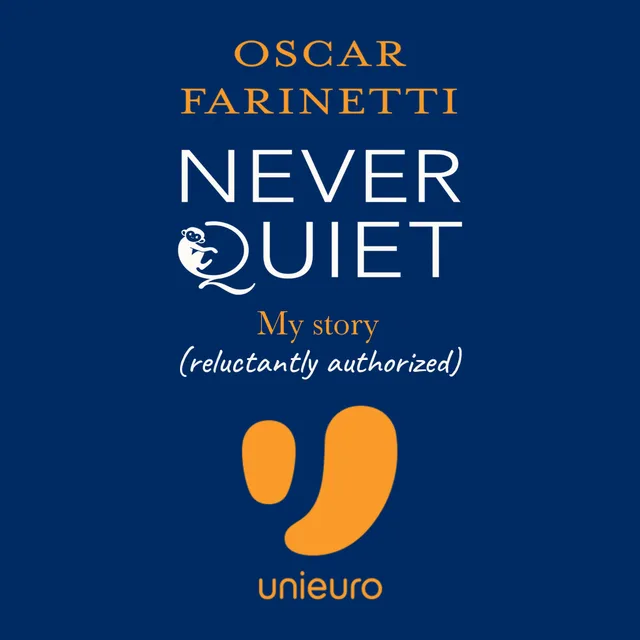
Oscar Farinetti was 52 when he opened the first Eataly, on 27 January 2007 at the Lingotto in Turin, after selling the biggest home appliance chain in Italy. Never quiet. La mia storia (autorizzata malvolentieri) (“Never quiet: my story, reluctantly authorized”) is his autobiography.
At conferences Oscar always gives the same talk: Italy has almost 900 products with a protected designation, more than any other country in the world, and yet it is not at the top of the agri-food export rankings. The reason, in his view, is that Italy is not good at storytelling and lacks powerful distribution and restaurant companies that go out into the world to promote it. Eataly is born from this problem.
In the book, Oscar describes seven precise moves he will follow to bring the project to life, and in this episode we go through them one by one. Then an eighth emerges, in our view the most interesting of all.
Eleven years after the start, and eight after the first American store, Eataly has sold over $300 million of Italian specialties to the American people. The biggest successes come from Turin, Bologna and New York. But along with the successes come the first failures.
After Turin, Oscar becomes convinced that the format can work anywhere in the world and opens a store in Japan. It will be, in his own words, the biggest mistake in Eataly’s history.
The second failure comes from Bari. Oscar feels he owes a debt to the South: the postwar economic miracle, he writes, was achieved in the North, but by the southerners who had moved there, and without them there would have been no miracle at all. So he opens in Bari. The first months go brilliantly, then customers drop off: the store is far from where people live, the prices are the same as in the North and seem crazy there, and there is a factor Oscar hadn’t reckoned with, off-the-books cash, which makes it impossible for him to compete. The result? Seven years of losses, without ever stopping looking for a fix.
In 2020 Oscar opens another big project, right next to the Lingotto Eataly: Green Pea, the first department store in the world dedicated to sustainable products. If Eataly was meant to save Italian food excellence, Green Pea aimed higher: convincing people to change their consumption habits, shifting respect for the environment from duty to pleasure. After a promising start, Green Pea also closes its doors.
If we had to sum up the most important principle we take away from this episode, it would be the last lines Oscar writes, quoting Albert Einstein: “Better to be an optimist and be wrong than a pessimist and be right.”
Oscar Farinetti
Eataly: Oscar Farinetti's 7 Moves to Sell Italy to the World
Now playing
Eataly: Oscar Farinetti's 7 Moves to Sell Italy to the World
"“If you go fast uphill, then the descent will be a walk in the park”: well, that's nonsense. You always start from where you're best."
"The main characteristic of someone who wants to be an entrepreneur has to be having a nose for it: sensing what's around the corner, catching trends, foreseeing the natural desires of peoples in the years to come."
"It is better to be an optimist and be wrong than a pessimist and be right. Please, let's carry on like this."
"Copy, don't imitate. To me, copying means discovering in another person or another place a talented idea that you can successfully transfer into your own project: copying its essence, adapting it to your concept."
"From the past you need to remember remorse and regrets, which are mistakes: the first for wrong things you've done and repented of, the second for right things you were wrong not to do. Remembering and boasting about successes, on the other hand, is useless: celebrating them is time wasted. The future is made of fear, which is the source of courage, and of hope, which gives rise to enthusiasm."
"Selfishness is an animal feeling inherent in human beings: give it an illusorily logical argument and it flares up. Sometimes it seems that humans can't wait to find justifications for the brute impulses that lie dormant in them."
"They are the people who, in life, have the ability to come up with actions that do good to themselves, but also to others: the best."
"A fact, however important, does not exist if it isn't told. Nothing at all exists if you don't know how to tell it: we have to learn to do it more, and better."
"Whether it's writing books or for newspapers, for the cinema or for the web, there's nothing greater than the ability to make others feel what you feel. The better you are at it, the more your audience will follow you."
"There it is, the main risk for dreamer entrepreneurs: when they get a poetic goal stuck in their head, they lose sight of reality. The power of the dream clouds the ability to analyze."