01 Intro
Marco, did you know that Italy is first in Europe for DOP and IGP foods, those labels that certify food excellence tied to a specific territory? We have almost 900 of them, more than France and more than Spain.
I knew we have more than 900, but I also know that Italy has the greatest agri-food biodiversity in the world.
Exactly, so with all this wealth Italy should be at the top of the food export rankings, right? But no, because at the top there's the United States, and then there's the Netherlands, a country a third the size of Italy.1
Yes, but the United States is number one, exporting almost twice as much food as we do, while Italy struggles along in ninth place.
Why do you think that is?
Good question. Because actually it isn't good at telling its own story, and Italy lacks big distribution and restaurant companies that go out into the world to promote it. And that opens up a huge space: creating a company that brings together retail, restaurants and education, and that knows how to tell a story. And this space is huge. Has anyone tried to fill this gap? To bring our excellence, our food, to the whole world. And he started from the point furthest away from food you could imagine: washing machines.
Exactly, from home appliances. His name is Oscar Farinetti, and in the previous episode we told how, starting from his dad's shop, he built the biggest home appliance chain in Italy, Unieuro, and then sold it to the British company Dixons for hundreds of millions. And then what? After 50 years, instead of retiring, he starts from scratch with a new project, Eat Italy, which today we all know as Eataly.
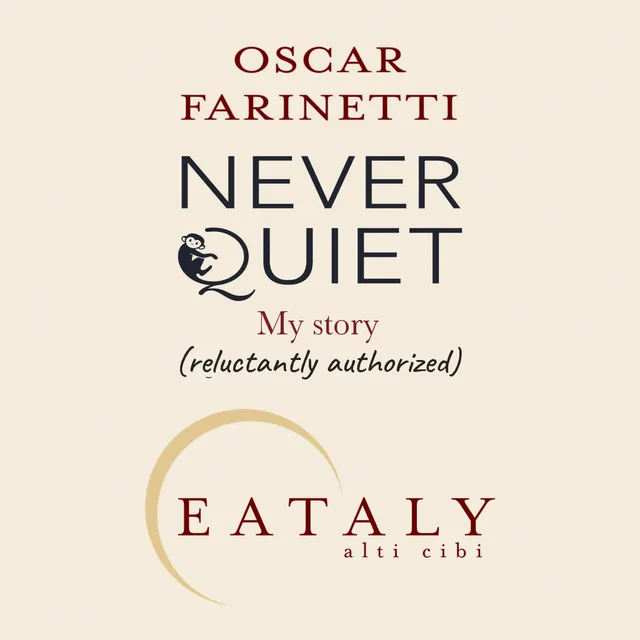
So this is episode 2, and you can go and listen to the previous one. And to launch this project Oscar gets to work with seven precise moves, seven moves that today we're going to study one by one. So, as I said, this is the second episode dedicated to Oscar Farinetti, to the creation of Eataly and to his book Never Quiet, which is this one here, quite a brick of a book.
As always, what we do is collect the little pieces left along the way by people who, in our view, have done really great work in their lives, and we try to share with you ideas and principles that we hope can be useful in your work and in your life. And so, welcome to In Buona Compagnia.
02 The Italian advantage we're wasting
So I'd start from the moves we talked about in the intro. He's famous because, when he does an interview or an event, he has this little blackboard where he draws Italy and starts telling the story of this wasted Italian advantage. So the plot, let's say, of his idea. He writes: "The plot was not really hard to write." And the plot goes like this: "There is a country, Italy, that enjoys the greatest agri-food biodiversity in the world, with the highest quality in many categories. An advantage carried over into Italian cuisine, which offers the largest number of dishes in the world, with practically unlimited choice from region to region. A cuisine that everyone likes, and that is healthy. Replicable, because it was born at home, the child of the most natural agriculture among the richest countries. And yet, incredibly, Italy is not at the top of the agri-food export rankings, because it is not good at storytelling and it lacks powerful distribution and restaurant companies that go out into the world to promote it. So there is a huge space to create one." So this is his idea, his initial plot for the creation of Eataly. And so he sets himself seven moves to launch this new idea.
03 How Farinetti planned Eataly in seven moves
The first move is to find a very simple office, to find an office in Alba. The second move is to build the team, so experienced, decent people, but above all the best specialist for each food category: water, oil, Parmigiano, pasta, wine, beer. The third move is to look for suppliers by traveling all over Italy, the best ones, who create absolute quality while respecting the environment.
Number four, make yourself known while waiting for the right place. So maybe starting to sell online, maybe with a website, and then gradually transforming.
04 When Eataly sold online before Amazon
The interesting thing is that when Eataly opens its website, Amazon doesn't exist in Italy yet.
So it's one of the first websites to sell online. Yes, people could actually buy from the website and get the goods delivered at home.2
The fifth move is to find the right place, beautiful and big, and open the first Eataly in Turin. Oscar absolutely had to start from Turin. How interesting, because why not start from Rome or Milan, why start from Turin? That's something we're going to look at. The sixth move is to build the most beautiful place in the world when it comes to food: a single place where high-quality food could be bought, eaten and studied, seamlessly and without spending a fortune.
Number seven, which is not the least important, because the most important, as we also saw in the Unieuro episode, is marketing, so communication. Finding something relentless and global that drums it into people's heads until they go and visit this blessed Eataly.
05 "Why don't you make a portmanteau?": how the name Eataly was born
So this is his plan. But how does the Eataly project come about? Even more interesting is how the name Eataly came about, because his idea was actually to call it Eat Italy, so two separate words, which would translate as "eat Italy." So Oscar is with one of his loyal collaborators, called Giovanni, they start discussing this name, and while they're discussing it Barbara walks by, who was Giovanni's secretary, she looks at them and says: "Why don't you make a portmanteau?" That is, instead of having two words, join them together. So she says: "I'd call it Eataly." And Oscar says he will never stop thanking her for this brilliant idea.
And he writes: "The two of them looked at each other, dumbfounded. How could it be that such a stroke of genius hadn't occurred to them?"
06 Why Eataly was meant to be built on the ring road
At first he imagined Eataly like Unieuro, so basically building it on the ring road. Unieuro is a bit like Ikea, it's on the edge of the city, there are ring roads, so the ring road takes you out of the city and there's the exit for Ikea, for Unieuro and so on.
So he pictured Eataly that way?
Exactly.
And he would have built it that way, if it hadn't been for a hugely important person in this whole story, whom we'll do an episode on, because I like him a lot as a person. And that's also an interesting thing about this podcast: every time we read something we discover another person who's super interesting. So in a few episodes there will be an episode on this person, whose name is Carlin Petrini.
Because he tells him: "Oscar, I see you're picturing Eataly on the ring roads, like the Unieuro stores, but this is a city-center project. If you want to make the best bread in the world and invite families to buy fresh every day, people have to be able to get there on foot too."
And his name is actually Carlo, known as Carlin, his name is Carlo Petrini, and he's the key to everything, because there's a line he says about Carlo: "He was the origin of everything, his one true mentor. He had taught him the logical and ethical thread that Eataly had to follow, both in Italy and around the world." That's why, he writes, without Petrini and Slow Food, Eataly would never have been born. Carlo Petrini is the founder of Slow Food, which is this movement. Why are you laughing?
No, I read what comes next.
This movement that was born in 1986 out of the protest against McDonald's opening in Rome.
Which is the opposite of slow food, so fast food.
Exactly, and it was born with this hen, what's it called, this snail, I said hen, this snail, precisely to represent that food has to be good, clean and fair, but also savored and slow. And Carlo Petrini also created the Salone del Gusto in Turin, Terra Madre, and he also created the University of Gastronomic Sciences in Pollenzo. Sadly, he died in May 2026. But Carlo really is the key to everything, because thanks to Carlo, Oscar gets the right people to start traveling all over Italy looking for the best in each food field.3
Exactly, it's looking for excellence, and that actually becomes the eighth move.
Exactly. And he writes: "Become partners with the best." So he starts traveling around Italy, a bit like we were saying before. And it's lovely because he writes: "I will never be able to become one of them, but maybe I'll learn faster if I team up with some of these excellent producers, becoming their partner, choosing in each category the one I feel most in tune with. I won't be able to help them produce better, but I'll make myself useful with the storytelling, the packaging and the distribution." So he starts looking for the best beer producer, the best for oil, the best for pasta, the best for Parmigiano. Now here comes the part that really blows you away.
What is it?
2006. So we've listed the moves, his plan, his plot, his story. We said that eataly.com is born, and it's born in 2006. Eataly goes online, and he calls them the "Eatalians," the people who buy on eataly.com, who, as we were saying before, start buying from the web. And he writes: "Besides explaining what it was all about, Eataly.com immediately offered for sale pasta, oil, wine, beer, water, meat, sweets and grappas."
07 The lawsuit that almost destroyed Eataly before it was born
Good, but he had to advertise his Eataly, which as we said starts online, and so he comes up with this ad. The problem with this ad, which we're about to tell you about, is that it takes him to court, and he comes within a step of shutting everything down before it even starts. Why? Because he comes up with a criminal idea: comparative advertising. Now, technically comparative advertising is allowed, so you take two products and compare them, but legally the two products have to be the same kind, so, I don't know, two bottles of oil, two bottles of water and so on. And the problem is that he compares two different things.4
And this idea comes to him during, he writes: "It came to me during a stop on the highway, I was on my way home," at the Agip, the Agip service station, and he had to buy the oil filter, both the filter and the oil. Anyway, the fact is that this Eni motor oil cost 12.80. By coincidence his Eataly oil also cost 12.80. So the engine oil cost the same as a liter of the extra virgin olive oil he had at Eataly. He goes back to the office, takes an A4 sheet, prints the two bottles of oil and underneath writes: "Does it seem right to you that they cost the same?" So this was his ad to put on the website, to show people that the oil they were buying, which was among the best in the world, cost the same as the oil you put in your car engine. He knew it would land him in some kind of mess, and he writes: "That idea was too good not to be published." So he launches his campaign, the press is already reprinting it in their papers and talking about this idea, and not even a week goes by before he gets a registered letter from Eni, summoning him to court. But actually he had spoken well of both Eataly and Eni, so he finds himself with... he had spoken well of all their products, I'll explain in a moment. So he finds himself in court facing what he calls a firing squad, all these Eni lawyers in court, whose only aim was to destroy him and get huge damages. Because after all Oscar Farinetti wasn't just anybody, I mean he had just sold Unieuro, so they knew they could really bleed him dry. So he gets to court, and his lawyer tells him: "Keep quiet, I'll handle everything." And as soon as the trial starts Oscar stands up and starts talking, and this is the speech he gives. He addresses the lawyers: "Enrico Mattei, the founder of your company, was a great partisan, exactly like my father. My father taught me that you have to be big in small things and small in big ones. This is a small thing. How can a giant like Eni lay into a small, newborn startup? Small, but patriotic, wanting to spread the culture and traditions of typical Italian food and give value to the hard work of Italian farmers. The page ends with a question, it expresses no opinions, and it describes the two products in equal measure. But be aware that if you ever won, burying us, and the news went national, then Eni really would suffer serious damage to its image, made a laughingstock by your Pyrrhic victory." I mean, this victory against a newborn startup. The verdict comes: technically he's found guilty of improper comparative advertising, but the only penalty was to take down the page that compared the two oils. So then comes the opening of Eataly in Turin, and he chooses the Lingotto area. The problem with that area is that it was a bit of a mess, because Fiat used to be there, and it wasn't what it once was, it was still an outlying area, so he was a bit afraid that nobody would actually go there. But certainly thanks to the advertising he did, thanks also to the trial with Eni, or anyway also to his own profile as Oscar Farinetti, on opening day there's a huge crowd.5
Here I'd stop on an important thing he writes: he doesn't look for outside agencies for communication and advertising, he does it in-house. And here he writes: "A merchant who can't produce his own communication is like a footballer who can't use his feet: he'll warm the bench." In my opinion this is important, because knowing how to communicate is very important, and handing it to other people isn't the same thing.
So he opens Eataly in Turin. But it's interesting, because today we think of Eataly as a sort of chain, I mean there are lots of them not only around Italy but around the world, but at the beginning he didn't see it that way, he had a different idea. He was also a bit scared, because he writes:
"I was convinced that Turin was a sort of dress rehearsal, that it was the other nations of the planet that needed a great story of Made in Italy. Maybe there really was no need to open more in Italy, because Italians already knew certain wonders and were too attached to their own regional tastes, perhaps better to say provincial, if not downright local. Would they be interested in going to a place like Eataly, invented by these Piedmontese with a mania for invading and unifying? And yet even in the provinces people are tired of always eating the same things." In fact, I'd never thought about it, that the best seafood restaurants are in the city. So at first he doesn't want to create a chain, because he was already scared about the Turin Eataly. Plus, at first he was convinced that Italians wouldn't like Eataly stores, so he was in a sort of limbo over whether to keep opening or not.
Also because he didn't want to create a chain like Ikea, where they're all the same, but to make every Eataly different and unique.
Exactly, but he still wanted to keep what he writes: "Not twins, but siblings." That is, not identical, but still, when you're inside one, you know you're at Eataly.
08 "Not twins, but siblings": why Eataly isn't a chain
Just 22 months after the Turin Eataly he opens one in Bologna, and it's here that he gives the definition that Eataly isn't a chain, but rather, as I was saying, they're siblings. Because he writes: "The Eatalys will be different from one another, but they are siblings. As siblings they will have some basic values in common, the same surname, the same father, but just like siblings they will show different characters, and sometimes very different ones." Because he gives a theme to every Eataly around the world. But it's true, when you're inside an Eataly and you've been to some other Eataly before, you can feel that they're similar.
The food too. For example we went to Eataly in New York, and the pasta with cherry tomatoes is very similar to the pasta you eat at, I don't know, the Eataly in Pinerolo.
09 The biggest screw-up in Eataly's history
But, as we also saw in the other episode, there are always ups and downs, ups and downs, and along comes the first big screw-up, which is Tokyo. If you think about the first expansion abroad, you'd maybe think of Europe or America, New York in this case, but the thing is that the New York Eataly was the fifth in order of time, because he does Turin, Bologna, Tokyo, Pinerolo and then New York. So he opens Eataly in Tokyo, because he makes a mistake. Because as we said before, Turin for him was the dress rehearsal, and after Eataly succeeds in Turin, he convinces himself that any Eataly would automatically succeed in any other part of the world.
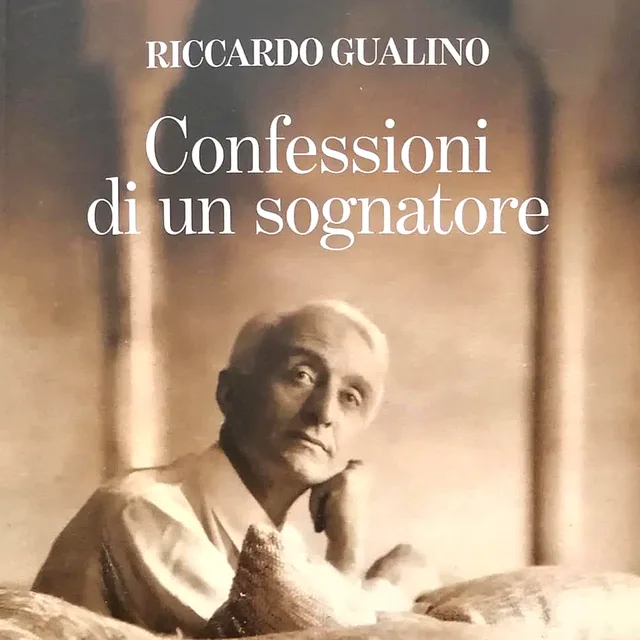
Here I made a connection with Riccardo Gualino, and here he writes: "From the adventure I learned that even experience must be constantly watched over. A healthy, sturdy tree is not enough to gather good fruit. You have to tend it, prune it, defend it from the attacks of insects, to have ripe fruit on the table and not wormy fruit."
10 "The audacity to start with the hardest things"
So in the sense that Oscar's experience there needed watching over, because he thinks that format is a winner and can make a great fortune in Tokyo too, and instead... And in fact he writes: "It is one of the main risk factors for the businessman who feels all-powerful: the audacity to start with the hardest things."
11 "Sometimes it goes to your head"
So he was convinced he could get the Japanese used to Italian cooking, apart from the fact that they're two completely different cultures. Then he opens it in the wrong place, because he opens it in a shopping mall, and so he fixates on this thing because he's let it go to his head. In fact here he writes: "Sometimes it goes to your head, and there's nothing more dangerous for an entrepreneur." And on top of that:
"If you go fast uphill, then the descent will be a walk in the park. Well, that's nonsense." So in the sense of, don't start from the hardest things, start from the easiest ones. So opening in New York was much easier than opening in Tokyo.
12 "You have to start with the simplest things"
In fact he writes that journalists usually ask him what his biggest mistake has been over the course of Eataly, and he writes: "Opening in Japan before America." And he writes: "You have to start with the simplest things."
13 What remorse and regrets mean to Farinetti
But Oscar had developed a real cult of mistakes, because he writes that they help you improve, the important thing is to notice them in time. He argues that from the past you need to remember remorse and regrets, which are mistakes: the first for wrong things you've done and repented of, the second for right things you were wrong not to do. The future, on the other hand, is made of fear, which is the source of courage, and of hope, which gives rise to enthusiasm. And he adds that there's a way of behaving that can join the useful mistakes of the past with the wonderful feelings of the future: lightness. That lightness, in the land of the rising sun, Japan, Oscar never managed to find. In fact he realizes that Tokyo is a huge screw-up, he tries to stay on somehow, he opens another, smaller Eataly to make up for the losses, and he immediately focuses on New York.
Yes, also because the thing he gets wrong here is the partner, do you remember this bit?
Exactly, yes.
And he writes: "As if that weren't enough, he got the partner spectacularly wrong." That is, there was this person who seemed to be a super expert on Tokyo, and he tells him to open in an area he doesn't like, he wants to open in another area, which is where he'll open later. Exactly, the one where he says: "And it will work." But he, this partner, naturally Oscar wasn't an expert on Japan, he relies on this person who has him open in a place where... Joe Bastianich used to say: "If you want to make it in New York you have to open on Fifth Avenue, because it's always packed." Instead he opens in this place in Tokyo that's packed on weekends, but during the week it's empty, there's nobody there.
14 How Farinetti opened in New York with Joe Bastianich
Exactly. So we get to New York, he opens it with Joe Bastianich, so the perfect combo. Actually there's just one small problem at the beginning with buying the space, because they don't want to pay that much for it, and in the end thanks to Joe Bastianich they manage to pay what Oscar wants to pay. They start renovating the whole place, they create Eataly. And the problem is that at the beginning he has some trouble with American bureaucracy, because they have to hold a meeting for everything: a meeting to change the faucet, a meeting to change the color. After a while he's had it up to here.
Also because, from what I understood, his style is a bit chaotic in everything. I mean, boom over here, over there, over there. Whereas in this structured way he really can't work.
15 Oscar's style: "a controlled disorder"
Here he describes his style, Oscar's style: "A poetic mission, lots of speed, few resources and a controlled disorder." And here he writes: "Better ten ideas a day, six of them wrong, than having only three. First of all because four good ones are better than three, and then because mistakes help you grow as much as successes do. Maybe more, if you know how to recognize them. But in the United States this way of his of understanding action had crashed into a country where everything has to be structured, foreseen, planned. It is paradoxically slow compared with his unstoppable urge to run, and on top of that extremely expensive." I mean, two different things, because there they get things done but at the same time everything has to be structured.
So he opens, and it's lovely because he opens with, there are always, with the signage, which is super important for Oscar, there are three really important signs. ---
16 "The customer is not always right. Neither is Eataly."
The first: "The customer is not always right." The second: "Eataly isn't always right either." And third: "From this wonderful doubt our harmony will be born."
And then he opens in the Flatiron area of New York, a special one.
17 Eataly Genoa, Renzo Piano and Soldini's crossing
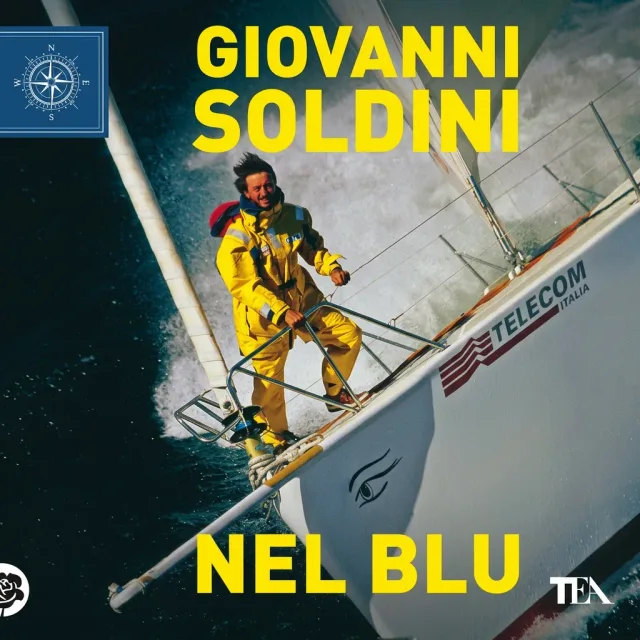
And so it's a smash hit from the very start. The next step is Genoa, in 2011, where they contact him, he gets in touch with the person who proposes opening this Eataly in Genoa. He proposes opening it in a building, on the top floor, in a penthouse looking out over the Gulf of Genoa. And the problem is that Oscar knows that in Italy restaurants in skyscrapers don't work, and in fact in that very spot lots of restaurants had tried to open but closed. But he says: "All right, come on, let's give it a try," because he falls in love with these huge windows looking out over the Gulf of Genoa. And he writes: "But I want a famous fellow citizen of the Genoese, Renzo Piano, who would have been happy to sign the design for these windows." And he writes: "Do me the favor of giving the project to Renzo Piano, so the glass wall comes out the way I say." Because Renzo Piano redesigns this district in Genoa, which actually isn't doing quite as well as he'd like, so maybe an Eataly in this district could revitalize it, and that's exactly why they contact him to open the Eataly. But to open the Eataly in Genoa he wants to do something unique, we always come back to marketing and communication. Since he has just opened the New York Eataly, he wants to connect the Genoa Eataly to the New York one, two cities on the sea. What better way than an ocean crossing on a sailboat? And who does he contact for this crossing? Giovanni Soldini.
Who we did the very first episodes on... We did the first episode, we did it while reading the book, I mean we always read every... we read the book, but in this case we did it reading the book while recording the episode, which is something crazy.
So he contacts Giovanni Soldini, and tells him he wants to do a crossing. Obviously Giovanni tells him he's out of his mind and won't last even a day on a sailboat.
Now here there's something that made me think, and he writes these two things, he makes these two reflections. ---
18 What is the main trait of someone who wants to be an entrepreneur?
The first is: what is the main characteristic of someone who wants to be an entrepreneur? And he writes: "The main characteristic of someone who wants to be an entrepreneur has to be having a nose for it: sensing what's around the corner, catching trends, foreseeing the natural desires of peoples in the years to come."
19 What are Professor Cipolla's four quadrants?
The other thing is that he quotes this Professor Cipolla, do you remember this part? He quotes this Professor Cipolla, who divides humankind into four quadrants. There's the intelligent one, who comes up with actions that do good to himself and to others. The bandit, the one who profits at other people's expense and cheats you, but at least he does it because he gains something from it, so deep down it's a rational thing, that's the bandit. Then there's the naive one, the one who harms himself to do good to others, so the good guy who ends up losing out. And then there's the stupid one, the one who harms everyone and doesn't even do himself any good.7
And here Oscar writes that the people who in life have the ability to come up with actions that do good to themselves but also to others are the best, the intelligent ones, what Oscar calls the righteous, the people whose actions do good to themselves and to others. And he writes this because he would like to be in this quadrant. He often writes that he doesn't manage it. But he writes that in his opinion Soldini belongs in this quadrant, and he writes: "Our never-quiet merchant would have liked to be in the same quadrant." It's the little monkey explaining, because it's written in the third person, this little monkey that talks to him from his shoulder. And he writes: "Our merchant would have liked to be in the same quadrant, often not managing it, so he did his best to learn from the sailor, to copy his qualities," those of the righteous, that is.
He says that he's very much in tune with Soldini, they have a lot in common, and that's why he chooses him for the crossing. So now Eataly's expansion is sailing ahead at full speed, because he opens them in the blink of an eye. Here he starts with Istanbul, Florence, then he opened more in Italy, and then in America it really takes off, because he has one in New York at Flatiron, New York Downtown near where the Twin Towers used to be, Boston, Chicago, Los Angeles and Las Vegas. And so just 11 years after the start of it all, and eight after the first store in America, with over $300 million of Italian specialties sold to the American people.6
20 The power of the storyteller: expected and perceived quality
One thing I want to focus on is, of course, communication and marketing. Oscar has also written a book on marketing that I'd like to read, and here he writes a bit about communication, or anyway about the ability to be a great storyteller. Here Steve Jobs comes to mind, who I think in one of his biographies, I don't remember which one now, says that the storyteller is the most powerful person in the world. And here Oscar writes: "He had long been thinking about the difference between expected quality and perceived quality." And at that time it was his main topic in the meetings he held with the marketing team. There was the creative group, the ones who had to invent the communication, and the category managers, the ones responsible for the product. And here he writes: "He insisted a lot on the relationship between what customers, in their imagination, expected from Eataly and what they actually found in reality. They could be disappointed, and so never come back, or reassured and so become loyal, or even amazed, and then they would tell everyone about it. It all depended on the relationship between the substance of the promise and that of the real offer." That's why he put together the ones who made promises and the ones who delivered, these two groups that worked there. He often used metaphors: "If you overdo it praising a woman's beauty, then when you find yourself in front of her you immediately find a flaw, any flaw, and if she has none you invent one, like her knees not living up to expectations." So the knot between expectation and reality had to be dealt with, because the ending depended precisely on that tangle: success or failure, happiness or unhappiness. And then here he writes that whether it's writing books or for newspapers, for the cinema or for the web, there's nothing greater than the ability to make others feel what you feel. The better you are at it, the more your audience will follow you. A fact, however important, does not exist if it isn't told.
21 Why Farinetti wanted to open the Bari store
So we said that Eataly expands around the world fairly quickly, but there's one store I'd like to focus on, and that's the one in Bari. Because it's another small failure for Eataly. So the problem is just one: he wants to open Bari because he's a bit like Gualino, he'd like to redeem the South of Italy, because he knows the potential it has, the beauty that's there, but obviously it's a potential that isn't well exploited, and so he'd like to go there to help, to invest in the area, to contribute to its growth and development.
22 "Italy from Rome down is a mystery of beauty and inefficiency"
Here he writes: "Italy from Rome down is a mystery of beauty and inefficiency. And yet it doesn't work. Just over a third of the population lives there, because many have left for more northern latitudes." And here a monologue starts, a beautiful one:
"The great postwar economic miracle was made in the north. And do you know why it happened? Because a multitude of southerners came to the north. Without the people of the south we would have achieved no miracle at all. Hybrid peoples are the best. Young people from the north should move to the south and invest in agriculture, food and tourism. The most beautiful part of the most beautiful nation in the world." The problem is that he talks about inefficiency. So he opens the Eataly in Bari, he has problems with the renovation, with the opening, bureaucratic problems, a colossal mess, and so he gets a bit angry and writes:
"Why don't you stop complaining and roll up your sleeves? You should stop blaming the Piedmontese. In Sicily there are more than 1,600 km of coastline, among the most beautiful in the world. Sicily gets 5 million tourists, Romagna gets 20. Is that the fault of the people of Romagna? No, it's your own failing, because you aren't able to get organized. Maybe the time has come to reflect on where you go wrong, instead of complaining that you're the innocent victims of a north-centric nation." Now, this isn't aimed only at Sicilians, or anyway, I mean it's in general about not complaining, not always blaming others, but getting up, seeing why others are better, understanding why they're better, rolling up your sleeves and starting to improve ourselves too.
23 "The power of the dream clouds the ability to analyze"
And in fact he writes, so as I was saying before he wanted to invest his own money too to redeem the South, and he writes: "The main risk for dreamer entrepreneurs is when they get a poetic goal stuck in their head and lose sight of reality. The power of the dream," this one's beautiful, "the power of the dream clouds the ability to analyze. This time mathematics gives way to the heart." So, again, his desire to redeem the south, but mathematically speaking the numbers weren't there for Bari to stay on its feet.
In fact he writes that in the first months Bari got off to a flying start: lots of people, high takings, then fewer and fewer customers. Exactly, so it's not just a problem of bureaucracy, it's also a problem that there are no people. There are no people, but also because, he writes, the people of Bari didn't feel at home in that place far from where people lived, and the prices, the same as in the north, were crazy: "What, coffee for one euro, a pizza for six, a beer for two, are we crazy?" And then here he writes: "Then there was a factor Oscar hadn't considered: off-the-books cash. Do you know what they answer when I ask for the best prices on fish? We could do them for you, but do you want an invoice?" Oscar was taken completely by surprise. In his naivety he believed that the phenomenon of off-the-books business in Italy had shrunk to negligible proportions. Instead, in certain areas where income is particularly low, evading VAT and the tax cost of labor was still the foundation the economy rested on. For a company like his it was like running the 100 meters starting 50 meters behind everyone else. He could never have sold a coffee for 60 cents or a beer for one and a half euros. The result? Seven years of losses, without ever stopping looking for ways to improve. With 10, 100, 1,000 bright ideas, nothing doing. The Bari Eataly filled up on weekends, but remained a magnificent cathedral in the desert. So he says, he doesn't close it, and he invents an alibi for himself, this is the little monkey explaining: "Well, we make good money in America, it's not the end of the world if we lose a little something in southern Italy." But anyway he doesn't close, because he still wanted to contribute.
24 The media attack over precarious work at Eataly Florence
In fact we get to what is maybe, after the Eni problem, the second biggest problem Oscar runs into: the media attack over precarious work that hits the Florence Eataly in October 2014. So there are these three young people who quit, saying they're treated badly, that they aren't paid, that they're exploited, that they're servants. Of course they immediately turn to the media, newspapers and television, and the scandal explodes. But according to Farinetti, of course, there was very little truth in it, or rather it was practically false, because at the Florence Eataly, out of more than 90 staff members, it's these blessed three who rebelled, who complain because they say they were fired, since they were on fixed-term contracts. Obviously it's a restaurant environment, so there are peak periods and off-peak periods. But the problem, and this is already the first falsehood, is that these blessed employees hadn't been thrown out, they just hadn't been confirmed yet, and those are two very different things. So he finds out about this mess and decides to go to Florence to talk to these three. There are three of them: one was a guy who had some problems at home, some trouble going on; the other two had gotten it into their heads that they wanted to kill Farinetti, take him to court and get compensation. In fact Farinetti goes there and tells them: "All right, I apologize for this misunderstanding, all right, so I'll give you a permanent contract." And they say no. So the fact is that these guys keep bombarding him, during the meeting they keep insulting him to try to provoke him. He's about to explode, but he doesn't explode, partly because he knows there's something behind it. In fact he leaves the meeting, opens the door, and there are the journalists waiting for him. But before leaving he goes to the Florence Eataly, gathers what he calls the store's general staff (it had opened just eight months earlier) and starts checking. So, salaries were at least 10% higher than the industry average. All the staff, ever since the first Eataly in Turin, got an annual bonus equal to about one month's pay, so a fifteenth-month salary. And the rule was to reach 80% permanent contracts by the third year. Florence, after 8 months, was at 35% and aimed to reach 50% by the end of the first year. So Oscar comes out and makes his decision: he renews the contract, in Turin, of the guy who had family problems, and he tells the other two to go to hell. And here there's a really great part, because the two who weren't confirmed go on television, they keep insulting Farinetti, Farinetti is attacked on every channel, they go to court, and the verdict is that the court rejected the accusations and the request to be rehired. And here there's an interesting part, because the two were ordered to pay the legal costs, also because they had produced false documents, but they didn't have a single euro to pay. And Oscar writes: "I realized I was angrier with the journalists than with the young people," because the young people would pay for their mistake, the journalists wouldn't, because the journalists exploited the moment to attack Oscar and gain media attention. The kids didn't even have the money to pay the legal costs, so they ended up with nothing. And Oscar writes that two thoughts came out of that ugly story. First: maybe the time had come to give up the command position in the company he had founded. Two: the hiring system needed rethinking, because Eataly had become big and needed a branched organization and a structured personnel office, which it still didn't have. And maybe the time had also come to look for a manager. And Oscar writes: "Maybe I had already waited far too long to look for one."
25 Why Eataly needed a manager
So in the meantime, a bit like with Unieuro, something happens, and Oscar starts thinking about letting Eataly go and leaving it to someone else, his sons, and anyway finding a manager. And he finds Andrea Guerra. Now, Andrea Guerra may not be a familiar name to you, but he was the CEO of Luxottica and now he's the CEO of Prada.
But Oscar decides to look for this manager also because he writes that after all those years building Eataly he was tired. His sons were good but didn't yet feel ready to set the course, ---
26 When to stop being the father and the boss at the same time
and he had sensed that the time had come to stop being the father and the boss at the same time. "There is a precise time limit beyond which the two roles can no longer coincide. The point is to realize it." He takes on Andrea Guerra. Andrea Guerra works for five years and then comes to Oscar, seeing how hard it is to work on Eataly, and here he writes: "I can't do it anymore, Oscar. I'm tired, I've given everything. Eataly is hard, I didn't imagine it would be this hard. The format is unique, unrepeatable, fantastic, but it requires incredible attention. The margins aren't those of industry, and it isn't easy to fit it with an organization that stays within costs. It needs another kind of energy, young people's stuff, and I'm 54. Still, I think I've fulfilled my task: now there's a good structure and excellent people."
Exactly, because the goals Oscar had given Andrea Guerra were three. The first was to be a mentor to his sons. The second was to steer Eataly toward a more structured, bigger organization. And three, to define the moves for the future, so maybe the stock market, new partners, and for the Middle East. Exactly. But it's lovely that when, as you told it, Andrea goes to Oscar, they come to an agreement in half an hour. Oscar understands that Andrea Guerra can't do it anymore, he's done what he had to do, and in half an hour they reach an agreement and Andrea says his goodbye.
27 How you learn to speak in public
Here there's another part, we always come back to communication and marketing, and here he writes: "The ability to speak in public depends on character, not on preparation. There are extremely cultured people who falter in front of an audience. Everything can be learned with commitment, taking for granted that first of all you need solid content. The ability to capture the attention of a large audience, and therefore an intelligent one, and to keep it high for a long time, for an hour, is a partly innate quality. It can be refined, but it's hard to create from scratch. And it doesn't mean being cynical or devoid of emotions: on the contrary, true emotional intelligence consists in managing feelings, and to keep the attention of many people glued you have to know how to touch them." Oscar had known he had this gift ever since his school days. He studied little, always got by, clutching at straws, and until he was twenty he was brazen, he writes here. Then he went to work, and it was precisely having to earn his daily bread that convinced him he needed culture. He started studying when it was no longer a duty, he multiplied the words he knew and used, and he understood that if he knew what reasoning, what historical context a product was born from, then he could also tell its story better and sell it. This ability to tell stories with new words and solid concepts acquired through reading.
28 The seven things Farinetti learned from Daniel Goleman
And he decided to go deeper into the subject of emotional intelligence, and it was by discovering Daniel Goleman that a whole world opened up for him. The things he learned were seven. The first is: being afraid is not a mistake. Two: living happily is the result of a decision, this is interesting. Three: our emotional reference points are inside us. Four: feelings are more important than rules, to establish good rules you need good feelings. Five: self-control doesn't consist in holding back your feelings. Six: you have to express your convictions with conviction, but convinced that you could also be wrong. Seven: to move others, you have to be able to be moved yourself.8
29 What is the algorithm of luck?
After this gem there's another one, right after it in the book, which is his definition of luck, or more than a definition, the rule of luck. So when he's at conferences, as we said, with this little blackboard of Italy, telling the story of Italy, the agri-food biodiversity, everything we talked about earlier in the plot of Eataly, when maybe they ask him for an encore, this is his encore. And he writes:
"There, I'd be done, but if you like, in 5 minutes I'll reveal a secret to you. After decades of research I have found the algorithm that, applied correctly, makes you lucky always, even for your whole life. But you have to promise me you'll tell everyone about it." So he tells it, and the thesis is this. On average everyone gets strokes of good luck and bad luck, let's say fifty-fifty. Some people tell about the first, and some about the second. Like journalists, who are convinced that bad news is good news, that bad news gets more audience. But who do we want to marry? Who do we want to go on vacation with? Who do we go into business with? Who do we want to be friends with? Who do we go out to dinner with? With lucky people. And how do you come across as lucky? Well, the algorithm of luck is to forget the bad breaks and tell people about the lucky breaks. By doing this you live better, you find more friends and great opportunities. "And now that I've revealed this very important secret to you, please, don't tell anyone about it." So it's simple: think about the good moments and not the bad ones.
30 The peach rule: the fifth P of marketing
Here I'd also add a presentation he gave when he was invited to speak at the World Business Forum, do you remember that part? He gives this presentation, this talk of his called "People." So in marketing classes we know there are the 4 Ps, OK? There's product, price, placement, promotion. And he adds people. At a certain point, among the slides Oscar had prepared for the occasion, there appeared half a fruit cut in section, and you could clearly see the three parts the fruit was made of. In the stone, the pit, you were supposed to write the poetic reasons why you launch the project. And he writes: "Don't use it to write make money. Put in it the goals your heart is set on reaching. In the case of Eataly, we wrote: celebrate the wonder of Italian gastronomic biodiversity." Then what goes on the flesh, which is the part you taste? He explained that you write the experiences you intend to give the public. Careful, to all of our public: customers, suppliers, staff, media, the political community. "If you like, copy this idea of the peach. Draw it and adapt it to your company, it'll be useful to you. Maybe you'll come up with an even better peach than mine. Don't worry about it, I've been copying my whole life and I'm doing great." Because one of Oscar's philosophies is to copy things and adapt them to your situation.
31 Ten moves for being innovative
After People and the peach metaphor, in the same presentation there are ten moves for being innovative, that is, managing imperfection. One, priority. Two, simplification, so we keep seeing simplification, making things as simple as possible. Managing imperfection, also interesting, managing imperfection. Think local and act global, which in this case is what Eataly did: think local, about Italy, and then act global, bringing Italian excellence to the world. Knowing how to tell a story. Then we have duty that becomes pleasure, duty that becomes pleasure. Never ever give up, so don't ever quit. Stay young. Copy. Know how to change. Then the tenth and last move was a bit different from the others, it was called trust, patriotism and courage. Oscar examined the last three periods in which Italy had been great: the Renaissance, the Risorgimento and the postwar economic miracle. He wanted to show that it was worth copying the feelings of the Italians of those times in order to become better. Lovely, isn't it? He wanted to show that it was worth, it's a bit what we do in this podcast, and that's really the beauty of reading, he wanted to show that it was worth copying the feelings of the Italians of those times in order to become better.
32 Why everything comes from feelings
And then here he describes another model talk he always gave, this short history of human feelings. And here he writes: "It seemed strange that an entrepreneur, to explain new business models, would start from feelings," a strange thing. And here he writes: "The fact is that feelings are more important than rules, and history is there at our disposal to teach us how great results are achieved." Oscar told the story of 11 historical periods at lightning speed, condensing into 166 pages something like a million and a half years, over the course of which human communities expressed prevailing feelings that were very different from one another. When they were good, communities grew, quality of life was better, new inventions blossomed, in short there was progress. The opposite happened, though, when negative feelings prevailed. And then here he writes: why does everything come from feelings? So why are feelings important? "Everything comes from feelings. Imagine the roots of a tree. Then there's the trunk, which represents thoughts. Thoughts become words, like the branches of the tree stretching out in various directions. Words are the musical part of life, and music, when it's beautiful, becomes wonder. From the branches sprout the leaves, which are behaviors, which in turn generate actions, that is, products. And these are the fruits that, in the right season, will ripen on the tree."
Beautiful.
OK, let's move on.
Right, we come to the last step of our story, which has nothing to do with Eataly. So, after Eataly has expanded further abroad, especially in France and Paris, we get to Turin around 2014, where he opens his latest project, which is about respect for the environment as beauty, and it's called Green Pea.
33 Green Pea: the department store to save the planet
So Green Pea is the first department store in the world dedicated to sustainable products, it opens in 2020, next to Eataly at the Lingotto. And if Eataly's mission was to save Italian food excellence, Green Pea's was much more ambitious: to save the planet, by convincing people to change their consumption habits.
34 How to turn duty into pleasure
The central idea of Green Pea turns the idea upside down: we move from duty to pleasure. And he writes: "If we want to change consumption by aiming for sustainability, we have to shift the value of respect from the sense of duty to the sense of pleasure. We have to behave well because it makes us feel cool to do it. Duty is experienced as effort and sacrifice, and that way you get nowhere." Oscar wanted to see a girl turn down an SUV for an electric car. The idea was very good. The problem is that it doesn't work. It doesn't work because, from what I've read, it loses money, and so people don't go and buy. People don't go, and so it closes.9
Good.
35 "Better to be an optimist and be wrong"
But in the end we see that Oscar had great successes and great failures. But at the end of it all, what I like about Oscar is this line at the end, what he writes at the end, and he writes: "It is better to be an optimist and be wrong than a pessimist and be right. Please, let's carry on like this."
Meaning... It's a quote from Einstein.
Ah yes, that's right, it's an Einstein quote, right.
At the last conference he starts speaking and says why he's retiring, and he says: "I've just finished a book that quotes Albert Einstein," and that's the line.
How beautiful. I mean, the Green Pea idea failed, yes, but the idea was optimistic, it was about being optimistic in order to try to change something. I mean, at least he put himself on the line, he did something. And it really reminds me of Riccardo Gualino's line, do you want to say it?
Go on. Where he writes: "Whoever has created something may claim to have lived. Even if unlucky, he will always be worth more than an indifferent spectator."
Even if unlucky, he'll be worth more than an indifferent spectator.
Another thing that connects to Gualino is money, I mean seeing it as a means. In fact he writes: "For me money is not an end, I have never had a lust for wealth. For me it has been a means to bring my projects to life. When I made money I reinvested it in new designs; when I lost it I didn't torment myself over its value, but because it held back growth and the chance to create new jobs." And Oscar closes by saying, so at this last conference with all his Eataly partners... This is what Oscar says. Do you want to read the Gualino part?
Where he says that the money he owned served him only to create things. I mean, the real beauty of money in itself is creating, not going on vacation or buying yourself, I don't know, a superyacht. The real beauty of money, here he writes: "The beauty of money lies in the power it gives to whoever holds it. Seeing thousands of men, creating new industries, these are joys of the imagination. But if to create them, if to create these dreams, you need money, and you have it, then it is a source of happiness." "Whoever has created something," wow, this one's damn beautiful, "whoever has created something may claim to have lived. Even if unlucky, he will always be worth more than an indifferent spectator." I'd write this quote down right here.
Right, let's close Oscar's story like this, with what he writes: "I have decided to devote the last years I have left to studying. Enough business, I've done far too much. I want to understand better what world I live in. How long has it been since I stopped to look at a starry sky? Maybe I haven't done it since I was a child. And do you know why I'm telling you this? Because I'd like to talk about it with everyone who wants to listen to me. I'd like to give away what I have learned. To give."
Right, this is how we want to close this episode. If you liked the episode, guys, go and get Oscar Farinetti's Never Quiet. It's a brick, 500 pages, but it's a wonderful read. You'll find even more ideas, more reflections, in this book.
Thank you so much for making it to the end of this episode. Don't forget, if you learned something new, subscribe, comment, leave a like and share, because it really helps us enormously. Also visit our website, inbuonacompagnia.com, where you'll find our complete educational collection.
Especially the sources, because every episode has its own sources. We really want to create an episode that, for me, is perfect, and for that you need lots of sources.
With all our notes, our deep dives, our opinions, all of it on the website. And also our newsletter, to get updates or even ideas we didn't cover in the episode. And as always, see you at the next great story.