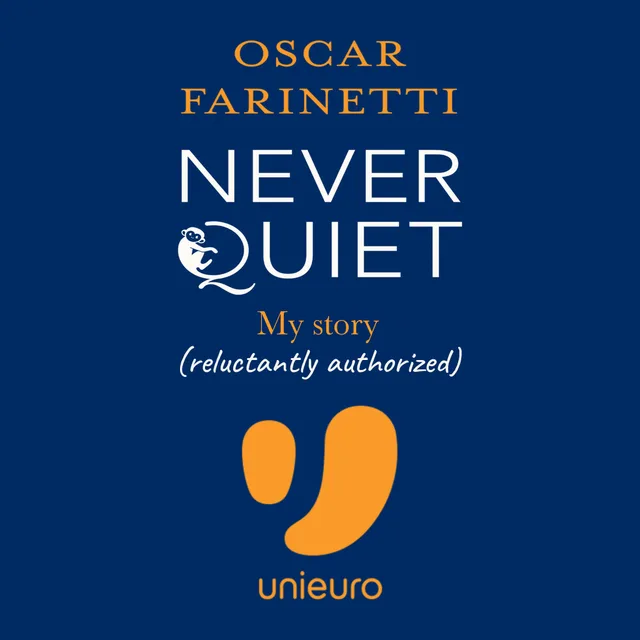
01 Intro
Marco, imagine a boy from the provinces, the son of a partisan, who as a young man ends up selling washing machines and fridges in the family business. What odds would you give him of becoming the king of home appliances in Italy?
Well, low, I'd say, partly because he started from a small department inside a hypermarket that belonged to his dad, which they had started together. So I'd say selling appliances in the provinces isn't exactly where great empires start.
And yet that's exactly where Oscar Farinetti starts. Today we all know him for Eataly, Italian food around the world, but before food there was another life, the one we're telling you about today: the birth of Unieuro, the biggest home appliance chain in Italy.
And the interesting thing is how he gets there, because one person on his own, with a single store, actually not even a store, a small department inside a big store, doesn't become number one.
Exactly, and that's the beauty of it. How did he do it? One move after another. Oscar turns that small store into Italy's number one giant, which in 2002 he'll sell to the British for hundreds of millions. But how he did it, we'll find out together today.
And as always, what we do is collect the pieces left along the road by people who, in our view, did great work in their lives, and we try to share with you ideas, principles and reflections that we hope can be useful in your life and your work. So welcome to In Buona Compagnia.
So, this book is a bit unusual because it isn't written in chronological order: it's split into two stories, the Unieuro part and the Eataly part.
And it's 500 pages, so it's a real brick. It took us a while to read it, also because we really wanted to understand every step, everything, because it matters a lot to us, so we really tried to understand as much as possible to make this episode. And I think we start from the beginning, so from the '50s, when the grandfather of Oscar's dad made bread and pasta, so the family starts with food, in Mango d'Alba. At 13, Oscar's dad (his name is Paolo, and in the book they call him the Commander, Commander Paolo)...
And we'll say why in a moment.
...carried on the family tradition by going to work as an errand boy in a pasta factory in Alba. Now that I read "errand boy" I think of Leonardo Del Vecchio, who also started out as an errand boy.
So he works with flour? Yes. This is interesting, I don't know if you noted it down: he, Farinetti, writes about how his surname came about.1
I don't remember this one.
Actually it's like this for everyone, and he writes: "The surnames we carry have a fairly recent origin, no more than four centuries, and they derive from the trade of our ancestors, mainly our great-great-grandparents." Why? Because among the poor, surnames came from nicknames. So Oscar's grandfather worked with flour, and in Piedmontese, in dialect, someone who worked flour was the farinè. Then Oscar describes how phonetics ran its course, the nickname shifted this way and that, and it turned into Farinetti.
02 The Commander: the partisan father who freed 17 men sentenced to death
But then what happens? The war came, and after 8 September 1943 his dad joined those young men who called themselves partisans. And here he writes something beautiful: "My dad's hardest feat was freeing, at night, from the prisons of Alba, 17 men sentenced to death who would have been shot the next day." "One of the most powerful memories of my childhood was of my dad. We'd walk through the streets of Alba and he'd be stopped and thanked, with emotion, by relatives or by the very people he had saved twenty or so years earlier. He felt like the son of a hero." It's lovely, though, to imagine the pride he has in his dad.
Because actually his dad first escapes to the mountains to join these partisans, then goes back to the Langhe and creates his own brigade, where he was the commander. And that's why in the book his nickname is the Commander.
So after commanding a brigade of almost 300 partisans, which is a lot, what does he do? He goes into business for himself and goes back to making what? Pasta. Exactly.
After the war, in the '50s, the pasta factory is born.
So Oscar is born among sacks of flour, semolina, tagliatelle, agnolotti. And he didn't see his parents very much because they were always working, but he writes that it was wonderful to see them in their rare moments of rest, tired and smiling. So I think he felt proud of that dad who had been a partisan and who now worked hard to give the family a better future. Then Oscar grows up and starts going to school. Now, we forgot to mention something here, which is actually very strange: this book is written by a little monkey, by his alter ego. Exactly, this little monkey that lives on his shoulder...
...and basically always tells him what to do. It's lovely, too. So this book is written by the little monkey, which means it's written in the third person. But it's really nice.
03 "Studying is important, perhaps more than anything else in the world"
So Oscar starts school and makes a very important reflection on studying, and he writes: "Studying is important, perhaps more than anything else in the world. It's the activity that sets humans apart from animals, for the pleasure of knowing. The best people are those who study for their whole lives, having understood that this kind of pleasure, unlike the others, grows with age. The problem is that most people see it as a duty that takes effort." And yet Oscar, even as a kid, was a little trader. In primary school he'd buy snacks wholesale from Ferrero and resell them at school. And here he writes: "naturally differentiating the prices according to the families' financial means."2
Now, who knows if it's true, if he really did it, but... I mean, in primary school... I mean, it's not just the fact that... but maybe it's also interesting that he grows up to be a good entrepreneur. I don't know if you're born that way or you become it, because it's still strange for a kid like that to already start trading...
04 "A friend is true when he too considers himself one to you"
...snacks. And the interesting thing is that he wasn't really a good student; he understands the importance of studying later, over time. But one important thing he really stresses is friends. In fact he goes on to write: "Having friends isn't compulsory, but it's indispensable for living with peace of mind. It's hard to stay balanced in solitude. Even if you have a good relationship with yourself, knowing you can count on a few true friends reassures you: you know there's someone walking with you." Now, I don't think they necessarily have to be just friends, it can be any other person.
And then he writes what we mean by a true friend, I mean, what we mean, and he writes: "A friend is true when he too considers himself one to you. In life you can find friends of various levels, starting with those you met on vacation the year before or that you keep seeing with pleasure. Then, as the bar rises, you reach a point where you can't go any higher: they're the friends you made as a child and that after 50-plus years you keep seeing and loving." Or also friends you made as you got older, but who still remain part of your life.
05 "You've studied, so you take care of this stuff here": the first day at Unieuro
We get to around the end of the Sixties. Oscar enrolls at university, in Turin of course, and signs up for economics and business. And this is where we find something, a factor that many of the entrepreneurs we've studied have in common. It's that, yes, he had enrolled in economics and business, but he says that maybe it would have been better to choose philosophy. So, as we saw with Marchionne and with Brunello Cucinelli. By then he was there, so he had decided to muddle through as usual. But here we're in the period of the Red Brigades.
The Years of Lead, so a very tough period. And the interesting thing is that at the same time there was Giorgio Armani, who was 41, and in that era of the Years of Lead, when Oscar was 24, 25, 26 or so, he launches Giorgio Armani. It's interesting how the different paths of different people...3
Exactly, because in the Armani episode we explained that he starts his company, then the Years of Lead arrive and he has to change everything, and so he starts to understand what people really needed, he starts producing in his own style, and it worked. Good, so he finishes university, and this is where we start talking about Unieuro. But back then Unieuro was nothing like the one we know today. Because he comes home and his father tells him: "Right, you've studied, so you take care of this stuff here." And that's how the Commander, Paolo, Oscar's father, welcomes him on his first day at the company, which was Monday 9 January 1978, at Unieuro. So the name Unieuro had been thought up by his father. And what was "this stuff here"? That stuff here was a small home appliance department, a corner of 40 square meters at most, tucked away in the Unieuro Market, where all the products with a plug were piled up. So taken and dumped there, where not much importance was given to them.
06 Why Unieuro is called Unieuro (and why it was born from coffee)
But Unieuro, do you remember it's linked to another of his dad's companies? Unieuro doesn't start as an appliance company.
Coffee, right?
Coffee, exactly. So his dad made pasta, and here he writes: "In Alba, in the big courtyard of the Maddalena in the town center, the biggest annual truffle fair was held. The town would later truly become the world capital of the white truffle. Oscar had convinced his father to rent a stand to promote Caffè Incantato." Because for a few years, in fact, the family trade had shifted from pasta to coffee. His dad Paolo thought the margins on pasta were getting thinner, while for coffee there was a new market bound to grow, with good profit opportunities. When he goes to register the new company, his dad chooses the name Unieuro: the packaging would say Caffè Incantato, but he wanted people to understand that the product came from someone who believed in a united Europe. So then he starts working for his dad, and we're in 1978.4
07 Dad loaded himself with debt, and in ten years he made it
But the leap, let's say, the big step Oscar's father takes, is when in France he saw the first hypermarkets, which didn't just have food but had pretty much everything, and he realizes they were the future. And in '73 he finds this field between Alba and Asti, and the idea was to build the first hypermarket there.5
Exactly, because in Italy there were no hypermarkets: the first hypermarket was Carrefour, which opened in 1963 near Paris. And so here he writes: "In 1973 Dad finds a large field near the state road that linked Alba to Asti and buys it, with the idea of building a 5,000-square-meter hypermarket on it as soon as possible. The goal was to draw in both the Alba area and the Asti area," about 200,000 inhabitants. This one's beautiful, I underlined this sentence: "He loaded himself with debt and it took him a decade," ten years.
"But in the end he made it." But in the end he made it. And in 1976 he opened a 1,500-square-meter supermarket, the Unieuro Market.
It's in this setting that Oscar starts working with him. And here he writes: "the hope that they would make it." Oscar understood right away that it was the main skill an entrepreneur must be able to show.
And in fact he writes: "After coming up with a project in step with the times, you then have to know how to create the right environment to make it work. Without harmony you get nowhere. You can have the best plan in the world in your hands, but if there's no esteem, no ability to reach compromises, no transparency and tolerance among those who work to make it happen, you'll blow it." But it's here that Oscar starts to cut his teeth, because he starts running a small space directly, dealing with customers.
Because he runs a small appliance space, let's remember that.
08 When Oscar falls in love with home appliances
And yet sales in that little 40-square-meter hole, out of the 1,500, were starting to pick up and sell more and more. And it ends up with Oscar falling madly in love with those contraptions that took the toil out of housework, and so he realizes that this shift to appliances wasn't just a passing thing, but that over time it would deeply change everyone's lives. And he writes: "Early in the morning he unloaded the wholesaler's truck, during the day he displayed and sold, and in the evening he went to deliver and install at customers' homes." At this point, at 24, a small interlude comes along for Oscar: military service, the naia, which he does in Fossano. But he wasn't very happy about doing military service, because he was strongly against the army. Because he writes: "The army's basic philosophy lies in obeying orders because they come from a person of higher rank. The meaning wasn't considered in the slightest: you were obliged to do that thing simply because someone who counted more than you had ordered it." And it's interesting how...
...two different people can love two different things. Oscar hates that environment, whereas Luca Parmitano loved that environment. It's really incredible.
Yes, Parmitano wrote that it was the academy that taught him discipline, respect, rigor. It's incredible.
And yet two great people who did completely different things.
But this interlude is nice, because Oscar writes that he had no income at all, just under 1,000 lire a day paid by the barracks, but he had a wife, he was married. And his wife was a substitute math teacher at the middle school in Alba, and she earned more as a substitute teacher than he did working at Unieuro. And Oscar writes: "I felt kept, I felt guilty for not being able to contribute to the family expenses." But little by little everything starts to change, because his military service ends and he keeps working. We get to the '80s.
09 Why non-food goes at the entrance, not at the back
So now his dad and Oscar are planning the hypermarket: how to build it, what to put first and what after. And here Oscar walks his dad through his reasoning about how the store should be laid out. The layout. Exactly, and he writes: "Listen, Dad, people will come for the food, that's natural. They buy it every week, it's the biggest part of the family shopping, and in our store it will take up two thirds of the space. But in my view, before reaching the food department, customers have to pass through appliances, hardware, stationery and housewares." "That way an impulse purchase or two is bound to slip through, while their minds are still free of the shopping list. If you put the non-food at the back, they'll walk past it without looking: they'll be tired, with a cart full to the brim, maybe with fresh products they can't wait to put in the fridge. We need to sell the non-food, where the margin is much higher. If we put it at the back, we can forget about it." So this is the idea of how to structure the hypermarket.
10 When the banks charge 25% interest
And then the big problem arrives: in 1979 bank interest on loans and mortgages shoots up to 15%, and in 1980 it goes over 20%, with peaks of 25%. So, in a nutshell, every year you had to pay back a quarter of the money you'd received while the debt stayed where it was. And here he writes that today, with rates like that, you'd go straight to prison for usury, but back then there was inflation and that's how things were done. So Unieuro goes into crisis: the income statement wasn't bad, because they were still selling, but the interest rates were too high.6
And it's nice because he writes: "We started feeling good after 5 in the afternoon, when the banks closed and stopped phoning us to call in the loans. The height of joy was Friday at 5, because they wouldn't hear from the banks all weekend." So in the first three years Oscar works alongside his father, I mean, it's really incredible, because not only does Unieuro make it through that period of crisis, but in the meantime the Commander's dream came true: the hypermarket. For 3 years Oscar never went on vacation and worked 7 days a week. Thanks to controlling waste, growing sales and the trust of suppliers, the banks' phone calls demanding repayment finally stopped. So much so that the Commander got new financing to expand the warehouse even further and make the hypermarket even bigger.
So when they finally open this hypermarket, the 5,000-square-meter one, in November 1983, they take in 136 million lire, more money than they'd ever seen in their lives. He writes: "Within a week, Unieuro's bank accounts, after such a long time, were back in the black, and they never went red again. The Commander had been right: a 4,500-square-meter hypermarket was a whole other thing. 1983 was a terrific year." What comes to mind now is that for that decade his dad was right, but now those markets are shrinking, because there are discount stores, you can buy online, so for that decade he was right. But now it's a whole other story, the market has completely changed.
11 What arrives 500 meters from the hypermarket: Magazzini AZ
But as we've seen in many stories, there are good moments when everything seems to be going great, and then another blow arrives. And this blow arrives in October 1984, so after they've solved the interest rate crisis: 500 meters from Oscar's hypermarket another one arrives, a competitor, and it's called Magazzini AZ. I'd never heard of it. Me neither. It was big, almost as big as Unieuro, but without food, just appliances and furniture, housewares, anyway the kind of thing that...
...Oscar was more focused on. And he writes: "Where Oscar displayed 30 televisions, they had ten times as many, and the same for washing machines and dishwashers. But the scariest thing," the thing that sent him into a panic, "was that they offered the public the prices he paid his suppliers, sometimes even lower." So Oscar goes back to the office, frantic, worried.
And the first thing that comes to mind is to send someone into Magazzini AZ to do a bit of spying, to see what the situation is. So he realizes what you said: if he had 30 televisions they had 300, they were showing off the Commodore 64 ahead of everyone, all new stuff. So he goes back to the office and starts tearing down all the posters, going crazy.
And he writes: "Then he ran into his office, his small office, and put his head in his hands. What to do?
12 "And what did you do when you found yourself in deep shit?"
A few days earlier Nicola had been born, his second son, an immense happiness, and instead he didn't even have time to rejoice, because this terrifying beast had come crashing down on him. He felt like he was dying." His father also rushed to his aid, because it could have been the end of Unieuro, and he says to his father...
"And what did you do when you found yourself in deep shit?"
"You didn't give up, did you?" Yes, and then he tells his partners: "Give me a few months, it'll be a war, David against Goliath."
And his dad tells him: "Good, let's go to war, we'll show that big brute, I've already got my slingshot ready." But Oscar writes that he faked the courage, because he was really scared and all he wanted to do was cry.
So what does Oscar do now? Right, let's see. Oscar's first move is to put the same price on all the common products. Even if he'd lose money on it, the first move? Even at zero margin or below zero, at least nobody could say Unieuro was more expensive. The second was to guard the department, trying to steer people who were asking around toward the products only he had, so where he had a bit of an edge, meaning Ariston and other brands that hadn't betrayed him by supplying the competitor, on which he could make a little money. And the third is to call in all the suppliers and ask for explanations. And here's the interesting thing: he now understands that he'd gotten a bit full of himself, he finds it out now, he discovers, he realizes how far he still has to go to become a good merchant. He finds out the suppliers had been screwing him, for years, charging him small-store price lists, while the other one, Magazzini AZ, was buying on wholesaler price lists. But he admits it, mea culpa, I'm an idiot, and yet he gets compensation, changes suppliers, and so he starts again. And here he writes: "He should have blamed himself instead of the suppliers. His father had always told him: on the purchase price, there's never a bottom." And this is a line he applies in the future too. So at first sales are a disaster, minus 60 percent.
But then, I think, it's minus 30, then minus 10, and little by little Oscar's defensive moves had withstood the blow. And so he stops chasing price alone and starts loading the products with extras. So, I don't know, extended warranty, discounted installments, free delivery and installation, showing himself to be more reliable than Magazzini AZ.
And sales keep rising, so by now appliances were more than 25% of Unieuro's revenue.
But the interesting thing is that he'd actually expected much worse, because Magazzini AZ, yes, was a competitor, but it had brought even more people to Castagnito, who then went to Unieuro as well.
13 The fake war: three years of simulated competition
And then what happens? The CEO of Magazzini AZ, whose name was Carlo Salvetto, gives up and asks for a meeting. And Oscar was thinking: "OK, maybe, I don't know, maybe he wants a ceasefire." But instead he had decided to sell. Before offering it to the highest bidder, he was letting Oscar know, in case he wanted to buy it.
But actually, technically, the only possible buyer was Unieuro. And so in the end he buys it for 100 million. And here it's interesting, this is really interesting, because he buys Magazzini AZ for 100 million, but he creates another company that he calls Magazzini AZ, and he didn't want them to have the same name and for it to become Unieuro. Because he writes: "I wanted to run the fake competition." And he writes: "For three years the two stores lived side by side, waging a very evocative fake war," because to customers it looked like a fight to the last drop of blood, and for Oscar it was complete harmony. Because what happened? Maybe customers would go to Unieuro, to him, he had a certain price, he'd offer them the product, they didn't like it, they'd go to Magazzini AZ and buy. But they didn't know that Magazzini AZ was Oscar's too, so he made money either way. And maybe he even did it on purpose: raising prices a bit on one side to push customers to go to the other side and buy.
So after the acquisition of Magazzini AZ and the successful integration, Oscar had already reached a prominent position in the company. Appliances were by now close to 50% of revenue, he was given a sizeable stake, and he was named managing director on an equal footing with his partners.
14 "Success bores me"
And here Oscar's little monkey writes. It writes: "That was when the first signs of a certain smugness showed in him, along with some signs of slackening. Mind you, he had worked himself to the bone and now he was enjoying the results." And the little monkey says: "Not me. The day after a success I've already forgotten it; more than that, success bores me. For me the enjoyment lies entirely in the risk phase, while I've always lived the moment of achievement as the end of the game."
And this partly answers the question you asked earlier: are you in love with appliances, or are you in love with building? So what he likes is the risk, creating something new and seeing whether he can take it to the stars. That's exactly why he's never satisfied. We're around the '90s, he goes to his dad and tells him: "Dad, I think we should sell the hypermarket and the coffee business too, to focus exclusively on appliances." And his dad answers: "Right now you're all caught up in electronics, you claim it will change the world, maybe so, I'll let you do it, but food will always remain the most important product in commerce. We can live without your video recorders, but if we don't eat we're dead. And remember that when economic crises or disasters come, the last sector to suffer will be food."
And here he writes that Oscar already had his answer ready, because his father had taught him a rule: "When you come to me with a problem, bring me your idea for a solution too." Because he had already found all the buyers for the hypermarket. So what happens?
In the end he sells it? Yes. Oscar is 35. He has a wife, Graziella, a son, she's pregnant again, and he describes it as one of the happiest periods of his life, partly because this is really lovely. Oscar writes: "Life is a film with a happy ending. The Commander, who grew up in a desperately poor childhood of rationed food, at 67 could finally catch his breath. A happy ending, Dad, you earned it." And this is even more interesting, because, as you said, Oscar had become CEO, managing director, but he still had shares in the company, which his father had put in his name, and at 35 Oscar could call himself a billionaire, in lire.
So what does he do? With half of the money he buys this beautiful house in Novello and restores it, and he put the other half into the new appliance company he was creating. So the first real Unieuro starts inside Magazzini AZ, their former hypermarket, plus 4 companies 50%-owned with other people, who ran 6 specialist stores under the Unieuro brand. Around forty billion in revenue in all, in lire of course. It came naturally to name Oscar managing director, because he was able to hold all these people together. In the following 12 years, until the final act in 2002, Unieuro would be a wonderful, as he calls it, hodgepodge, constantly expanding, destined to establish itself among Italy's leading companies. And here he writes that in Turin Oscar discovered something: where there was a higher concentration of inhabitants, even with wider competition and higher opening costs, there were better business prospects and customers who bought faster. And this, I thought, is that why there are 30,000 ice cream shops on one street, for this reason?
15 The leap: Oscar joins the GRE
Precisely because he's growing, Oscar joins a buying group. This is important, because it's what takes him to the next level: the GRE. So the GRE was a group made up of 25 appliance dealers from all over Italy, who basically had no premises of their own, no stores, but bought large quantities of products to resell to retail shops. So they didn't have their own stores, but they bought and resold.7
Why do you think it makes him take off?
What?
Why does this thing make him take off?
Because he starts having lots of connections and...
Yes, I think the book says two things in two different chapters, and I tried to connect them. Remember the chapter about Salvetto, Magazzini AZ, where suppliers treated Oscar like a small store, so he bought on the most expensive price list? With the GRE, so Grossisti Riuniti Elettrodomestici, United Appliance Wholesalers, he buys with the combined volumes of 25 operators, and so all of a sudden he gets much lower purchase prices. So I think that's exactly what it means: the ceiling of the small buyer's cost disadvantage disappears, and he can finally buy well and so have bigger margins. So at a certain point Unieuro has more than 20 stores. Revenue flies past 10 billion, and the wonderful hodgepodge of partners was more than a dozen. And Oscar liked having lots of partners: it was the fastest way to grow, and doing it as a pack was fantastic.
16 How to buy a company you can't afford
Then we get to the early 2000s, the late '90s, and this is really the leap, there's a real turning point in our story, because this is incredible: La Rinascente. I mean, when you think of La Rinascente you think of clothes, perfumes, that kind of stuff, and you'd never think of electronics, right? Well, between '94 and '97 La Rinascente had put Trony up for sale.
So the stores and the brand.
Exactly. Why? Because they had realized they weren't very good with appliances, they couldn't get a good margin on those products. So, in plain terms, you had to fork out 6 billion for the stores and the goods, plus 600 million for the brand. Unieuro was starting to do well, it was fairly solid. But the figure was too high. It was too much, it was really too much.
So what does Oscar do? He invents a path.
Because technically the deal is to buy the whole Trony group. So Oscar invents this path: of the six Trony stores in total, two were in Piedmont, two in Lombardy, one in Veneto and one in Campania. So the idea was to convince all the GRE partners, or maybe some of them, coming from all the regions, to each buy their own Trony store. Also because, remember, they had no stores, since they bought and resold. So we get to the moment of the sale. The problem is that a lot of people were interested in buying Trony, so there were many offers at once.
But meanwhile he had already convinced some members of the group to take part in the purchase.
He had gone to the meeting with Garbolino, who was in charge of selling the Trony group, and he knew he could present his offer, his plan, but he knew there were lots of other offers. So what does he do? He told Garbolino: "Look, my father taught me that when you buy, you pay, so I'll write you a check."
Because what happens first? You have to sign a preliminary agreement and then the board decides.
It analyzes, precisely because there are lots of offers.
Exactly, but he thinks ahead and does what he told you. But he can do it precisely because he's already convinced them. Exactly. So explain, what does he do? How interesting.
So he goes there and goes straight at him with the check. For 6 billion 600 million lire.
He had never written a number like that in his life.
So it's also thanks to the GRE buying group that he manages to buy Trony.
So this is also an advantage, which is why it also takes him to the next level. So what happens? This isn't written there... actually, I think it is. Then he goes back to the GRE, shows up with the Trony brand and says: "OK, now what do we do? Let's put the Trony brand on all our stores and create the first Italian specialist chain, and advertise it on TV." Why?
17 Why Italy had no number one
Because if you look at Europe, in every country except Italy there's a single company that establishes itself as number one. In England there's Dixons, in France there's Darty, in Germany there's MediaMarkt. Which in Italy is called MediaWorld. Exactly.8
But he writes: "Here in Italy we're victims of our provincial mentality. There's a common, fucking fear of sticking your nose outside your own territory. Today I'm the most aggressive one, but on my own it would take me too long. Meanwhile the Germans are advancing: before long they'll break through the Gothic Line, even if from the opposite side."
He has some GRE partners who take some of the stores, but some of these partners in the Trony group, who have some Trony stores, then go bust. Why? Because he decides to put the name Trony in giant letters on the signs, and underneath, in small letters, "Unieuro group." Because that "Trony, non ci sono paragoni" ("Trony, there's no comparison") was already being hammered home on television, whereas some of his partners in the South do the opposite: they write their own name big and Trony small.
The interesting thing is that the director of the GRE, Renato Piccini, convinces him to hand the Trony brand over to the GRE. Do you remember this? Yes: the brand isn't actually his, he buys it, but then he hands it over to the GRE for less than he had paid, in exchange for the right to open Trony stores anywhere in Italy, not just in his own region. So he sells, he buys himself a Trony brand, he sells the Trony brand for less so he can open lots and lots of Trony stores.
But the point is that precisely because the others get the strategy wrong, in the end he'll be the one who represents the Trony brand. In fact he writes: "Many entrepreneurs fall too much in love with their own name, and that is sometimes a huge limitation." So he starts to grow, he starts opening lots of Trony stores.
And in 1999 there are 60 Trony stores, and revenue is approaching 500 billion.
18 How the idea of Eataly is born: Slow Food, the KaDeWe and the Grand Bazaar
But this is where, little by little, our story starts to change face, because little by little we're getting close to the end of Unieuro and the birth of Eataly. Because thanks to Unieuro, to Trony in this case, he starts traveling up and down the peninsula to open lots of stores, and he loves eating, he loves drinking, so he starts doing lots of food-related things around Italy. And little by little he starts having this small idea of Eataly, but it's still very primitive.
And he writes: "Three years earlier I had been to Slow Food's Salone del Gusto in Turin," this is a beautiful story too, I think, and I think we'll tell it in the next episodes, "something completely new, and I had been amazed. But why does something like this last only a few days?" Then every year he had lunch on the food floor of the KaDeWe in Berlin and went crazy for that beautiful way of combining a market and a restaurant, so the idea itself was already there. Then there had been the big visit to the Grand Bazaar in Istanbul, that miraculous survival of an ancient trade.9
And so at that moment everything blends together, partly because he writes that as time went by he was getting a bit bored and he could also see the margins...
...collapsing.
Collapsing. And so maybe he starts thinking: maybe I'll do something else.
It's what he said earlier: he craves the privilege of risk, and then when success arrives, of course, it's not the same thrill anymore.
In fact he writes: "Add two factors, also connected." Here it's still the little monkey talking. "Oscar was very worried about the falling margins on new electronics products, and he had sensed that his sons imagined working with him in the near future. In July 1999 all these elements together suggested that the time was coming to change trades, to invent a new one. The shape was still embryonic, but there was little doubt about the sector. Food." The interesting thing here? That he invents a new trade for himself. I mean, it's incredible, I mean, for me it's really interesting: out of nothing he creates something new that didn't exist before.
19 "I want the washing machines to wash"
But before all this, when I read it I cracked up, before all this comes the last Trony, and the last Trony is in Rome. This story is incredible. So, first of all, a bit like IKEA stores, they're not in the city center, they're on the outskirts, often near the ring road. That's exactly what he does in Rome: he builds it near the Grande Raccordo Anulare, Rome's ring road. And with this last Trony he really wanted to break through every frontier, every boundary, every limit, and create a display, signage worthy of the name. And he writes: "We'll build the first store in the world where all the appliances are alive. I want the washing machines to wash, the fridges to refrigerate, the stoves to cook, the irons to iron, the vacuum cleaners to vacuum, got it? Everything on display in the sales area has to work. I want our customers to try the experience before they even buy." And in fact the opening, in December 1999, is insane, total madness. And that's why only three days after the opening the Rome police headquarters arrives and seals the Trony shut. Because what happens? What happens is total chaos, because once again the marketing is phenomenal. Rome's ring road is jammed toward the exit for the Trony, and people stop, leave their cars on the ring road and get out on foot to go and shop at the Trony. And this, this is even crazier, because he writes: "A radio announcer inside the Trony, well briefed by Oscar, every so often would start up and say: ladies and gentlemen, hurry to the microwave department, for the next fifteen minutes an extraordinary 20% discount," so everyone would rush en masse to the department. He writes: "That wasn't a store, it was a party, it was an immense, wonderful mess." Exactly what he wanted. But they shut it down for a while, partly because he doesn't have the license. The fact is he wanted to open it for Christmas, and in the end he opens it for Easter. But still, in its first year his mega Trony in Rome takes in 102 billion. Right, we're getting toward the end of this chapter, and now Oscar has something else in mind.
20 The three moves to leave the GRE and sell Unieuro
He wants to sell Trony and create Unieuro, I mean, push on with the last... Interesting how first he buys Trony, puts it on the stores, Trony, and then he wants to sell Trony. Why does he want to do this?
Because, from what I understood, he was fed up with having a shared brand and wanted one of his own?
Yes, but also because, from what I understood, and I'd love to ask Oscar about this, now his stores, so Unieuro, OK, let's call it Trony, but still part of Unieuro, were the most profitable in Italy. So now he was the one pulling the group along. It no longer paid for him to stay... Exactly, it no longer paid, because if a big company like Dixons comes to Italy and wants to buy Unieuro, it's better for it to buy Unieuro on its own than the Trony brand, which is shared with all the other small stores, which are nothing compared to the powerhouse Unieuro had now become.
So?
And so here he writes, so, he thinks of three moves. The first was to leave the buying group, the GRE. And he writes: "By now Unieuro's revenue was close to half of the whole GRE. The other 24 companies looked very small and local next to the Piedmontese giant, and by now it had very different needs." Oscar wanted to do it in harmony, so he would have to give up the Trony brand, which, even though he had brought it in, now belonged to the Grossisti Riuniti.
Then move number 2: relaunch Unieuro as a national brand. Change all the shop signs, because, and this is interesting, a future buyer wouldn't have liked a shared brand, nor would it have needed to belong to a buying group.
But the interesting thing is that, I mean, relationships really do build the world. He manages to take this leap, I think, from what I understood, thanks to the wholesalers. Because with the wholesalers he gets the best prices, he has extra margins. With the wholesalers he has the chance to buy Trony, because he couldn't buy Trony on his own, so the various partners buy Trony, he sells Trony to the wholesalers, and then he manages to put Trony on all the various stores, all these wholesalers, the small stores too. Revenue grows, he believes in Trony more than other people do. Trony, which is part of Unieuro, becomes huge, so its revenue is higher than all the other Trony stores. And now he thinks: OK, maybe I want to do something else, I have to sell, but a buyer wouldn't have liked a brand that was shared, it would want a brand that belonged to just one owner.
And so now he takes the next step, which is move number three: find a buyer.
Exactly, so get out of the Trony group, take back his own brand, and then find the buyer.
21 "Gianni, optimism is the scent of life"
Right. Now comes, once again, the most important part for Oscar, the part that really matters most: marketing. So he has to break away from Trony, which is still that "Trony, there's no comparison" being hammered home on television. He has to break away and create a new catchphrase. So the first step is the Unieuro TV commercial, where he writes it with a capital U and a capital E, UniEuro, to stress even more how unique Unieuro is. And he writes: if you want to make a strong impact on the first try you have to hire a very well-known and well-loved celebrity, like Raffaella Carrà or Pippo Baudo, but it costs a fortune. And the one he manages to find is Tonino Guerra.10
Yes, who wrote those films with Fellini. Anyway, it's lovely that actually he couldn't afford him either, but he pesters him so much, rings his doorbell so often, every day, until he convinces him. And he writes: Oscar took a room in a guesthouse in the village where Tonino lived, and went every day to ring his doorbell, until he convinced him.
I'll read this, though maybe we won't keep it in. Because Tonino answers him: "I give myself to you like a whore to her client; still, I like this desire of yours to put a little poetry next to your trade of filthy merchant." Because the idea was to talk about optimism. So the commercial: Tonino talks on the phone with an imaginary friend, Gianni, who is deaf, which is why he shouts. And that's how the catchphrase was born: "Gianni, l'ottimismo è il profumo della vita" ("Gianni, optimism is the scent of life"). So the Unieuro brand is finally freed from Trony. And thanks to Tonino Guerra that commercial starts being hammered home too, because Oscar spends an enormous amount of money, buys airtime everywhere, on Mediaset, on Rai, and little by little Unieuro, with its commercial, takes off again.
And so who shows up? Just as he had predicted. Dixons shows up. Dixons shows up, which was the company, a group of 1,440 stores across England, Norway, Sweden, Greece and Hungary. Excellent profits and good quality. And he thinks: what's the price, what's Unieuro's price? It's what he likes, throwing out really high figures, and he writes: "In my view Unieuro is worth a thousand billion."
22 What is a company worth? The past, the present or the future
And here he writes: "Setting the value of a company is like using a video camera to film a person in a room, behind a pane of glass. You can focus on the glass, or on the person behind the glass, or on the person with everything around them." "There are companies that are worth something because of their past. Great, but the buyers will have to invent the future. Others are worth something for the present, with a simple multiple of current profits. But there are also companies that are worth something for their future, which, starting from a healthy and already well-defined present, is easy to carry forward. Those are the ones worth the most. We have to justify our value by grounding it in the future." This one is a very interesting reflection. And so the CEO of Dixons, according to Oscar, shouldn't have been scared at the idea of shelling out around 300 million pounds. And yet he said: "It's really too much." And for the rest of the lunch, because they meet over lunch, he said very little. Oscar had almost convinced himself that he had lost the deal, when that big Celtic man, before they said goodbye, announced that he would send his head of development, Stephen Carroll, to look into it further. When Stephen arrives in Italy, Oscar realized that British companies played a different game. For British companies what counted was the price, the numbers counted more than the people, and even when assessing growth opportunities only the return-on-investment calculations counted, not the prospects as he saw it, the future and all those things. So what happens? Dixons is persuaded to buy, in August they sign the preliminary agreement, and then what happens? 9/11 happens. And with a short phone call Oscar realizes it couldn't be done at that price.11
Also because there was a clause Dixons could use to pull out in the event of a catastrophic incident.
And right then, 9/11 happens.
Yes.
Crazy. So 9/11 happens. And what happens? What happens is that Stephen stays in Italy and agrees on a gradual handover. Because what they want to make sure of is that if they pay all this money and the world collapses, they're basically done for, so they want to do it in gradual steps. So what happens? After four months, in January 2002, the British will come in with 20%, in November they'll buy the remaining 80%, and so they basically close the circle. But in the meantime Unieuro had become even stronger, with an even bigger brand. The only thing that changed is that the number Oscar wanted became much, much smaller. The book doesn't say, but I looked it up, hopefully it's right: Dixons pays about 368 million euros, so 230 million pounds, for Unieuro, which had more than 200 stores. So he wanted 500 million euros or dollars, anyway, converted into lire.
A much bigger number.
A much bigger number. Then I connected another thing that comes later, in the Eataly part, but I think it belongs here: after he sells Unieuro, Oscar has plenty of cash, and so he decides to invest a million dollars in setting up a school of Carlo Petrini's. Do you remember that part?
23 "Copy, don't imitate": the Guggenheim lesson
He invests a million in the world's first university of gastronomic sciences, in Pollenzo, which is a village at the foot of the Langhe.12
And here there's an important thing I wrote down. The school was basically designed to train a new generation of gastronomes, so new young people with Italian culture at heart. And Oscar invests a million dollars, but running a school at that level took much more money, so here too he has to come up with something. And what does he do? One day he goes to New York, because at that time he was opening Eataly, we'll tell that story later, he goes to the Guggenheim, the museum in New York, and at the entrance, next to the reception desk, it says "Global Partners," followed by a list of about fifty very well-known multinationals, Samsung, JP Morgan, Lavazza, and underneath an explanation: "These are the private companies that support us; they give us a lot of money because they believe in the importance of offering humanity the enjoyment of great art. We try to repay them by committing to be ever more efficient and by listening to their advice." And finally an astronomical figure for how much all these companies donated to the Solomon R. Guggenheim Foundation. And now Oscar thinks about it, and he thinks of something that is basically his creed above all. Do you remember what it is? That is: copy from the best. And here he writes: "Copy, don't imitate. For me, copying means discovering in another person or another place a talented idea that you can successfully transfer into your own project. Copying the essence, adapting it to your concept." And that's basically what he does. "Global Partners" becomes "Partner Strategici," strategic partners. "Listening to their advice" changed into "making them part of the strategies." "Offering humanity the enjoyment of art" turned into "creating the new gastronomes of the third millennium."
Right, the next step is the birth of Eataly, but we decided to do it in the next episode, because it's really a completely different story, full of things to study, to tell, to analyze.
And we'll leave you with this. He's at the seaside with his wife, and an idea pops into his head, a crystal-clear image. It would have been a very simple drawing, so he asks for a blank sheet of paper. He had improvised a ruler out of a volume of the civil code and a compass out of a two-euro coin, and he had set to work.
Right, thank you so much for making it to the end of this episode. We'll see you very soon with the next episode, on the story of Eataly. Don't forget: if you got curious or learned something new, subscribe, comment, leave a like, it helps us enormously. We also have our website, inbuonacompagnia.com, which you can visit to see our whole educational collection. We also have the newsletter, which you can sign up for to receive deep dives we didn't cover in the episode. And as always, see you at the next story, in this case to tell you the story of Eataly.