




01 Intro
But among all of humanity's mysteries, there are some that have stayed open for thousands of years. For example, what are humanity's biggest mysteries?
Well, how the world was created.
The universe, how our mind works. And then there's one that I honestly had never thought about, which is time, which seems like the simplest thing in the world, but actually...
It isn't.
It isn't, and it may well be the most complicated of all.
Also because it doesn't work at all the way we actually expect.
And if you think about it, in everyday life time is trivial. There's a present, there's a past and there's a future. But what if it isn't like that? What if time isn't the same for everyone? What if it flows differently depending on where you are? And what if the present, the past and the future aren't what we imagine? Before we start, there's a passage here that made me stop and think for a few minutes when I read it, also because this episode, I have to tell you, literally consumed me. It consumed me because it's not easy.
No, it's complicated, super complicated.
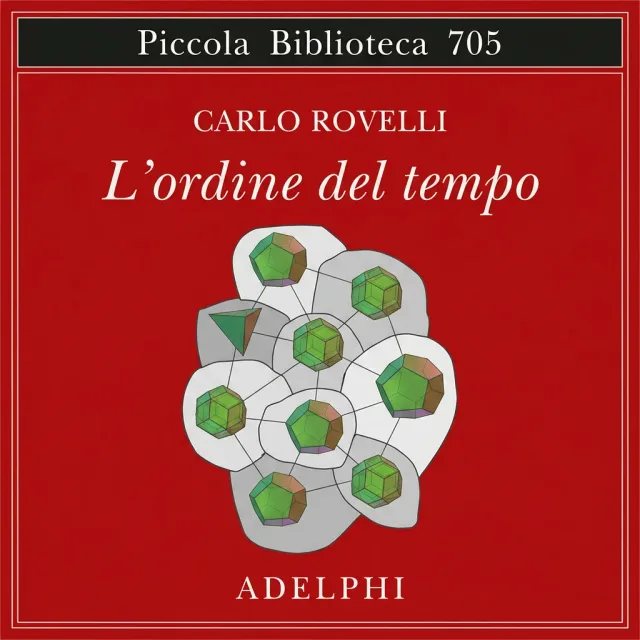
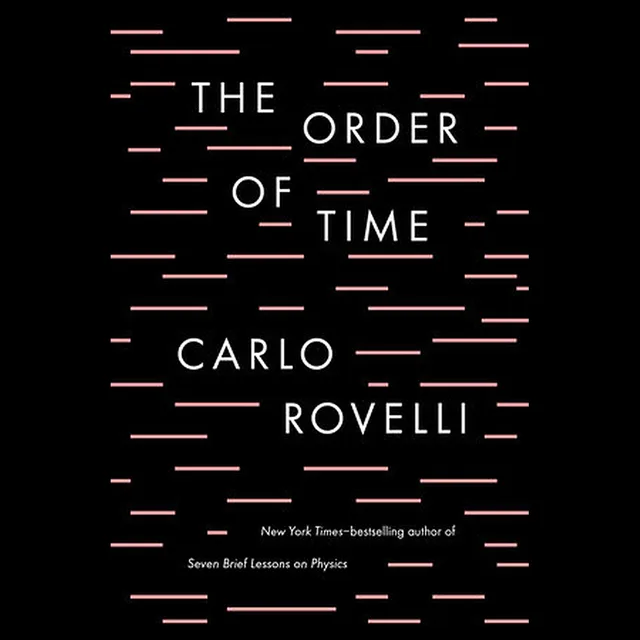
It literally consumed me, I mean some nights I went to bed thinking about this book. Anyway, there's this passage, and he writes: "We think of time as something simple and fundamental, that flows uniformly from the past toward the future, measured by clocks. In the course of time the events of the universe follow one another in order, past, present and future. The past is fixed and the future open." Simple, right? And he writes: "Well, all of this has turned out to be false." And when I read it I thought: false? All of this, false? Well, in this episode of In Buona Compagnia we dove into what I think is the most complicated book, or anyway the most complicated concepts we've ever read, which I think are also the most fascinating, and we dove into the book called The Order of Time, by Carlo Rovelli, one of the most important theoretical physicists in Europe. For anyone who doesn't know who Carlo is. Carlo is a theoretical physicist who has spent most of his life working on loop quantum gravity, a frontier theory of modern physics that tries to unite Einstein's relativity with quantum physics, with quantum mechanics, exactly. But before we start I wanted to say something, because we want to be honest from the start: these things are extremely complicated, really hard, so we're giving it a go, but if we make mistakes, and I think we will,
Yes, let's say these are really complicated concepts.
And Carlo himself tried to simplify things.
But the book is complicated all the same.
Exactly, and we can't turn ourselves into quantum physicists in three weeks.
But we did try to understand it, and here we are.
Exactly, if we make mistakes we apologize in advance, but we hope to pass on to you at least a fraction of what Carlo passed on to us.
02 "Everything you know about time is wrong"
So, I'd start with one of the first lines of the book. And Rovelli writes: "I stop and do nothing. Nothing happens, I think of nothing. I simply listen to the passing of time. This is time, familiar and intimate. Its swiftness carries us. The rush of seconds, hours and years that hurl us toward life. And then drag us toward nothing", that is, death. Is it really all like that? In reality, time works completely differently from how it appears to us. And he writes: "The nature of time is perhaps the greatest remaining mystery, and it is tied to the other great open mysteries. The nature of the mind, the origin of the universe, the fate of black holes and the workings of life", as you were saying.1
03 Why time flows differently in the mountains than on the plain
So in everyday life it's really simple to say there's a present, there's a past, a future. My time flows the same as yours, and at the same pace. And I think the hard thing about these topics is that it's so hard to imagine an enormous scale. I mean, it's so hard to imagine these things because they're not things you can see; it's not like a book, which you can see and say, OK, this is a book. So these are things you can't picture, and that's why they're so hard to understand. And the incredible thing is that for thousands of years humanity had certain certainties about how the world works, or at least it thought so, as in: well, obviously the Earth stands still; if it moved, what an upheaval, can you imagine! It's obvious that time is the same for me and for you, and instead none of this is true. Carlo makes us see that all these things are just prejudices; they seemed so obvious that nobody thought to question them. And I tried to imagine how many things we take as reality today only because we're not smart enough to see the real reality. So Carlo is telling us that time, the way we experience it, is one of these prejudices, because it doesn't work the way we really think. And here he makes a point: if you leave now and go to the mountains and I stay here on the plain, time flows differently. If we then meet again in thirty years, the one on the plain has lived slightly less than the one in the mountains. And it's one of the most solid discoveries of twentieth-century physics.
And the difference is actually really small, but it can be measured with atomic clocks. And it's nice, because the one in the mountains has more time, so he ages faster, simply because of the altitude, because he's farther from the center of the Earth. So technically time flows differently for my feet and for my head, because my feet are closer to the center of the Earth and my head isn't.2
04 How Einstein explained gravity without a force
Like you said, in everyday life the difference is fractions of a nanosecond, you don't notice it, but it's real. Now, why does this happen? The answer comes, once again, from Einstein, who in 1915 arrives with his General Relativity.
The interesting thing is that Einstein understands this before there were even the instruments to measure it. And here Rovelli writes: "The ability to understand before seeing is the heart of scientific thinking." So Einstein wakes up and asks himself this question. We've all studied the force of gravity. For example, how do the Sun and the Earth attract each other through the force of gravity? I mean, if they don't touch and there's nothing in between, how do they attract each other? Newton's answer up to that point, Newton being the one who came before Einstein, is that there's this mysterious force of gravity that acts at a distance. And so the two bodies, the Sun and the Earth, attract each other. Fine. But for Einstein this theory, this story, wasn't enough. Because how can a force act through nothing?3
So he gave himself a different answer. That is, that there's no force at all. Masses, so in this case the Sun and the Earth, deform the space around them. And objects simply follow this deformation. So, a visual example. Take a sheet of fabric. You spread it out nice and smooth, nice and taut. You put a bowling ball in the middle. What happens to the sheet? It deforms, it sags downward. Fine. Then you roll a marble onto it. The marble follows this deformation. It goes toward the big object, toward the billiard ball, or rather the bowling ball. Well, it's the same with the Sun, which is the big mass, the central one, and the Earth, which is the marble. But why doesn't the Earth crash into the bowling ball? It's the same thing we talked about in the Samantha Cristoforetti episode: the Earth is fast enough to keep going around and never fall toward the Sun. So in reality there's no force at all, it's simply masses deforming spacetime.
It's not only space, but time itself. It's called spacetime, the gravitational field. So if this mat is spacetime, putting such a big mass in the center curves not only space but time itself. What does this elastic do? It closes in more and more, little by little, so the gravitational field is less near the mass, because it's more constricted. Whereas this elastic is wider at the sides. The further I go along this elastic toward the center of the Earth, so where it's more constricted, the less the gravitational field, and as a result time flows slower there. Far from the mass, time flows faster.4
A practical, everyday example is satellites. Satellites travel at an altitude of 20,200 kilometers, and their atomic clocks gain about 38 microseconds a day compared to Earth. It seems like nothing, but if these differences weren't corrected, after just two minutes your GPS would start getting things wrong, and the errors would build up at a rate of 11 kilometers a day.5
I think.
05 Anaximander and the fragment that gives the book its name
One of Carlo's great loves is Anaximander. Anaximander is a Greek philosopher who lived about 26 centuries ago.
Who 26 centuries ago had already understood that the Earth floats in space, resting on nothing, let's say.6
Because the prejudice about the Earth was that it instead... rested on something, the back of a turtle, the shoulders of Atlas.
The only fragment left of his writings is this: "Things transform into one another according to necessity, and render justice to one another according to the order of time."7
Go on, let's try to decode it piece by piece.
So, why is this interesting? It's interesting because the whole of our current, modern physics is the science of how things evolve according to the order of time.
But let's analyze it step by step, because it's the heart of this book. What does it mean that "things transform into one another"? For example, let me think: water becomes vapor, vapor becomes cloud, cloud becomes rain, rain becomes river, river becomes sea. So it's a continuous transformation; things transform into one another, they're not static. It's not static, water isn't static, it doesn't just stay there forever. "According to necessity", so things transform into one another according to necessity. What does "according to necessity" mean? That water, when you boil water, the water doesn't choose to become vapor. And then the phrase the book takes its name from: "render justice to one another according to the order of time". What does it mean? I think it means that boiling water becomes vapor, it doesn't become earth, it doesn't become light. So there's only one possible direction, and the order matters.
06 Proper time: everyone has their own clock
OK, but earlier we said there's our friend who goes to the mountains and our friend who's on the plain, and we said time flows differently. The one in the mountains ages faster, the one on the plain ages more slowly. Fine. So those are two t's, two different times. But which is the right time? There is no right time. The guy in the mountains has his own time t, the guy on the plain has his own time t. And this is where we get to proper time, that is, time measured along a particular phenomenon, so in this case the guy in the mountains and the guy on the plain, and so there's no right time. There are two times. Period.8
So there's no global time. There are infinitely many. There's a different time for every point in space. In this room there are infinitely many times. It's a crazy thing to imagine: a different time on the ceiling, a different time on the table, a different time...
Even between you and me, for example, because right now we see each other as, how can I put it, level, but maybe one of us is closer to the center of the Earth, so one of us is aging faster.
Yes, and proper time, the way I pictured it, we each have a different time of life, even if we're at different distances. Your proper time is different from my proper time. Because proper time, from what I understood, is a crazy thing. Metaphorically, the way I pictured it, everyone in this life walks around with a watch on their wrist, OK? Not a physical watch, but a metaphorical watch that marks your proper time. That is, a continuous record that always travels with you wherever you go. Like I said, it seems strange, but right now, as we're recording this podcast, you have your watch and I have mine, and that's what's called proper time. My proper time is different from yours because it's the total accumulation of time along the entire path of your whole life. You went to the mountains, you went on a plane, I did other things, I went to the plain. I mean, time itself: everyone has their own proper time. Because if I go to the mountains, mine goes up a tiny bit compared to yours, since you're somewhere else. The two times of two people are, in themselves, completely different, and they'll stay different forever. An interesting thing is that an astronaut who spends six months on the space station comes back to Earth about 5,000 seconds younger than those who stayed behind. An airline pilot with a 30-year career builds up tens of nanoseconds of difference compared to someone who stays on the ground. We're talking about nanoseconds, so it's imperceptible, but the physics is real. I made a connection with this, with a phrase I hear often, which is: "I'm behind in life". But if you think about it, it makes no sense. When I say "it's 20 degrees in this room", you can measure it. There's the thermometer, there's the line of mercury, it's 20 degrees. But if I say "I'm behind compared to that person", what does that mean? Behind compared to what? And here I wrote: so it assumes there's a common timeline, the same for everyone. So the same track, the same time, along which everyone is supposed to be at a certain point by a certain age. But that track, that shared time, this timeline that's the same for everyone, doesn't exist. If you think of a hundred runners in a marathon, all on an oval track, it's easy to say who's in front and who's behind. But if the people in this marathon take different roads, one is in Alaska, one is in the Sahara, you can't say who's ahead or who's behind, or who's last, who's in the middle. There's no single track. The interesting thing is that not even clocks have a single track. If you take two atomic clocks, one at NIST in Canada at 1,700 meters, where time flows faster, and one at sea level, you can't say one is ahead of the other. From NIST, the sea is behind; from the sea, NIST is ahead. Both are right, each relative to itself. So when a person says "I'm behind", you're assuming a common track that doesn't exist. So imagine, if not even clocks have a common time.
Let alone human beings.
Exactly. So a person is neither behind nor ahead; they're in their own proper time.
OK, so time, as we were saying, has lost its first layer, that is, its uniqueness: it's not the same for everyone. For us, past and future are two completely different things. So causes come before effects; the glass breaks into a thousand pieces, and the thousand pieces don't then come back together to re-form the glass. So we can't change the past, which is why we can have regrets, remorse, happy memories. The future, instead, is uncertainty, desire, restlessness, so everything we know. So time isn't a line with two equal directions; there's an arrow from the past to the future.
And that's the thing that really interests us about time. Whether time flows faster in the mountains or on the plain...
By nanoseconds, big deal.
And the thing I really love about this book of Carlo's, anyway, is that he applies physics to our lives. When you study physics in high school, you study physics for an exam. I never got passionate about physics because I never understood why I should study it. But when he applies physics to your real life, to understanding yourself, then it's a beautiful game, it's the most beautiful thing you can do.
Also because physics, and mathematics, is the only way we have to communicate with nature. So, like I was saying before, the Big Bang. How can we relate to the birth of the universe? Like we were saying before, with quantum equations.
So this is what interests us: the flowing of time, the fact that in the end we'll be sand. And this flowing of time from the past to the future is what really interests us.
07 When the equations of physics don't tell past from future
So, we were talking about past and future, this distinction. Well, a few seconds ago I said that physics, and mathematics, are the only way we have to communicate with nature. Well, but in physics this distinction between past and future doesn't exist. In all the equations, from something as simple as uniform circular motion to Newton's equations or Maxwell's, this flowing of time, this difference between past and future, doesn't exist?
It doesn't exist.
In the sense that they're interchangeable, I mean I can go forward and I can go back, there's no such difference.9
It doesn't exist in the elementary laws of physics.
Exactly. The only field, the only equation where there is this difference, the past and the future, meaning that an event happened, boom, that's it, I can't go back anymore, is when we talk about heat.10
08 The ball in space: the film played backward
OK, but I'd stop for a moment and look deeper, because past and future don't exist in the elementary laws of physics. This is an important concept. For us, locally, in our present lives, past and future exist, but globally, in the great vastness of the universe, in the elementary laws of physics, there's no difference between past and future. Let's go deeper here. If, for example, we take Newton's formula, force equals mass times acceleration, we all know it, and we take a little ball and put it in absolute space, OK? This ball: there's no friction, there's no air, there's no force at all. With this formula, force equals mass times acceleration, you can calculate the position of the ball at any instant. If you replace time with, say, 5, you get where the ball will be in 5 seconds. If you replace time with minus 5, you get where the ball was 5 seconds ago. So in the elementary laws of physics, whether the ball is going forward 5 seconds or going back minus 5 seconds, it works. And what I pictured is that if you look at that ball, you film it, you can't tell whether it's past... you can't tell...
Whether the film was shot while the ball was going backward or forward.
Now let's try something else, and let's connect it to heat. Now we take that ball and put it on this table here. We push it, the ball rolls and then stops. If you watched the video backward...
The ball... It makes no sense! No.
09 Entropy: the heart of it all (and counting the cards)
It makes absolutely no sense. And why does this happen? The answer lies in heat. In this case the ball creates friction with the table, which produces heat that dissipates into the table.11
The point is that the world isn't made of isolated balls in space, OK, but of billions of molecules bumping into each other all the time, and when there are billions of things mixing together, something happens that could never happen with a single ball in space. And this thing has only one name, which is the key to all of this: entropy. So the question is, if there's no difference between past and future in the elementary laws of physics, why do we feel it, the past and the future? Interesting question, right? Why do we feel the past and the future? Now, this explanation of entropy isn't the most complete in the world, but what we're trying to get across to you, what I'm trying to get across in my own head, is why we feel the difference between past and future.12
So, to explain entropy, the definition I wrote down here, which we're going to analyze, of course won't make sense when I say it to you, but we'll analyze it and then it will make sense. Entropy is the count of how many different microscopic configurations are compatible with the macroscopic description. It makes no sense. But let's try to analyze it, because entropy is not only what fuels all of life, it's what makes us understand the difference between past and future.13
So, if I take three cards, A, B, C, OK? How many configurations of these cards are there? Six. Six configurations. ABC, BCA, CBA. Six configurations. Now, you can't see them, and I tell you, I describe them to you. The deck is in alphabetical order. How many arrangements of these cards ABC are there?
One.
Just one. The one where they're in alphabetical order. Then I tell you: the deck is not in order.
There are five others.
Five others, OK? In the first we have one configuration, in the second we have five configurations. Now let's move on and scale this up: we have 52 cards. We shuffle them all and put them on the table. How many configurations are there where they're all in order? Just one. How many configurations are there where they're all mixed up? A huge number.14
Now, instead of talking about cards, let's try talking about molecules. Let's take the case of wood. Now we have the ability to see not the wood, we have a telescope, a microscope, and we go and look at the molecules, OK? But we have two examples, and we compare them. We have wood that's just sitting there and wood that's burning, OK? In the first case, when the wood is just sitting there, the molecules are still. Yes, exactly. How many configurations of the molecules are there? A huge number. There are a huge number of configurations. But then we light it, we set it on fire. In this case, is the number of arrangements of molecules higher or lower than before?
It's higher.
It's higher, exactly. Because there's a continuous mixing of molecules, OK? Just like the cards. If we count the configurations of the wood sitting there still, there are a certain number. If we count the configurations of the molecules when it's burning, there's a different number. So entropy is the count of how many configurations... are these molecules macroscopic or microscopic? Microscopic. So how many different microscopic configurations are compatible with what?
With your, with what you see.
With my macroscopic description of the world. When I say "hot", what's my description? So I say "hot". What is it?
That it's hot.
That it's hot. How many configurations are there in that piece of hot wood?
Lots.
Lots. Whether it's cold or hot, there are various microscopic configurations. We're talking about high entropy and low entropy, so high configuration and low configuration, when we make a comparison.
10 How the Big Bang explains the arrow of time
So what does entropy have to do with the flow of time? That, as you were saying, first the wood is sitting there, still, so it's low entropy, then I light it and the entropy grows, because it's disordered. Fine. So low entropy equals the past, high entropy equals the future. Fine. Now, let's think about the universe. The universe, in the past, was more ordered than it is now. Why? Let's think about the Big Bang. So there, at the Big Bang, entropy was extremely low. Because the universe was there, at that moment, in that state, extremely ordered. Because it was only there, in that one place. It wasn't spread out across the whole universe. Fine. Then, over time, with all the reactions that happened, and everything else, entropy went up because the universe... and that's the future.15
At the beginning, when you said everything was calm and in order, we can really picture a soup, all calm and all in order, OK? In that case, the molecules, the microscopic configurations of molecules, how many are there? A thousand! There isn't even a number for it! But then, over time, what happened? Galaxies. Destruction. Death. Black holes. So how many configurations were there in that case? Far more than before. So entropy in that case, which again we can define as the count of how many different microscopic configurations are compatible with our macroscopic description, increased. Because before it was a primordial soup, and now it's basically total chaos, so entropy increased. It's the same when we have a piece of wood: with fire the entropy increases, because there are more configurations.16
Now, the question is: but why can't we go back? Why can't we go back from the fire, to the heat, to the wood sitting there still?
11 Why we can't go back: the near-zero probability
Let's take the example of the deck of cards again, which is easier, after all. So it's well established that if I take a new deck of cards and shuffle it, the chance that after shuffling I end up with exactly the same deck is one in 8 times ten to the... to the 67th. So technically, if we said that entropy is the flow of time, from an ordered event to a disordered event, you can go back in time. And technically, that's how it is. So there's no law of the cosmos that says this isn't possible, going back in time, going back in entropy. The problem is that the probability of it happening is so absurdly small that it's practically zero. So it's not zero in the mathematical sense, but zero in the statistical sense, in terms of probability. So the probability that a broken glass puts itself back together, OK, or I'm smoking a cigarette and then the smoke goes back into the cigarette, the probability is there, but it's one in... And this probability is infinitely smaller than the probability of winning the lottery a thousand times in a row. And waiting for the entire life of the universe, so fourteen billion years, I wouldn't see it happen. And I wouldn't see it even if I waited a thousand times the life of the universe, so a thousand times fourteen billion years.
12 "Entropy exists only for us, because of our blurring"
So entropy describes, it's the only law in physics that describes that the past and the future exist, right? I mean that there's only one direction of time, not that the past and the future exist: that there's only one direction in physics, while in the equations of elementary physics there are both. But now the question is: we can't go back to the past because it's statistically impossible? OK, fine. But does entropy really exist? This huge number of configurations, when there's heat from the fireplace? This shift from a few configurations to many configurations of molecules? This shift from high entropy to low entropy? Does it exist? Yes, for us, not at the microscopic level.17
Because if I take a coffee and the coffee is hot, are the molecules agitated? They're agitated. They're agitated. Compared to cold coffee, is the entropy higher or lower? Higher. Higher. But if I touch it, am I feeling every single molecule at that speed, in that exact position?
No.
It's impossible. I'm blurring, I'm saying it's hot or lukewarm. I can't feel every single molecule, OK? I can't feel it. So if I can't feel it, as far as my brain is concerned it's hot or lukewarm, but if I go down to the microscopic level there's no hot or lukewarm, there's only that molecule in that position there, at that speed there. So at the microscopic level, does entropy exist, yes or no? No, it doesn't.18
So the passage from past to future, the only arrow, the one entropy explains, from past to future, exists only because of my blurring. Do you get it? Or does it not make sense?19
13 "We are time": Rovelli's real thesis
Yes, yes, it makes sense. I mean, what I was saying before about the universe being ordered at the beginning, OK? So actually, it's not that the universe was ordered. Maybe it's that our way of looking at the world perceived that universe as ordered.
Exactly, in fact Carlo gives an example: maybe there could be another person somewhere else who would see that Big Bang not as an ordered system but as a completely disordered one, so with high entropy. In this case we're applying this blurring to the birth of the universe.
Which is pretty mind-blowing. Yes, in fact he writes: "We are time. More precisely, time is the way in which creatures like us, finite, mortal, made of molecules, able to perceive only certain scales and certain magnitudes, relate to the universe. It is the product of the encounter between a fundamental reality that has no time", which is what we were saying before, "and an observer who looks at it incompletely."2021
So in reality we're the stupid creatures: we're not able, our brain isn't able to perceive the universe in its totality, and so we blur it with these perceptions of ours, which is maybe the easiest way our brain has to perceive the world around it. So I think this connects to the heart of the book, which is one of the first lines Rovelli writes: "In the end, perhaps, the mystery of time is more about what we are than about the cosmos." We're so small. Our brain is able to understand and absorb certain concepts, but at a limited level, so neither too big nor too small. And so this question of time is more about us than about understanding how the cosmos was born, how the universe was born. The origin of the Big Bang is maybe yet another way we've given ourselves, a way we've tried to understand the universe, or at least to believe that we're able to understand the universe, that we have some control over what happens. Because, like you were saying before, at the microscopic level time doesn't really exist, there's the past and the future.2223
And so, all in all, this is the real heart of the book, of the episode. Then in the last pages he explains really well what he means by not understanding the cosmos but understanding ourselves.24
And another example is the now. Something we're used to, which Rovelli takes apart.
14 Why "now" means nothing: the trip to Proxima b
Because, if you think about it, it's obvious that my now is the same as your now; I mean, right now we're part of the same now. But Rovelli writes that "now means exactly nothing." In fact, right now as you're looking at me, the light leaves your face and reaches my eyes, but it arrives with delays of nanoseconds. Something you can't even put into numbers. So actually I'm not looking at your now, but at your almost-now. I'd be looking at your past. Yes, but I think using "past" in this case is a very big word. I'd say "I'm looking at your almost-now". And Carlo takes us, to give an even bigger example, to a planet that was discovered a few years ago called Proxima b, which is the closest star to the Sun, about 4.24 light-years away. That means light takes 4 years to get to Earth, and vice versa. And the question is: if you're on Proxima b right now, and I ask the question, "What is Francesco doing now on Proxima b?" The question doesn't really make sense, and Rovelli tries to explain it by making four different attempts.25
I wrote it like this, this is how I interpreted it. In everyday life, if I'm in Turin and you're in Rome, I call you, you answer, and in that case the voice over fiber optic takes around 2,000 seconds; it's negligible. In that moment I'm tasting your almost-now, but it's negligible. But if we take this to a much bigger scale, and you're on Proxima b and I send you a message, it'll arrive in four years. You reply, and it'll reach me in another four years. So eight years of total delay. So here the concept of now starts to break down. And what weren't you sure about?
That it was, it was, it confused you? But even if you see me...
So you're talking more about the level of perception?
I think so, yes, because, again, I'm talking, you're doing something right now, you're reading; so you see me talking and I see you reading with a delay, OK, fine, it's not the same moment, it's not the real now that I'm seeing, but I still think there's a common now, because we're both doing something.
Yes, but if we apply it to a big scale like Proxima b...
Why not? If I'm here, and he sees my message in four years and I get the reply in eight... While I'm doing something, he's still doing something. I'm scratching my thumb and he's cooking pasta. We're both doing something.
In this case you're saying that they're both doing something. But there's no common now. There's no now... If I ask you what Francesco is doing on Proxima b now, it doesn't work.
Because you can't see it, but he's doing something.
If you're on Proxima b and light takes 4 years to arrive, what's your now?
No, but then I've understood what you're saying, you haven't understood what I mean, but I've understood what you mean. Eh, maybe... this is complicated. I mean, what you're saying, I think, is that there isn't... we don't live in the same moment. Because you actually see the past, I see the past, so we're not in the same present. But what I mean instead, by a common now, and let's wrap up this whole mess about the now here. Ah well, what I said before, I don't want to repeat myself. Anyway yes, so I think what Rovelli means is that we don't live in an identical now, in a common present, because you see my past and I see your past, precisely because light takes a nanosecond, 8... 8 nanoseconds, to reach my eyes.
15 The bubble of the present: where your now ends
OK, maybe this is a bit confusing; maybe we'll get the chance to ask Carlo. Let's hope. The next interesting thing is that here Carlo introduces a concept he calls the bubble of the present.
The extended present.
The extended present, exactly. That is, we all have a bubble of our present. And here I wrote: the bubble of our present is the zone around us within which the delay of light is too small for us to notice. Example: me, light takes a few nanoseconds to arrive, so right now you're part of my present, you're inside my bubble of the present.26
Yes, because you've decided that your bubble of the present is big, that it's a certain size.
Yes, exactly, because it's the zone where the delay of light is too small for us to notice. So in this case the light that goes from your eyes to my eyes is too small.
So in this case, if this delay, this latency as we call it, is nanoseconds, the present is defined only over a few meters. Everything else is past, because it takes more than a nanosecond to reach my eyes.27
No, no. It depends on what instruments you measure with.
No, the speed of light is what it is.
Yes, but the whole Earth is part of my bubble.
It depends on what you define, how big you want your bubble to be, I mean how precise you want to be in considering time.
Exactly, but as a method of measurement? Am I measuring the human being? Am I not measuring an atomic clock? Am I using an atomic clock? The bubble is 30 centimeters, so my right hand and my left hand aren't part of the same bubble?
No, they're not part of the present. Yes, but I mean, if I decide that the delay I can accept is a thousand seconds... Yes, exactly. My bubble is defined over kilometers. If it's nanoseconds, my bubble is defined over a few meters. Exactly.
16 The silent band: events that are neither past nor future
So for a human being it's nanoseconds... Now, I don't know exactly how much it is... 30,000 kilometers, I think. So the Earth fits inside it. Yes, yes, yes. That's why you can say that what I'm doing now is happening in the same now as what a person is doing in Tokyo, because the difference is negligible, so it's part of my present. But let's move on; so we've understood this bubble. Now the next question is what happens outside this bubble. Is it possible that there's an event that, at that instant, is part of neither the past nor the future? And the answer is very strange, it's really dizzying, and this is how I understood it. And let's see if we can do it, if I can explain it. So, let's take the Proxima b example again, OK? What year is it on Proxima b?
2020.
2020.
It's here. It's 2024.
You're cooking spaghetti in 2020? On Proxima b? When does that event reach me?
It's 2024.
No, it takes four years.
It's 2028, sorry.
That moment, with me being in 2024, is part of my present and of my past.
But you're not in 2024 anymore, you're in 2028.
I know I'm not in 2024 anymore, I'm in 2028. You're doing that event on Proxima b in 2020?
But I see it in 2028.
I see it, OK?
On Earth you see it in 2028.
Perfect. In 2024, when I look...
You can't see it?
Exactly. So what is that part of? It isn't part of anything.
Ah, OK, I get it.
It's part of what Carlo calls the silent band. Do you get it? OK, let's try to explain it.28
Proxima b is 4 light-years away, which means its light takes 4 years to reach our eyes. So Proxima b is in 2020, we're in 2024. To keep it simple, OK? To give a time frame. Now, there's some guy cooking a plate of spaghetti on Proxima b. In 2020 he cooks this plate of spaghetti. And we're in 2024 while he cooks that plate of spaghetti. With a good telescope we look at Proxima b, at the guy. In 2024. In 2024. And we see the guy making the plate of spaghetti in 2028. Exactly. Because his light takes 4 years to reach our eyes. Yes. But while the guy was cooking the plate of spaghetti, it was 2024 on Earth, but we couldn't see him, because the light of the guy cooking spaghetti had only just left. Exactly. It takes 4 years to reach our eyes. But in 2020... it's super complicated... but in 2024, while we were watching the guy, he was meanwhile cooking spaghetti, but what we were actually seeing was what he had done four years earlier, so in 2016. What an incredible mess. And so, in 2024, that thing the guy is doing is part of neither the past, nor the present, nor the future, because we can't see it.
It's part of the extended present, as he calls it. Of the silent band.
OK, good.
17 The world is made of events, not things: stones vs kisses
It's part of that event there. Then I'd move on to "the world is made of events, not things". Which I think is interesting. Or that part about memories?
No?
OK, here Carlo also goes a bit philosophical. But here Carlo makes a distinction: you, as a human being, what are you? Are you an entity? Are you a thing? What are you?29
Ah no, I'm a succession of events.
A succession of events, exactly. Even an object like a stone is, in itself, an event. And here Carlo's idea is that the world is a network of events that happen and end. Time doesn't flow around them; time is what events are made of.30
The analogy Carlo uses is: what's the difference between a stone and a kiss? In this case a stone is a thing. If I ask you where the stone is, you can point to it. A kiss, instead, is an event. You give it, it lasts a second and it's over. Tomorrow it makes no sense to ask where the kiss went.31
So a thing exists, and an event happens. And Carlo says the world is a network of kisses, not of stones. At its fundamental scale, the universe is made of events that happen and end, not of things that just sit there.32
In itself, though, the stone is an event too; it just lasts a very long time. It formed in a certain way, it formed at a certain moment, maybe thousands of years ago, and it will break down at a certain moment. So the stone too has a beginning and an end. The only difference is the duration. The kiss lasts a second, the stone lasts thousands of years. Mont Blanc is an event too. We don't call it Mont Blanc, but we're gathering together some... the mass of stones. Exactly. And a human being is the same thing: an event that lasts 80 years.33
18 Why these discoveries change everything (like Copernicus)
Now, I have a question I asked myself while reading this book, because I'm super curious, it's really interesting, understanding spacetime, that gravity actually isn't a force but the deformation... OK, fine. But once I know it, once I know that I'm actually seeing the past, once I know that there are no equal times, once I know that the guy in the mountains is aging less than me, what changes for the history of humanity? Now, the answer I gave myself is, I think, really interesting. So, on the level of everyday life absolutely nothing changes, because my watch works, the trains leave, the economy keeps turning. But if I look at it from another point of view, these discoveries actually change everything. Not because they create a new app for us, but because they help us redefine our idea of the world. I mean, for example, think of Copernicus, right? OK. When people thought the Earth was at the center of the universe. Fine. Then when he discovered, when he understood that the Earth wasn't at the center of the universe, OK, for the people of the time, OK, sure, interesting, but nothing changed if you think about it; I mean, farmers kept farming, the tides went on as before, but that discovery of Copernicus completely rewrote humanity's position in the cosmos, it helped us truly understand our place in the cosmos.34
And that discovery changed philosophy, theology, politics, art. On a practical level, yes, we discovered something new, but life on Earth went on just as it had before anyone discovered that the Earth wasn't the center of the universe. But still, these discoveries that seem fleeting, that seem useless, are actually small things that help human beings truly understand the cosmos, or at least help us understand a bit better how we were born and how things really work.
19 Traces: why we remember the past and not the future
They make us understand... I think... they make us understand who we are, and they're all... they're all... there's a phrase that goes... we all stand on the shoulders of giants. We're all, how do you say it, we're all on the shoulders of giants. And anyway, discovering that everything we believed was true is actually false... even if maybe... some things definitely have an impact on our lives. I mean, like he was saying, the fact that time flows faster in the mountains.
Or the satellites one, which always has to be corrected. That's our GPS.
Exactly, yes. But on a personal level too, when we were talking about someone who says "I'm behind". That they're running late, yes, yes. Also the fact that there are things that are events, OK? Thinking that I'm an event, so I'm not a fixed thing. So it's OK that I change, it's OK that I change direction, it's OK that I change things, because in myself I'm a succession of events, I'm not something static. Now, another phenomenon linked to the arrow of time. Of course it's hard to explain all of Carlo's ideas in 50 minutes, there are so many others, so if you like you can go get the book and read it, it's a beautiful journey to take. Another phenomenon linked to the arrow of time is the question: why do we remember the past and not the future? It seems obvious. Well, the future hasn't happened yet, how can I remember it? But, again, the fundamental equations don't remember... there's no difference between future and past, so why does it exist in human beings? And here Carlo introduces a key concept, which is the trace. Here he explains: "A trace is an improbable configuration, present now, that can exist only because something happened in the past. It's an imprint left by an event." For example, why does the ash in the fireplace exist?
Because I set fire to the wood.
Because there was wood that you burned. A scar exists only because there was a trauma.
Or why the Big Bang turned into a universe, because there was a hydrogen reaction that triggered a series of events that led to the creation of the universe.
The trace of that thing doesn't form spontaneously; it exists only because there was an event that created it. And here Carlo makes an observation that got me thinking: when you remember something you're not accessing the past, you're reading a trace that exists now in your brain. The past isn't anywhere; it's dead, over, gone. What you call the past is actually a set of traces in the present. Memories, photos, objects. Which the mind decodes to reconstruct a story. Everything you call the past lives in the present in the form of traces. And the question is: why does only the past leave traces, and not the future?
Because we haven't lived the future yet.
Yes, but physically we can explain it, because to create a trace you need low entropy.
And in the future there's no low entropy; the entropy is higher. In fact our present is teeming with traces of our past. We are stories for ourselves, we are tales.
So traces travel only in one direction, from the past to the present. The past has lower entropy than the present, the future will have higher entropy, and that's why we have no traces of the future.
Now, this is beautiful too. Our brain is a time machine: it's a mechanism that gathers memory of the past in order to use it constantly to predict the future.
20 Who are we? Identity mirrored in others
Another passage I'd bring up is when Carlo talks... if the world is made of happenings and we're not things, then what are we really? There's another very long discussion here, but there's a part where Carlo explains why a person considers himself a human being, why everyone considers themselves human beings. A child, when he's born, has no notion that he's a human being. Here Carlo explains: first of all, the child sees other human beings. He sees mom, dad and his brothers and sisters. He builds a mental model of a human being. Then slowly he applies that model to himself and says: oh, I'm a human being too, like them. And he sees himself from the outside through the eyes of his mom, who looks at him and calls him Francesco, Francesco, Francesco. So the child applies the mental model of a human being because he sees it in other human beings, in this case mom and dad.35
Carlo writes: "We are, for ourselves, to a large extent what we see mirrored in our friends, our loves and our enemies."36
If you think about it, it really is true. Apart from the example of the child who feels he's a human being because he sees it in the other person and takes on this mental model of a human being, maybe I'm wrong, but it's a thought: what you see of yourself, a lot of the time you see it through what others see of you. I don't know if you're following me.
Yes, yes, I get it, I get it.
So let's take an example. If you surround yourself with people who mirror you, OK? Who mirror you as capable, intelligent, enterprising, you become that too. I mean, it gets mirrored onto you. If you surround yourself with people who mirror you as incapable, you become that too. So friends, mentors, everyone you choose: they're not just fellow travelers, they're co-authors of your identity.
Eh, I think this is the truest thing in the world. But it comes, like you said, I'd never thought about it, it sent me on a real mental trip. Like you said, a child at first, when he's born, doesn't know he's a human being. Then he sees all the other human beings, so he defines himself, he comes to understand by himself that he too is a human being. So the same thing happens.
Carlo writes: "The idea of 'I' does not come from introspection", so thinking about who I am, "but comes from others." And then Carlo ends with this reflection.
On death?
21 "Finiteness is the gift": Bach, kisses and life as a note
On death. I wrote it like this. I wrote it down because it moved me so much. You are a wave that lasts 80 years. A note in a symphony. An event that begins, unfolds and ends. This has always frightened human beings. All of philosophy, all of religion, a large part of art are attempts to face the fact that we will end.37
But Carlo, at the end of the book, suggests something different. Finiteness isn't a curse, it's the gift. Without an ending, nothing would have value. Think of a kiss. It lasts a second. It's precious precisely because it ends. If kisses lasted forever, they wouldn't be kisses anymore, they'd be something, something else, nothing. A song, for example "Hey Jude" by the Beatles, lasts seven minutes. It's beautiful precisely because it unfolds and then ends. If it never ended, it wouldn't be a song anymore. And the same goes for you. Your life is precious precisely because it ends. The people you love, afternoons in the sun, laughing with your brother: everything has value because it doesn't last forever. Finiteness is what gives life meaning. Carlo, in the last pages of the book, talks about Bach, the music he loves most. A Bach fugue lasts as long as it lasts. You can't hold on to it, you can't own it. It exists only in its unfolding, in its ending. And that's exactly why it's so beautiful.38
You are like a Bach fugue. You exist in your unfolding. You're not a stone, you're a note. And the most beautiful note is the one that dissolves into the air, leaving only its trace in the memory of whoever heard it. This whole journey through time, from Einstein's relativity to the bubble of the present, from entropy, from the world made of events to the memory that holds you together, brings us to a simple truth. Time is the way we exist, as finite beings. It's not something outside us; it's what we're made of. And our finiteness, the fact that we die, guys, isn't something to hide; it's what makes us precious. Every breath, every thought, every gesture, every love exists precisely because one day all of this will end. Time is the gift, fragility is the gift, the end is what gives meaning to the beginning.
Beautiful. Really beautiful. When he talks about death, he writes: "But death doesn't frighten me; it didn't frighten me as a boy, but back then I thought it was only because it seemed far away. Now, at 60, the fear hasn't come. I love life, but life is also toil, suffering and pain, and I think of death as a well-earned rest, the sister of sleep, a gentle sister who will soon come to close my eyes and stroke my head."39
And he writes that he wants to die like Job, who died when he was full of days. And he writes: "Can I savor some more? Yes, I would like to savor a little more of those days, of the kisses of the woman I love, of her presence that gives meaning to everything, more", as you were saying, "of the afternoons in the sun, of the winter Sundays lying on the sofa at home filling page after page with formulas, trying to wrest one more small secret from the thousand that still surround us. But today I have drunk deeply from this sweet and bitter chalice of life, and if the angel came right now to tell me 'Carlo, it's time', I would not ask him to let me finish my sentence: I would smile at him and follow him."
Let's end on that. Well, this is how we want to close the episode, I hope you enjoyed it. It's a huge journey, we've surely got quite a few things wrong, but anyway that's not the goal of this episode, to explain time and all of physics, quantum physics, to you; we're not theoretical physicists. But what we'd love to do is pass on to you everything Carlo gave us, so this passion for understanding time and understanding ourselves. And if you enjoyed it, well, share it with someone who might like it, and above all try to understand for yourselves who you are and what time really means. And Carlo's books are beautiful.