01 Intro
What remains five years after Marchionne's death? What is left of that turn-of-the-millennium revolution that saved Fiat? He sacrifices family, children, and right to the end, until he dies, until his very last day, he never stops working. And the line we're going to look at, the one that made me think, is a line that says...
When Marchionne joins Fiat
He comes in like a giant elephant in a china shop, except the china is already broken. And the thing that changes Sergio, in my view, and turns him into this man obsessed with goals, with fixing things: when Marchionne arrives, he writes: "I smell death, the smell of industrial death. I'm a fixer, I fix things, until I've managed it, until I'm done, I can't stop." In his first 40 days he stays in touch with the workers, he goes to visit the plants, and the first thing he does when he visits the plants... What's the deal, as they call him, the deal maestro, the deal maestro? What's the deal that turns Marchionne into Marchionne the star? "As you look for your path, keep in mind what you want to become. Think about what mark you want to leave, what difference you want to make. Stay ambitious in your goals, because settling for a mediocre life is never worth it."
02 What we learned from Sergio Marchionne
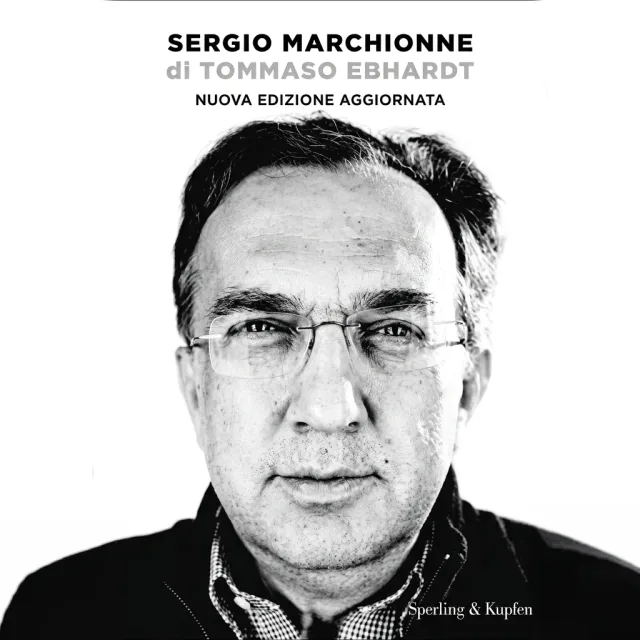
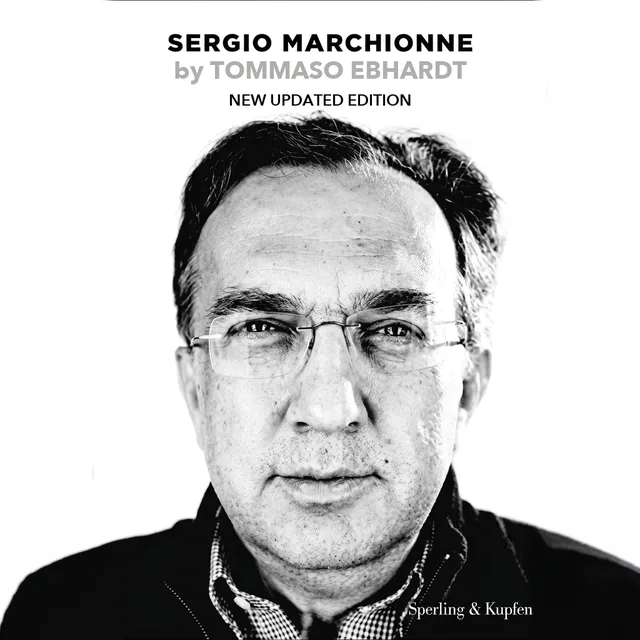
Welcome to In Buona Compagnia. We're Marco and Francesco, and every month we dive into the story of a person who inspires us and try to learn ideas and principles that can be useful in our life and our work, and we hope this project can be helpful to you too. This month we're diving into the story of Sergio Marchionne. The book we read is Sergio Marchionne by Tommaso Ebhardt, which I'm surely not pronouncing correctly, and this is it right here. On top of that we spent, I have to say, a month and a half really digging into articles and case studies about this fantastic story. And we want to start with this lecture Marchionne gave at the University of Trento on October 2, 2017.
03 "The journey of self-discovery": Marchionne's speech in Trento
"The journey of self-discovery can be full of a thousand pitfalls, but you will have to make it on your own, without avoiding the obstacles. Find your own way, change it as many times as you like, follow your dreams. Don't let upbringing, habits and your own preconceptions become a prison. Always have the courage to change yourselves, your ideas, your approach, your point of view. Because it is the only way to change the things that are wrong and to improve your life and the lives of many others." "As you look for your path, keep in mind what you want to become. Think about what mark you want to leave, what difference you want to make. Stay ambitious in your goals, because settling for a mediocre life is never worth it."
04 How Marchionne ended up in Canada: the exodus from Istria at 14
Ten years before Sergio was born, his family goes through a very bad period, and we're in the middle of the Second World War. They live in the city of Istria, and at that time the Slavic communist partisans wanted to carry out an ethnic cleansing, so eliminate all the fascists and drive out all the Italians. So what happens in that period? Sergio's mother and father move to Chieti, where Sergio is born in 1952, and they live there until Sergio is 14. Then, when his father retires, they decide to leave and go to Canada to join an aunt who had already moved there and opened a small clothing shop. They go to Canada because they think Canada can give Sergio and Luciana, his sister, a better life.
05 When Luciana dies: the birth of the "fixer"
And the thing that changes Sergio, in my view, and turns him into this man obsessed with goals, with fixing things, as he puts it, "I am a fixer, I fix things," is Luciana's death. Here it says: "He shuts himself in his room, smokes, drinks, reads for two whole weeks, then leaves the house. He comes out a different young man, a young man ready for life and even more determined to show the world what he can do," and he writes: "I owe it to Luciana. I'm a fixer, I fix things, until I've managed it, until I'm done, I can't stop." And I think this is an important moment because it turns Sergio from a child, a kid, into a man more determined to show the world what he's really capable of. And I think after her death Sergio feels he has to prove that his own life has meaning and that he can really make a difference in the world. And that's where his obsession with fixing things is born, saving companies in crisis and solving impossible problems. Maybe as if he were saying: "Luciana, look, look what I've done. See? I haven't wasted my life, the life you never got to live. I've done something important, something that made a difference."
06 His father the Carabinieri marshal: the sense of duty that shaped Sergio
Sergio develops a very strong sense of duty. And here it says it comes from his dad: "My father was a Carabinieri marshal, I grew up with the red-striped uniform of the Carabinieri, and I always come back to the values I grew up with, which were the foundation of my upbringing: seriousness, honesty, a sense of duty, discipline and a spirit of service." And it was precisely this, probably, as some of his closest and most senior collaborators believe, that made him neglect his health until the situation became irreversible.
07 How Marchionne got to Fiat: from SGS to the Agnellis' board
How does Marchionne end up at Fiat? I mean, he leaves Italy as a minor, so how is it that decades later he's brought back to his home country? So Marchionne graduates, starts working in Canada, and after a long, winding route he ends up in Switzerland, at a company called SGS. Here too, a company that's devastated, wrecked, on the verge of bankruptcy, and his job is to turn it around. And the Agnelli family sits on the board of SGS. And when Marchionne starts working at this company, the Agnelli family sees his potential and starts to imagine working with Sergio, so much so that they put him on Fiat's board of directors. After the death of Giovanni Agnelli, in 2004, on June 1, 2004, Marchionne becomes CEO of the entire Fiat group. The great thing is that when Marchionne arrives at Fiat, nobody has the faintest idea who Sergio Marchionne is, nobody knows him. The press, journalists, TV, nobody knows him, and everyone thinks he'll be yet another CEO who won't manage to do anything, because Fiat's decline starts in the '90s and gets going in the 2000s, and in the last few years there have been four CEOs one after the other.
08 Why four CEOs failed before him
The thing is, none of these four people manages to turn the situation around, and these four aren't just anybody. We have Cantarella, Galateri, Barberis and Morchio, four people. Cantarella, a graduate of the Politecnico di Torino, who became CEO in 1996. Galateri, a brilliant career as CEO of Telecom Italia. Barberis came from banking with solid financial experience, and then there was Morchio, who had pulled off an incredible turnaround at Pirelli. But none of these four people manages it. The question is: how on earth is that possible?
09 Why it took a Canadian outsider to save Fiat
I think it's because from his teenage years on, Marchionne was no longer shaped by, let's call it, the Italian mentality, but moved over to an Anglo-Saxon mentality. So when he came here he was the only person who was outside the politics, outside all the arrangements, all the backroom deals between Fiat and politics in Italy. He was the only outsider, and precisely for that reason
he was the perfect person. And here he says: "I was basically a foreigner, I had left Italy in the '60s and I had no previous experience in the car industry. I arrived in Europe as a foreigner, never in a million years would I have thought that journey would bring me here." What's also interesting, and I don't know the educational background of these four CEOs, but here I wrote: Marchionne had a mix of skills that was lethal. First of all, he studied philosophy. He writes: "When I started university in Canada I chose philosophy because I felt that at that moment it was the most important thing for me. Then I studied other things, I worked first as an accountant, then as a lawyer, and I followed many other paths, going from finance to packaging, aluminum, chemicals, biotechnology, and today cars. I don't know whether philosophy made me a better lawyer or a better CEO, but it opened my eyes, it opened my mind to other things, it taught me to see things in a different way, to think a bit outside the box." So he has critical thinking, this humanistic training, he knows the numbers, he's basically a capitalism addict. There's a presentation he gave called Confessions of a Capital Junkie, confessions of someone addicted to capital, this lethal mix. And he's the only person at that moment capable of turning Fiat around, because Fiat really needs him, it needs someone who isn't tied to Turin. Why did Morchio leave, for example? Because he wanted power over Fiat, he wanted the chairmanship and control, and the Agnelli family said, you know what, pal? Bye bye. Marchionne, on the other hand, is an outsider
he's a complete outsider.
He's a complete outsider, and that's exactly what's needed. At that moment Fiat needs a complete break from its old patterns.
10 "I smell industrial death": the first 40 days at Fiat
When Marchionne arrives, he writes: "I smell death, the smell of industrial death." And the first anecdotes about Marchionne at Fiat are super interesting. When he gets to Mirafiori, which is a huge plant here in Turin, they call it the city within the city, there's a 500 on display in the lobby by the reception, and Marchionne comes down to get a coffee, runs his finger over the bodywork and his finger comes away covered in dust. He gets furious, he loses it, he asks for a cloth and starts cleaning this blessed 500 himself. And in the months that follow, when he holds meetings at the Mirafiori headquarters, he holds the meetings, then goes downstairs to check whether this 500 is dusty or not. And in the first 40 days of his tenure he does something super interesting, because in the collective imagination a manager, especially one of Marchionne's caliber, is someone who sits up in his office, in his penthouse at the Lingotto, and never comes into contact with the lower levels of the hierarchy. But no, Marchionne is the complete opposite, because in his first 40 days he stays in touch with the workers, he goes to visit the plants. And the first thing he does when he visits the plants, and this is crazy, is go and look at the bathrooms. Because it's from the bathrooms, according to Marchionne, that he can tell how much a manager, the head of a department, of a plant, cares about the company. I mean, find me someone today, as important as Marchionne was, who first of all stays in touch with workers and staff, but above all goes to look at the bathrooms.
11 The Ubuntu spirit: "a person is a person through other people"
Because this is a bit of the Ubuntu philosophy, it means that in dirt there's inefficiency. Among the native peoples of Africa, south of the Sahara, the spirit of Ubuntu is pervasive. The word itself is part of a longer expression, "Umuntu Ngumuntu Ngabantu", which translated literally from Zulu means "a person is a person through other people."
The book says: a Fiat CEO quoting African philosophies in messages to his executives would have been completely unimaginable before him. And at the beginning, the deeper Marchionne goes in analyzing the company, the more he realizes that every moment of waiting brings it closer to the end.
12 How Marchionne reorganized Fiat: 23 direct reports, brand managers, hidden talent
Let's talk about the state Fiat was in, because when Elkann and Marchionne meet, neither of them really had any idea how bad things were at Fiat. Before the total disaster, in the '80s, again "change is the only certainty", I mean in the '80s it was the biggest car maker in Europe. Just think how things change. In 1968 it held 6.6% of world car production. The Mirafiori factory, which we'll talk about later, employed 60,000 people between workers and office staff, and it was the largest manufacturing site in Europe by area. I mean Europe, not some country of a thousand people, the whole of Europe. Move on to 2000 and Fiat is collapsing. It posts over 6 billion euros in losses, not 6 thousand, not 6 million, 6 billion. It burns more than 5 million a day, 200,000 euros an hour. So okay, in the first 40 days he goes to visit the plants, but concretely, what does he have to do to save Fiat? He put an end to the great man. What does the era of the great man mean? That larger-than-life person who works alone and makes all the decisions. Exactly. It's dead. We went from the great man to great teams. At Fiat the hierarchy was so rigid, just think, executives had to book appointments through their secretaries even just to talk to colleagues. Marchionne analyzes the problem and says: "From the first day I understood that Fiat had a leadership problem." So what does he do? He goes from 7 to 23 direct reports, so 23 people reporting to him. Directly to him. Exactly, directly to him. So instead of working alone, instead of having 7, he has 23. Then there's another important thing. He changes the culture, this one's important though, listen. From an engineering-based culture, it gets a culture oriented around brand managers. The brand managers were the company's link to the customer, to the market. So it was crucial that the people in charge of each brand took part in every decision that concerned the customer. Before that, what used to happen before? The brand managers reported to sales and marketing. In the new organization they report directly to the CEO, to Marchionne. This matters because decisions weren't immediate, but they were brought directly to Marchionne and then he decided. The brand managers all worked together, and if they're all part of the same team, the brand managers were aware of the other brand managers' requests, and that creates more of a team. The third turnaround strategy he uses, and he does it at SGS, he does it at Fiat and he does it at Chrysler: he looks for hidden talent. What does that mean? Marchionne systematically looked for hidden leadership potential in the company, people far from headquarters, young talent in functions like marketing and human resources that traditionally weren't considered high-potential career paths. When he meets someone, Marchionne explains his selection method, this is interesting: "I don't have a checklist and I don't have a magic recipe. Skills and functional knowledge are a given, if you work there you have the knowledge, okay? What's the difference? I want to know what that person is afraid of, what they fear. I like people who take risks, I ask about the things they're truly proud of in their career, or what they hate. I want to know their view of competitors, of markets, it's important that someone isn't detached from the market." A concrete example is Luca De Meo, who was discovered by Marchionne when he was a young manager, he finds him almost by chance and promotes him to head of the Fiat brand. So he skips several levels of the hierarchy, which wasn't possible before. And he, Marchionne, says: "De Meo was part of that generation of fresh faces with a sense of optimism," and that was exactly what Marchionne was looking for. And then, it's ugly to say, but he cleans house. "It's not a question of how good they are at their job, it's a question of change." So again we see that change is the only certain thing. "Twelve months can go by arguing with them about things and what to change, but it won't work and it will take too long. I look for young people, they have no seniority, they don't play corporate games, they're pure." In the first four years he cuts 200 executives, dismantling the entire corporate layer of 300 people. And then a multiple-hats approach was introduced in the management team. Each brand manager was given a separate functional responsibility: sales, product planning or marketing. What does that mean? There was the brand manager, okay? The brand manager: Jeep, Chrysler, Dodge. And then there were all these cross-cutting functions, so there was sales, product planning and marketing. The brand manager got one of these functions on top of their role. Why? So that people have to work more? In the end that's what it is, they work more, I mean they do their job and on top of that they have extra things. Why? Marchionne explains: "Portable leadership has some advantages. One is testing whether you're able to handle the complexity of life. It induces efficiencies." Portable leadership means you can carry it here, over there, there, there, and there. The worst thing for a leader, according to Marchionne, what could it be? Having free time. Because if you have free time, what do you do? Since there's nothing to do, you go around ruining the life of someone who works for you. The wider the span, so the broader your responsibilities, the less time you have, and so the people who work for you have more freedom to do what they need to do, instead of you getting on their nerves because there's nothing to do. So this is a multiple-hats approach, meaning every manager had, on top of their own responsibility, other responsibilities. And so people worked a huge amount. Another strategy he applies is "help, don't do." What does that mean? Helping doesn't mean doing other people's work. What Marchionne did: he immersed himself in the business, not to make decisions from his corner office, but to guide the people on the ground to make the right decisions. "I don't know what the right decisions will be when I walk into a meeting, but I think my involvement makes it more likely that the right ones will come out." And he always says a great manager has to work 12, 13, 14 hours a day. And that's why it's a very hard life, because making his presence felt is more important than anything else. The interesting thing I didn't know, I mean the most interesting, Marchionne doesn't arrive at meetings with decisions already made, he doesn't read the preparatory material. Why? To avoid bias. And so, as he explains, his involvement in the company was part of a "bits and pieces" process. Bits and pieces means his involvement in the processes they ran was intermittent but intense. It means he wasn't focused on just one project, it was bits and pieces: boom, focus here, then over here, then over there. The problem he was dealing with at the time: he ran Fiat, and then over time he ran three companies, three companies, Fiat, SGS and Chrysler. How could one man take this bits-and-pieces approach across three different companies? The only alternative was basically to live on planes. And he explains, this one's beautiful, damn it, beautiful but maybe also a bit sad: "I live on planes, I don't have a home, in a year I spend 43 whole days flying. I wear black sweaters because it's simpler, I buy them online in batches of 50, so I have clothes everywhere. I need all the simplicity I can get in the very complex life I live." And if you think about it, it isn't simple, it takes effort and a prodigious breadth of mind, of bandwidth. Because you have to understand everything in real time, keep lots of projects in your head all at once, and always be mentally ready. So now let's go and see. We've understood that Fiat was collapsing, it was losing 5 million a day. What's the deal, as they call him, the deal maestro, the deal maestro? What's the deal that turns Marchionne into Marchionne the star?
13 "The Valentine's Day agreement": how the put option became a 2-billion weapon
It's called the Valentine's Day agreement, Marchionne's Valentine's Day, so not February 14 but October 14. And back then, before Marchionne arrived, Fiat had an agreement with General Motors, with GM. Basically General Motors, which at the time, as you said, was the biggest car maker in the world, was looking for a foothold in Europe, a bridge into Europe. And they find in Fiat this possible bridge into Europe. And so they make an agreement to share joint ventures, so sharing gearboxes, engines, car platforms, basically to save money. This deal promised billions in savings. The point is that Fiat was already at the start of its decline, so it wasn't at its peak, it wasn't the top car company in Europe. Anyway, GM was the biggest car maker in the world, and this option gets drawn up, the put option, under which after a certain number of years General Motors would have been forced, obliged, no matter what, to buy Fiat.
Because what were the Agnellis thinking? Since Fiat is collapsing, let's see, "we sell that part to General Motors, and then if in the future we decide to do something else, we can sell the whole thing to General Motors." General Motors didn't want that put option. They only took it to stop DaimlerChrysler from taking Fiat, because everyone wanted access to that fuel-efficient car technology. And so the CEO of GM writes: "We needed scale in Europe to bring costs down, and we managed to do it by working with Fiat. Frankly, it was an initiative with a fairly high return for GM, even if not exactly the way we had expected. Because of one single word: put." As Rick himself, the CEO of GM, admitted: "We didn't like this put option, but the Agnellis wouldn't have done this deal without that option." So that option was the only way to get this deal done. But nobody could imagine what might happen afterwards. And what happens afterwards?
What happens is we get to 2005, Marchionne has been at Fiat for just over a year and he has to find money to restructure the company. He searches and searches and searches, and he spots in that very put option the strategic weapon. Because here too Marchionne sees opportunity where everyone else sees crisis, chaos and problems. Because until then the put option was seen as... This is important, wait, what you just said is important.
Seeing opportunity where everyone sees misery. And he'll do it not only here, he'll do it at Chrysler too. He sees opportunity where everyone sees misery.
So the put option was seen as damaging to Fiat, because that whole 80%, the whole Fiat group, a national company seen as an icon here in Italy, gets sold, gone forever. Whereas Marchionne studies GM, studies their financial statements, and knows they don't have the money to buy Fiat.
Or rather,
they do have the money to buy Fiat, but the moment they decided to buy Fiat, they'd be screwed. So he sets up a meeting with GM, and the only thing he does, first of all he doesn't want armies of lawyers facing armies of other lawyers, he just wants to deal with the CEO of GM himself. The only thing he does, he says, is show up with a presentation and list all his prophecies of the hell Fiat could go through in the years ahead.
And remember, he can exercise this put option. Yes, he says, "You have to buy me." Exactly. "You're obliged to." Exactly. So he also strikes fear into them. He says it's as if someone had a gun to your head, finger on the trigger, and could shoot at any moment.
14 How the 2 billion from the put option paid for the launch of the new 500
He can pull the trigger. That's technically what he does, because now that put option becomes a gun pointed at General Motors' temple. And Marchionne, as we'll also see later on, has a figure in mind. He wants that figure to get rid of the put option, and until he gets to that figure he won't leave. The figure he wants is 2 billion euros. At the end of huge negotiations they get to that figure. General Motors will pay Fiat 2 billion euros in cash. And thanks to these very 2 billion, Marchionne pulls off another stroke of genius: he launches new models. In particular one new model, the new 500. Besides the fact that the launch of the new 500 was phenomenal, a huge event on the Po, with platforms floating on the river, cars on top, packed with people. And so Marchionne decides to launch that 500 to create a nostalgia effect. Because the people who in those years had the purchasing power to buy a 500 were the people who, when they were young, in their teens, had the 500 as their first car, the original 500. So by launching this new 500, besides launching a new car, he was tapping into a sense of nostalgia.
What other feelings did they stir up? There are other very important emotions he always uses, both now and at Chrysler: pride. The stroke of genius was turning the launch of the 500 into an event that made you feel proud to be Italian. And the ad, which you can watch on YouTube, alternated images of Fiat workers with moments from history: the fall of the Berlin Wall, the Bologna massacre, Falcone and Borsellino smiling, and the slogan was openly patriotic. "If you're Italian you have to buy a Fiat," or "the new Fiat belongs to all of us." The day before the official launch, Fiat organized a gathering of 1,400 vintage Fiat 500s from all over the world, reawakening Italians' feeling for what Luca De Meo called "the car that gave four wheels to ordinary Italians, transforming a country and a company." Another important thing is that Marchionne is a Steve Jobs fan. A Steve Jobs fan, and here, just as Steve Jobs had done with Think Different, Marchionne wasn't just selling a car, he was selling an identity, a sense of belonging, the rebirth of a national symbol at the very moment Fiat was returning to record profits after years of crisis. Marchionne had declared: "We want Fiat to become the Apple of cars, and the 500 will be our iPod." Like the iPod, the 500 had to be practical, elegant and affordable. So the pride is this national pride in being Italian. If you're Italian, if you're proud to be Italian, there's only one car you can buy, and that's the 500. Now, did you know the 500 was produced in 18 months instead of 48?
In 18 months?
In 18 months. And this is another principle, a turnaround strategy, which means "challenging assumptions." Marchionne writes here: "A lot of what I do is challenging assumptions, which often looks like asking stupid questions, and that's exactly how we cut the development time of the 500 from 48 months to 18 months. I asked the designers and engineers why it took 48 months. They told me they needed this input and that input, this other one and that other one. And then I asked," Marchionne replied, "what would happen if you didn't have this particular input? And sometimes they told me it actually wouldn't really make a difference." So the engineers had to justify every step of the process, and if an input wasn't really necessary, it was cut. The 500 team was made up of people under 40, and Marchionne explained: "They achieved the goal because they didn't know it was impossible. My job was to make sure they didn't do anything stupid, but above all to protect them from the corporate culture of the naysayers, the pessimists."
15 "Small means death": the obsession with global growth
So, thanks to the deal with GM, thanks to the 500, thanks to all the strategies we've looked at so far, Marchionne manages to save a company that only three years earlier, in 2002, was technically bankrupt and considered so by everyone. In 2007 the Fiat group makes over 2 billion in profit, and this is super interesting for anyone who criticizes Marchionne: this is the best result in Fiat's history, in more than 100 years. But here's what's even crazier: for Marchionne there's never time to celebrate. Because yes, Fiat's rebirth by now seemed complete and consolidated. It wasn't a heavily indebted company. It managed to stand up to GM, it managed to launch new products, new cars. But for Marchionne all of this isn't enough. Because as we'll learn in the book, Marchionne keeps raising the bar, keeps raising the bar higher. And what's interesting is that whether or not the goal is reached isn't super important, it's at least trying, attempting the impossible. Marchionne now isn't satisfied with having saved Fiat from bankruptcy, he wants to turn it into a global car group able to compete with the world's giants. And to do this, to turn Fiat into one of the biggest car groups in the world, the opportunity came at the darkest and most unexpected moment in modern history, because it comes during the worst global economic crisis since the Second World War, the great crisis of 2008.
He knew Fiat's business was very fragile. It was provincial. It was provincial, and he explains that "we were too small and regional, we were still a marginal player." This ability to see past the immediate appearance, to recognize the weakness hidden inside success, is definitely one of the most distinctive traits of his strategic thinking. Recognizing the weakness hidden inside success.
Also because Marchionne didn't want a company that was too small and had innovation imposed on it, he wanted a company big enough to impose innovation.
And to survive in the car industry, according to him, you had to produce 6 million vehicles a year. And Fiat was stuck at 2 million. He explains it to them: "Small means death."
16 When Obama puts his name next to Marchionne's: "I'm expendable"
So it's right at the moment Marchionne starts looking for a new partner that the crisis breaks out. And it's a heavy blow, because vehicle sales collapse by 25%, and in Italy 60,000 people are at risk of losing their jobs and 50,000 Fiat employees are on cassa integrazione, the state-backed furlough scheme. And it's right at this moment that the turning point comes, because as I said before, Marchionne sees opportunity where everyone else sees crisis, rubble, problems. And he makes the most of this crisis, to his own advantage, because he manages to create the conditions for a deal that before the crisis was unthinkable. Basically Marchionne buys Chrysler at a discount, thanks to the crisis. So Marchionne goes after the smallest of the three Detroit car makers, which are General Motors, Ford and Chrysler. So as you said, "small means death," and Marchionne says, "We saw an opportunity where others saw only rubble."
The ability to see opportunity where others see only disaster. "Lions have great strength," he would quote, "but it would be useless if nature hadn't given them eyes. You have to move quickly so as not to go under, but the crisis also offered enormous opportunities." And when he got there, nobody could have imagined a deal like that. And he explains, this is important: "We were able." He's not only focused on goals, he also has an unprecedented sense of urgency. "We were able to move at the speed of light, adapting to the way the market was evolving, and we saw opportunity where others saw rubble." Beautiful opportunities where others saw rubble. But
on the other hand, Marchionne is also very frightened by this crisis, and this is interesting because, as you said, it had been five years at full speed without ever unplugging, forcing his collaborators and employees into indescribable workloads, phone calls at any hour of the day, children, family, relatives neglected, kids they never saw grow up. All of this for nothing, all of it just to be swept away by a simple crisis. And here too Marchionne, and this is super interesting, goes against the current, just as Giorgio Armani went against the current. He goes against the current because no car company, big or small, wants to get its hands on Chrysler, because just like Fiat had been, Chrysler is considered a company on the edge of collapse, on the edge of bankruptcy. So at first Chrysler asks the American government for a loan, Obama is president, and of course they don't want to let an emblem of American cars go bankrupt and simply vanish. So they look for someone who could buy Chrysler, or at least help turn Chrysler around, and they pick out, and this is great, especially Obama, Obama himself, the president of the United States of America, picks out Sergio Marchionne as the right person. So at first Marchionne makes an approach and they sign what's called a Memorandum of Understanding. So technically Fiat doesn't pay a single dollar to take a stake in Chrysler, but this is super important, they pay with Italian know-how. So as you said, platforms, gearboxes, engines, especially for small cars. And this is interesting, because from this moment on the balance starts to tip away from Italy, across the ocean, toward the United States. From this moment on the center of gravity of the Fiat company, which later becomes FCA, slowly shifts from Italy toward the United States.
The interesting thing is that when this agreement happens, the American government wanted Fiat to put in some money, because it was worried that Marchionne might come in, take everything and leave. In the book it's called Overhaul. His position was clear: "You have my skin in the game. I'm giving you everything I have, my technology base, my leadership. I was ready to risk my career, my reputation, my time at home." And this one's beautiful: "I wouldn't have risked Fiat's financial stability. I was expendable. Fiat wasn't." In a sense he feels: "I'm expendable, it doesn't matter what happens to me, what matters is that Fiat and the people who work with me are safe." And so Obama's task force understands Marchionne's intentions, and so they reach this 20% agreement, paying with know-how. And this percentage could gradually grow, it would later reach 35% by hitting specific targets, which were distributing Chrysler vehicles in international markets and producing a fuel-efficient engine for the American market. Because that's what they were looking for, because during the crisis the price of fuel had gone up enormously, and so where before people bought SUVs, now they couldn't afford them anymore. Because filling up an SUV, a full tank, cost you over 100 dollars, so they couldn't afford it anymore, and so they needed this technology that Fiat was really good at, fuel-efficient cars. Something that later on won't count for anything, but we'll get to that. When Obama, as you said, announces that Chrysler has found a potential partner, which was Fiat, at the Lingotto Marchionne is watching Obama's announcement and a silence falls and everyone says, "What the hell just happened?" Nobody expected it, not even Marchionne. Even though there were negotiations, this memorandum of understanding, which in the end was an engagement, not a proper marriage, nobody could have expected it. At that moment, these beautiful feelings he has: at that moment the most powerful man on the planet, Obama, has put his name next to an Italian-Canadian manager most Americans have never heard of. And Marchionne says, "I felt an enormous sense of responsibility." This sense of responsibility he feels is, I think, what keeps him working until the last day of his life. "We were," he says, "we were singled out by the president of the United States himself. It's not something that happens to you every day, these are things that happen only once in a lifetime, and so failure wasn't an option." Also because, think of everything he did, he could easily have stayed sitting comfortably at home. When he went from SGS to Fiat, SGS had been turned around and was doing really well, so he took on an enormous responsibility: if he failed at Fiat, it was Marchionne who had failed, the fifth CEO who didn't make it. He took all those problems onto his shoulders. Hundreds and hundreds of people out of work, on furlough, a company in ruins. And then he does the same thing with Chrysler. He gets to Chrysler and there too he takes a company onto his shoulders to turn it around.
17 What brutal efficiency means: the conditions of American workers
And Marchionne has only one plan, one word to complete his strategy for turning Chrysler around, and that's "efficiency." And here we also start to see the other side of Marchionne. Because sure, efficiency is fine, but what does the word efficiency actually turn into in practice? And Marchionne starts proposing conditions and agreements that are very harsh, mainly for the workers. So to save the company according to his plan, which isn't necessarily the right one, but it did work, Marchionne decides to impose extremely harsh conditions on the quality of work inside the plants. At first even the American unions refuse because the conditions are too harsh, but they know Marchionne is imposing them and that's the condition, take it or leave it.
Because the alternative was total liquidation, so selling off all the assets, the brand disappearing and thousands and thousands of people out of work.
And the agreement Marchionne wanted included giving up the right to strike, no productivity bonuses, turning public holidays into working days, a shorter daily break, a way of counting overtime that favors the company and not the worker, and, which especially in America is huge, a 50% cut in workers' health care. And after putting his plan into action, Marchionne, for the first time, reveals what will become first his fixation and then the biggest disappointment of his career. Because he says: "Now, after turning Chrysler around, we take General Motors too and merge them together." Because now, so again, first he saves Fiat, then he wants Chrysler, and now he wants to create the biggest car group in the world. And the only way he has is to merge with GM. And here there's a line where I can't tell whether he really said it or not, because it's beautiful. Because it says: "When we've finished fixing the car business and made it safe, then that's it. We're done here. Do we leave it all behind? Industry, banks, quarterly reports, boards of directors, presentations, PowerPoints, Excel sheets? And we go and fix the country, we go and fix Italy." So my question is, because this is in the book, but who knows if he really said it, who knows what he could have done if he'd had the chance, and who knows whether in his mind, after doing everything, after fixing everything, he might have wanted to go into politics and really fix things.
He's a fixer, he fixes things. But you get why he wanted to create one single big company.
Because in his view it was the only way to survive, and as we said before, he wanted to be the one who imposes revolutions, not the one who has them imposed on him.
Exactly, but there's another thing too: he was allergic to waste.
18 Why Marchionne dreamed of merging Fiat and GM: the "Capital Junkie"
It explains that every year a car company wastes billions, above all investing in new models, where maybe we think "a new car comes out, okay, a new car," a new model, but the company has spent billions on development, research, innovation, production, getting it on sale. And so a big merger allows billions in savings and the creation of what are called joint ventures, meaning sharing know-how, plants, engines, gearboxes, platforms.
Because it takes billions and billions of dollars to develop platforms. "Independence in this business is no longer sustainable. I can't keep working on cars on my own. I need a much bigger machine to help me. I need a shared machine." The concept of the "shared machine," which will become the heart of his industrial philosophy. In this document I mentioned earlier, called Confessions of a Capital Junkie, where he explains the immorality of waste, he explains: "The car industry was spending over 100 billion euros a year on research and development." Just think about the numbers, 100 billion. "40 to 50% of development costs could be shared among the biggest manufacturers, saving 2 to 4 billion euros a year." What goes even deeper is that Marchionne felt an enormous sense of responsibility toward the people who depended on his decisions. In a 2008 interview he says: "I have two goals. The first is to help find a permanent solution to this automotive mess, and the second is to make sure Fiat is safe." In my view, he wasn't looking for a merger for his ego. He was looking for it because he saw that without scale, without size, the people who worked for him would lose their jobs. The only way to protect them was to change the rules of the game.
19 Why Italy hated Marchionne and America loved him
At this point it's precisely the merger with Chrysler that changes the rules of the game. But not for the better for everyone. Because before, with the GM deal, the 2-billion Valentine's Day, the launch of the 500, the purchase of Chrysler, in Italy Marchionne was seen as the good bourgeois, as a hero. But little by little, with the purchase of Chrysler, as I said before, the center of gravity starts to shift toward the United States. And people here start to realize it. And even though Marchionne manages to get Chrysler out of the crisis, Fiat, and Europe in general, doesn't manage it. And little by little the figure of Marchionne splits in two, because on one side in Italy he was starting to be hated, when he landed at Caselle airport he moved around with an escort, at any event everything was locked down and people wished him dead. Whereas in America, where he had imposed much harsher conditions than in the Italian plants, he was considered a hero. And it's precisely over the Italian plants that Marchionne clashes with the unions but above all with public opinion. But this is super interesting, I didn't know it: during the crisis Marchionne analyzes the European car sector and realizes the plants are working 20% below their production capacity. That means every year in Europe you could produce 3 million more cars than the market is able to absorb. And so there's a 3-million gap that has to be covered, and the only way is to reduce production capacity, and so close plants. Marchionne goes to talk to the European Commission, to Volkswagen, to Mercedes, to BMW. Marchionne goes to talk to Opel and goes in person to talk to Angela Merkel, the German chancellor, and tells her, "We have to do something all together to solve this problem. Mainly we have to close plants, but we have to do it together to contain the risks and contain the fallout." They all laughed in his face, every one of them laughed in his face, because they thought the crisis couldn't drag on, but that crisis then turned into a recession. Nobody listens to him and Marchionne has to go it alone, and so he has to close plants on his own to save Fiat. But in the end, as so many times, history will prove him right, because years after that meeting with Angela Merkel, BMW, Mercedes, Volkswagen and Opel close plants. So who knows what might have changed if they'd all done it together. And Marchionne starts closing plants in Sicily, transforms the Mirafiori plant, and threatens to move production of the Panda, which is another icon of the Italian car, to Poland. The only way he'd agree to keep it in Italy is with an agreement with the Pomigliano d'Arco plant, which was in a really bad way. And maybe you don't think about it, okay, Marchionne imposes very harsh conditions, though less harsh than the ones he imposes in America, but that plant was in a disastrous state. That plant offered the worst you could possibly imagine. First of all there were stray dogs, rats everywhere, and the hair of the dogs and the rats ended up in the cars. One crazy thing is that the absenteeism rate was the highest of all the Italian plants, and above all that blessed absenteeism rate went up whenever the national football team was playing. I mean, damn, okay, but how are you supposed to deal with it when you have 300,000 people on your shoulders, deal with a plant that maybe lacks funding, isn't well invested in, but in itself is just a plant that doesn't work. It's even crazier, and this is one last figure: 90%, I mean not a good share, not half, 90% of the cars that came out of that plant had to be checked again, often sent to other plants, Mirafiori for example, other Italian plants, to be rechecked, because they came out defective. So Marchionne says, "Okay, I promise billions in investment to revive this plant, mainly to bring Panda production there, but you have to accept these conditions." So in Italy all hell breaks loose, public opinion is completely against Marchionne. A referendum is called among the workers to vote yes or no on the conditions. And just over half vote yes, the other half says, "You're not getting my soul." So some vote yes, they know the conditions are extremely harsh, but they vote yes to save their jobs. And that's from the first part. Marchionne does the same thing at Mirafiori, with harsh conditions again, which, let's remember, are still less harsh than the ones he imposed in America (and in America he was considered a hero), where he promises billions in investment, and promises production of Jeep, Alfa and Lancia. In the end the referendum passes, and in the end Marchionne keeps his promises and production is moved to Italy.
Do you get the difference between Italy and America? Why is it so different?
From what he writes, simplified, it's that in America capitalism is much harsher.
And there isn't this welfare system?
Above all one tied to the state, where "okay, Fiat's in trouble, but whatever, the state will pour money into it anyway," it pours money in and the status quo stays the same. In America it doesn't work like that. Chrysler was this close to going under, it was on the brink of bankruptcy. With one foot already in the grave, and the other foot in the grave would have meant thousands, hundreds of thousands of people not on furlough but out of work. It's a whole city, Detroit, that would have turned into a ghost town.
It's interesting because it's the same thing, he's trying to turn around two collapsing companies. But in America, because capitalism is brutal, people are basically without work, there's nobody who can save them. I mean there's no option, you die either way. Marchionne arrives and says, "Look, these are the things you have to do." And to them he's a hero, because even if these are tough conditions, he saved their lives. There's an example of this man at home who for months and months and months stayed at home while his wife, pregnant, was working. When he gets the phone call that the factory is reopening, his eyes light up. And the most beautiful thing is that it could happen to him. In Italy, completely different. Because in Italy there's always been a cushion, there's always been someone who could save the situation, even if it was only about holding on and not about competing. And that's what bothers Marchionne. In Italy you're holding on, you're not competitive. And maybe that's exactly why, even today, in the collective memory he's seen, and this is true, as the person who took production out of Italy. But according to Marchionne it was the only way to save Fiat and Chrysler. And he says: "I never regretted those choices, for me it was only, it wasn't a political question. People used Fiat for political ends, for me it was just a metalworker trying to make his factory work."
20 "Born of Fire" and "Imported from Detroit": how Chrysler sold pride
So Marchionne keeps relaunching Chrysler with his strategies, his conditions, and fine. But just as for Fiat it was the deal with General Motors and the launch of the 500, for Chrysler there's one step that marked the shift into a higher gear, and that's marketing, advertising. And the biggest event in America, where the most important ads run, is the Super Bowl. And as you said, Marchionne takes inspiration from Steve Jobs, from the 1984 ad where Steve Jobs launches the Macintosh, and that spot cost Apple over 900,000 dollars but would generate over 54 million. And thanks to this spot Apple would sell 72,000 Macintoshes, 44% more than expected. And Marchionne wants to do the same thing. He wants to launch his own spot, and he does it in Detroit, with Eminem, for Chrysler. And it's crazy, here too Marchionne goes against the current, because that Chrysler spot is the longest spot ever aired in the history of the Super Bowl. And Marchionne doesn't simply want to make an ad, to promote the product, the car. He wants to air an institutional type of advertising. That means it's not normal advertising. The institutional type is an ad that aims to convey values, ideals, a sense of belonging, of pride. And that's what he does. On February 6, 2011, Born of Fire, the Chrysler spot, goes on air. This spot lasts two minutes, it costs Chrysler over 9 million dollars, but the spot is a bombshell, it works brilliantly, it's a huge success, and Chrysler's sales start to grow. After Marchionne airs this blessed spot, he gets a phone call from the vice president of the United States, Joe Biden at the time, congratulating him on the fact that Chrysler had managed to repay its 6-billion-euro debt to the American government, 6 years ahead of what the agreement had planned. And in 23 months Marchionne transforms a company that was dying, a company that was destined to fail, that was already considered dead, into a company free of public money, that can do what it wants, profitable and able to stand on its own two feet. Marchionne writes: "I remember the faces of the people who didn't believe all this was possible, fucking analysts and journalists. I remember the skeptics with that face you make when you tell a child he'll be an astronaut when he grows up, just to keep him quiet. Well, ladies and gentlemen, we did it. We dared to dream big and we made our dreams come true." And it was a very risky bet, the ad, because Detroit was struggling badly and was in a disastrous state, so much so that it was nicknamed the ghost town. Exactly, precisely because it was a city built on automotive, on the car industry, and when the Big Three, especially Chrysler, were going bankrupt, the city turned into a desert. And in fact that's exactly why the spot is shot in Detroit, precisely to show, "Look, Detroit together with Chrysler is being reborn, it's getting back on its feet."
And then the closing slogan: "Imported from Detroit." And it's a bit of a provocative ad playing on the clichés "Imported from Germany" or "Imported from Japan." And Marchionne was telling America, "Be proud of what you build, but above all of what Detroit has built and is doing." Great, so far it's all wonderful, fun, exciting, moving
but the other side of the coin is that Fiat, the company that bought Chrysler, the company that technically saved Chrysler, is now the same Fiat that's failing, the same Fiat that's in trouble.
Why? What happens now?
21 When Marchionne listed Ferrari on Wall Street for 10 billion
Because the 2008 crisis drags on, and Europe as such can't get back on its feet after the crisis. And it's nice because first it's Fiat that buys Chrysler, to turn it around. And Fiat, which was the big company, the healthy one, the rich one, sharing its know-how, platforms, engines, gearboxes, to turn Chrysler around, now it's Chrysler, the beautiful one, the big one, the powerful one, that helps Fiat stay afloat. Because after the spot, in the years that follow, the group's profits are around 1 billion euros, but every single cent comes from Chrysler, Fiat is completely in the red, so now it's Fiat that lives thanks to Chrysler and no longer Chrysler that lives thanks to Fiat. We're in April 2011. As we've said so far, Chrysler is being reborn, and it's pulling Fiat along with it, which, like the whole European sector, is still in crisis. And Marchionne starts looking at something that maybe nobody had thought about until then, and that's Ferrari. Because inside Fiat, in that 100%, there's also Ferrari, and the total market value of the Fiat group is 8.5 billion. According to Marchionne, Ferrari is therefore a highly undervalued asset, and Marchionne is super aware of this, but he knows perfectly well that Ferrari is a card you can only play once in a lifetime, and that card has to be played well and played at the right moment. And once again many analysts predict a valuation for Ferrari of around 2 to 3 billion euros. But Marchionne has in mind a valuation well beyond 2 to 3 billion euros. At first he's thinking 5. And that would mean that the Maranello company alone would be worth over 60% of the entire Fiat group. But then he starts studying it properly, and in his view Ferrari, using the criteria applied to luxury companies, can be worth at least 10 billion euros. Once again everyone sees it as yet another marchionnata, yet another shot at the stars just to raise the bar, but once again history shows that Sergio Marchionne was right. So at this point Ferrari is still under the Fiat group. And to encourage investors to buy Ferrari shares, which technically aren't Ferrari shares yet, Marchionne creates a convertible bond. It means that right now that slice of shares, of stock, is Fiat, but later it will turn into Ferrari. And so investors can't wait to own Ferrari shares, but before owning Ferrari shares they have to buy these convertible bonds, which are technically Fiat securities. With this move Fiat's value on the stock market rises by over 20%, precisely because investors can't wait to have Ferrari shares. And this is only the start of a triumphant ride that ends on October 20 in New York. Because Marchionne lists Ferrari on Wall Street under the ticker RACE and, guess what, the listing reaches 10 billion euros. It means that Ferrari on its own was worth more than the entire Fiat group.
And to do this he basically had to push out Montezemolo, Luca Cordero di Montezemolo, who was still a truly great entrepreneur, because he won Formula 1 with Schumacher and, I think, also tripled Ferrari's revenue. Only then change, which again is the only certainty, reaches a point where Ferrari isn't winning, and anyway Ferrari is still part of Fiat, and Montezemolo's idea, in my view, was right.
He wanted to keep Ferrari as a niche brand with low production volumes, whereas Marchionne didn't dream of turning Ferrari into a mass producer, but he did want to expand it.
There was room to produce, instead of the 7,000 cars they wanted to stick to, 10,000 cars, while still keeping, once again, always
the exclusivity of the brand. And above all, thanks to Marchionne's work, by the end of 2017 Ferrari was making a profit of 120,000 euros on every car sold. On every single car alone there was a profit of 120,000 euros. And also because the GM operation and the Valentine's Day agreement, the acquisition of Chrysler, and this Ferrari stock market listing, these operations are all studied in the best business schools in the world. But above all, brands like Porsche and Lamborghini asked themselves, "Why didn't we do this first?" And then that's what everyone follows, one after the other. Porsche does the same thing. But since Ferrari had done it first...
You mean taking Ferrari out of the big Fiat brand?
Yes, and listing it separately on the stock market. Because Marchionne considered Ferrari a highly undervalued brand, and in fact it was.
22 How Marchionne foresaw the end of the sedan and the age of the SUV
So it's as if someone took Jeep and listed it separately on the stock market?
Yes, separately on the stock market. Which, by the way, is something they wanted to do, Marchionne wanted to do... Jeep? Yes. Split Jeep off from the whole group, also because it's actually Jeep that drives Chrysler's climb, and Jeep is the brand that grows the most of all. Out of Ram, Dodge, Chrysler and Jeep, it's Jeep that carries the sense of quality and pulls the whole group along with it.
Jeep is a very important brand because, once again, change is the only certainty. I mean, at first Chrysler wanted Fiat for its know-how in making fuel-efficient cars, because during the financial crisis fuel cost too much and so people didn't want to buy SUVs anymore. But eight years later, in 2016, Marchionne announces a decision that goes against the current: Fiat Chrysler would stop making traditional cars in the United States to focus exclusively on SUVs, pickups and minivans. And he explains that in this period, yes, the 2009 strategy had been right, when Fiat was chosen for its expertise in small, fuel-efficient cars, but now that same strategy wouldn't work anymore. And here he explains: "Even if we became the best sedan makers in the United States, we couldn't even come close to the profits we make with off-road vehicles and large vehicles. It takes several sedans to match the margins of a single Jeep." So Americans, with gas back at reasonable prices, were rediscovering their love for big vehicles. But there was even more. Marchionne had understood that the future of the car industry would be split in two. On one side there were the premium brands able to justify these high prices. Thanks to what? Emotional value, meaning what it stands for. I mean, the emotional value of a Jeep is completely different from the emotional value of a 500. And on the other side an undifferentiated commodity, where one manufacturer is the same as another. So if what you make is a basic product, then you're screwed. It's like buying a generic cell phone. There are no possible margins. So what was the real way out now, in 2016? Incredible how there are always problems. There are these, in 2008 these ones, in 2016 these, there are always problems because change is the only constant. So at that time the only way out is still a premium brand they have, and that's Jeep.
23 Why Waymo exists thanks to Marchionne
It's the same thing that happens in Italy and in Europe. So as you said, Marchionne predicts that market share will mainly be SUVs, and once again history shows he was right. Also because Porsche gets back on its feet with an SUV. The new SUV, which they don't want called an SUV but a crossover, Ferrari's Purosangue, was Marchionne's idea. An incredible success. Alfa Romeo gets back on its feet with an SUV, starting with the Stelvio. So once again Marchionne had seen far ahead, and Marchionne was right. Right, it's further proof that Marchionne saw far ahead, that Marchionne was a far-sighted visionary. At first he doesn't believe in electric cars, there are lots of interviews and viral shorts where Marchionne advises against buying Fiat electric cars. But then he changes his mind and realizes that this is actually the future, but above all he believes the future will be automation. And in fact Sergio Marchionne himself, as an executive but also as an individual, is the first to invest in Waymo. For anyone who doesn't know what Waymo is: Waymo is a Google program of taxis, self-driving robotaxis, now active in San Francisco and Phoenix, but expanding to Denver and Miami. But that project exists thanks to Sergio Marchionne, it exists thanks to Fiat and it exists thanks to FCA. Because that project, evaluated by Google, is financed directly by FCA.
24 Premium brands versus the commodity: how to survive in a changing industry
Now, for the skeptics this collaboration with Google was a weakness for Fiat, because to them it was a manufacturer unable to develop its own technology, reduced to being a supplier for the masters of Silicon Valley. Marchionne saw it completely differently. He thought: "The idea that we manufacturers have to make everything ourselves in-house, and that we can do it better than the specialists, is to me pure bullshit," he said frankly. "Our choice is to talk to everyone, keep learning, and make our decisions based on the best answers available on the market." And it was a different philosophy from everyone else's, because all his competitors were instead investing billions to develop their technologies in-house. But Marchionne feared that this arms race would burn through capital without producing results. So Fiat Chrysler's goal wasn't to develop in-house technologies, it was building a network of alliances instead of attempting the impossible task of competing alone against the big giants. In this huge technological revolution, with Waymo, Google, Tesla, robotaxis, the question is: how do you survive? And for him the only way out was to bet on premium brands. Part of the sector, in his view, would become a commodity. In this scenario, all the brands without a distinct identity would die. And it's paradoxical, because the two brands the company is named after, Fiat and Chrysler, were both at risk. So his last big project was preparing the company to cross the desert. And he describes the transition period in which the old technologies would die and the new ones wouldn't yet be mature. "We have to make it to the other side," he kept saying. "The goal is to give my successors a strong company, with no debt, with the right brands to face the future. If we're able to preserve the strength of the brands we've managed to build, then we'll be leaders of change instead of being swept along by it like many other traditional car makers."
25 "I'm tired": the last industrial plan, the illness, the end
In fact the last pieces of his big plan are reaching zero debt, preparing the company for the future of electric and autonomous mobility, and above all finding a successor up to the task. But Sergio Marchionne's time was about to run out, only he didn't know it yet.
Exactly, exactly 14 years after arriving in Turin, Marchionne presented the last industrial plan of his career. But there was something different about Marchionne that day. Those who knew him well noticed an unusual tiredness, heavier breathing, a voice less sharp than usual. He read the text always looking down, without the provocative energy that had always defined him. "I'm tired," he said. A few months earlier he had confided: "I feel like doing something different. My next venture won't be in the difficult car industry." Nobody knew he was already ill. For over a year he had been going regularly to the hospital in Zurich, for treatment he kept secret even from his closest collaborators. He had chosen to spend the last year of his life working, pushing his body to the very end to reach the goals he had set himself.
In fact Marchionne explains that he doesn't want to reach zero debt as a personal achievement, but because he wants to leave his successor a company able to stand on its own feet. And he starts having these thoughts, the successor, zero debt, because for years by now he's been thinking about leaving the automotive world. So again, no more PowerPoints, no more slides, no more plans, and at last he wants to devote himself to his wife, to his children, whom he never gave the time they deserved. Maybe he starts having all these thoughts because he already knew about the illness, but as we said before, he was aware that he wouldn't be the one to blow the final whistle. To the very end, to the very last year. Maybe he even tries, you know, because a year and a half before his death he quits smoking, quits drinking, because he was aware of the illness. So maybe he did try, but the paradox is crazy: right when he decides "that's enough, now I'll take care of my family, of myself," by then it was too late.
26 What remains of Sergio Marchionne
And so the final question Tommaso, the biographer of this biography, asks is: what remains at the end of it all? And was it really worth it, what remains at the end of it all? Marchionne died on July 25, 2018, at the age of 66. Sergio Marchionne leaves behind a transformed company. In 2004 Fiat was worth 5 billion euros and was losing 5 million a day. In 2018 Fiat Chrysler had a market capitalization of over 30 billion and was generating billions of euros in profit. Ferrari, spun off and listed on its own, was worth another 25 billion by itself. But the numbers tell only part of the story. Marchionne had changed the very way cars are made and the way you lead the people who build them. His strategies, his flat organization, his Ubuntu philosophy are still studied today. But perhaps his most important legacy was something else. In Detroit, Marchionne rebuilt factories, rehired workers, and gave back dignity to a city the world had written off. He did it harshly, when necessary, but always with an underlying respect for people. That same respect he had learned from his father, the Carabinieri marshal, who had taught him seriousness, honesty, a sense of duty, discipline, and a spirit of service. Sergio Marchionne had arrived in Turin as a complete unknown, a Canadian in a black sweater with no experience in the car industry. He left as one of the most influential managers in the history of the industry, and as the man who, perhaps more than anyone else, had shown that the impossible is only what hasn't been done yet. Well, we've come to the end of this episode. I hope you enjoyed it, and if you did, share it with someone who might enjoy it and find it useful, and if you want to help this project, subscribe on Spotify, Apple Podcasts. And one more thing, since this episode is dense, really dense, there are lots of things we didn't even mention, for example all the leadership principles Marchionne used to select the various types of managers: we're leaving a document with everything we haven't covered yet on our website, just go to inbuonacompagnia.com and you'll find it all there. Thank you so much, and see you in the next episode. Bye bye!