01 Intro
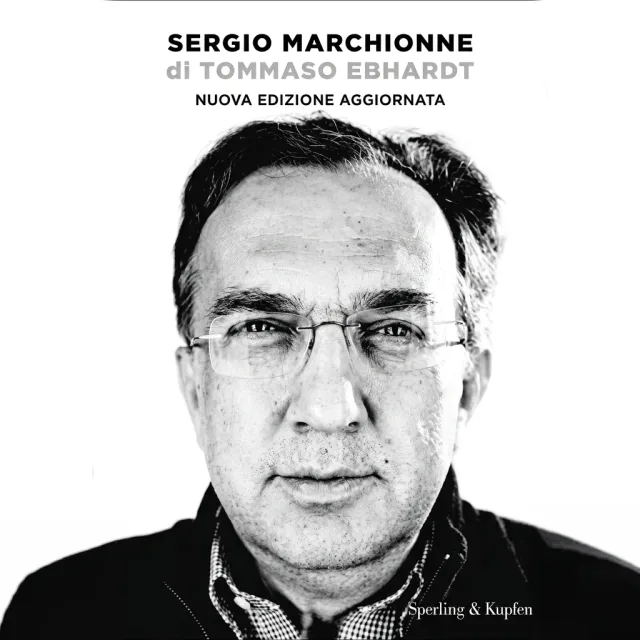
Welcome to In Buona Compagnia. We're Marco and Francesco, and every month we dive into the story of a person who inspires us and share ideas and principles that we think can help us in our lives and our work. In the previous episode we told the story of Sergio Marchionne, who inspired us enormously, and there are so many ideas and principles Marchionne used to bring Fiat and Chrysler back to life and to do so many other really important things. But it was a very dense episode, because there were so many things we didn't know, so we left out a lot of things, a lot of ideas, a lot of principles that I think are really important. So we want to do a second episode where we just list them, tell you about them: only principles and ideas, and that's it. If you'd rather hear the whole story, you can go back and look for the previous episode. And this is a bit of a selfish episode, because afterwards I'd like to listen to it again myself, with just the most important ideas and principles. Right, let's start. So, Fra, do you want to start with one?
02 The Trento letter and the bar that keeps rising
I'd always start with the letter he writes to the University of Trento, with the final line: "settling for a mediocre life is never worth it." "The journey of self-discovery can be full of a thousand pitfalls, but you will have to make it on your own, without avoiding the obstacles. Find your own way, change it as many times as you like, and follow your dreams. Don't let your upbringing, your habits and your own preconceptions become a prison. Always have the courage to change yourselves, your ideas, your approach and your point of view, because that is the only way to change the things that are wrong and to improve your life and the lives of others. While you look for your path, keep in mind who you want to become. Think about what mark you want to leave and what difference you want to make. Stay ambitious in your goals, because settling for a mediocre life is never worth it." Not settling, not just letting yourself drift along. To me, floating is a good metaphor for it. Just being there, floating, doing what I have to do and that's it, nothing more. And I think this connects to another principle that really struck me, one of my favorites: reading the story, you keep noticing that Marchionne raises the bar higher and higher, precisely because he doesn't want to settle, because he doesn't want to live a mediocre life. From the industrial plans to the targets, to the Ferrari listing, to the Fiat listing: all plans and forecasts that everyone considers nonsense, that get called "marchionnate," "Marchionne stunts." But in the end, precisely because he always wants more, he always wants to dare more, a lot of the time he maybe doesn't hit his targets, but it's that extra step, that drive to do things, that sets him apart.
03 Why change is the only certainty (Fiat, GM)
Then I have this one here: change itself is the only great certainty. Nobody is too big to fail. The only protection is the ability to accept change. For example, Fiat dominated in the 1950s, when it was competing with Volkswagen for first place in Europe. In 2004 it was practically bankrupt and losing 5 million euros a day. GM, which was an industrial giant, was the number one car maker in the world for decades. But between 2004 and 2008, when the crisis hit, it was losing over 70 billion dollars.
04 A humanistic education as a weapon to open the mind
Don't be afraid to open yourself up to the new and the different. What makes Marchionne unique is his humanistic education, very similar to Cucinelli, very similar to Armani. He studies philosophy, which is one of the humanities, and he writes that these subjects help you open your eyes and open your mind to other things. Try to look at things differently, look for unconventional vantage points.
05 How small choices build big dreams
Also, starting from the small things, improving a little at a time, gradual growth. To reach a bigger goal, always start from the small choices each of us has to make every day in our own small way, which can still make the difference.
And here it says: walk into every room aiming to make the biggest dreams come true, but always starting from the small choices you find yourself making every day.
06 "Play by the rules, then free yourself from them"
This is a nice one you put in that I didn't remember: play by the rules, and once you've freed yourself from them, then you can try to change them. Precisely because Marchionne didn't want to be too small and have revolutions forced on him; he wanted to be big enough to impose the revolutions, the innovations, and so lead the change instead of being at its mercy.
07 His Carabiniere father's sense of duty and the rejection of mediocrity
This is one of my favorites: "until I've succeeded, until I've finished, I can't stop." Keep these values in mind: seriousness, honesty, a sense of duty, discipline and a spirit of service. Mediocrity: back to mediocrity. And here there's the speech he gave at Alusuisse in 1999, where he says: "the entire workforce must accept that from now on it belongs to a group that does not tolerate mediocrity as a way of life. We want to become the best diversified industrial group in the world. Coming second is not enough for us, we always want to be the best." Which also connects to the humanities, philosophy.
08 What made Marchionne unique: multidisciplinary knowledge and responsibility
Actually, Marchionne starts out studying philosophy. Here it says: "what can make you unique is your ability to develop a broad, multidisciplinary range of knowledge." Marchionne knew philosophy, he knew law, he was a lawyer, he knew numbers. And as you said in the other episode, that was a lethal combination against anyone. Another beautiful one is that Marchionne felt responsible, a bit like Cucinelli, who felt responsible for the beauty of the world and a guardian of creation. Marchionne, even if many people think otherwise, felt responsible not just for himself but for his whole industry, all his employees and the whole supply chain around it. In fact it says: "take on your rightful responsibilities," so you have to be aware that your actions carry a certain weight, a certain value, and have consequences, above all for other people.
09 Details matter: from the dusty finger to "yes you, you've got what it takes"
I wrote this one, and I think it's a really nice one: details matter, and sometimes not because it's better for the customer but because it matters to you. Simply because it matters to you. At his first meeting, his appearance at Mirafiori is important: he goes down to the entrance hall where a car is on display, touches the bodywork with his hand, and his finger comes away covered in dust. And you can already see the Marchionne in him right there: he's furious, he can't accept that there could be so much neglect at the entrance of his company, and he demands that the car be made to shine again immediately. He has someone hand him a rag and cleans it himself. OK, then here I wrote a statement: "yes you, yes you, you've got what it takes." It's here because Marchionne explains: "at the start of my career, CEOs were something mystical to me, and I believed there was something in these people that made them special. I was convinced I didn't have that quality in me, the quality of a leader." But yes, yes you, you've got what it takes.
And maybe someone underestimates themselves and can't really see their own worth. Then you see someone like Marchionne, who also thought he didn't have what it takes to be a CEO, and then he became the CEO.
10 "Freedom is choosing the right responsibilities"
This one's lovely, and I think this is a quote, a line I read in a book called The Impossible Takes Longer, which is basically a collection of quotes from people who won the Nobel: physics, mathematics, literature. So what's the line? Freedom. I mean, you might ask yourself, what is freedom? I don't know, maybe freedom is doing whatever you want. I don't know, what comes to mind when you hear freedom? Financial freedom, being able to be... OK, financial freedom aside, freedom in life, I don't know, doing anything a person wants. This beautiful line, I think, gives a possible definition of freedom, where freedom is choosing the right responsibilities. Freedom is choosing the right responsibilities. When you're free you can do anything, and choose which responsibilities are the right ones for you. And I think it applies a bit to Marchionne, because Marchionne could have done anything. When he was working for SGS, where he also pulled off a turnaround, he could have stayed there, done really well and carried on.
Instead they offer him Fiat. Exactly. And in that case too, like we said, it's super interesting. Everyone advised him against going to Fiat. Everyone. And he said: guys, I'm going, and in the end he saves it.
So I don't know if he felt free, but to me, he could have gone back to studying in Toronto, he could have done anything.
At that point he wanted to raise the bar again and put himself to the test, and say: OK, I saved SGS, which is a much smaller company than Fiat, and now I'm going to Fiat.
So I don't know if it applies directly to Marchionne, but the freedom to choose the right responsibilities makes me think a bit of when Marchionne decided to leave SGS to take care of a company that was collapsing. He put his face on it and put his own reputation at risk, which is not an easy thing to do.
11 Why a leader must step down from the pedestal (humility, respect, fewer layers)
OK, this one's good: as the leader of your company, or of anything we do, forget that you're superior to the people who work for you. Without them you are nothing. A leader who lives on the top floor and looks at everyone from below is a loser. I wrote that one myself. Your job is to come down and live in the arena where the real work gets done.
Which is what Marchionne does, in actual fact. Exactly.
Because unlike Morchio, who was the previous CEO, who before walking into a meeting would send his secretary Manuela ahead of him to announce his arrival, a bit like he was a king. Marchionne is completely different, he's much more humble, very down to earth, not haughty at all. He turns up alone, unannounced, and sits down with the workers. He talks to them as equals, and it's a culture shock for everyone.
A bit like how he also goes to inspect the toilets in the plants. Or he writes, and I didn't note this one down but I remember it: "remember respect and you will be one step ahead of everyone." Remember respect and you will be one step ahead of everyone. This one's lovely, I hadn't even written it down myself, it was in the book. Remember respect and you will be ahead of everyone. And linking to what you just said about respect, about not being haughty, he writes: if your role is the lifeblood of the company, so being the CEO, the role Marchionne held, create a direct contact between you, the CEO, and them, meaning the employees, the workers, and avoid having an intermediary between you. Which is what Marchionne does, because he shortens the chain of command, and in far fewer steps you can get to Marchionne.
12 How marketing creates pride: the 500 and "Imported from Detroit"
Another one I have is the importance of marketing and promotion. You might not think about it, but above all the success of Fiat, starting from the success of Fiat, you showed me the ad I hadn't seen, the 500 ad, when they launch the 500. I'd seen the launch event on the Po, if you watch the videos it's a huge party, with platforms on the Po where the cars drive past. But then if you watch the 500 ad, that is advertising, that is marketing.
It's cool. The Chrysler one too. And then he does the same things at Chrysler. Born to Die, no, Born of Fire.
So it's exactly those ads, those promotions, that aren't just aimed at advertising the product, but at creating a sense of pride, of belonging, of wanting to buy the product. There's this ad for the 500 that we watched. It has all the images of dark moments in Italy's history: terrorism, the Red Brigades, the Bologna massacre, fascism. And then great successes, so, I don't know, '82 at the World Cup, and when you watch it you go: damn, I'm Italian. Exactly, I'm Italian, let me buy a 500. Same thing with Chrysler, except you do it in America: Imported from Detroit. So not Imported from Germany, from China, from Japan. So every advertising campaign isn't just a story about a product, it's a story about values that really matter. OK, this one, I think, is the most important of all
13 "The impossible is only what hasn't been done yet"
because it really sums up who Marchionne was: the impossible is only what hasn't been done yet. It's very simple, very idealistic, very fluffy, but in the end he did exactly that. Something that was impossible, he made possible.
14 Utopia according to Olivetti, challenges according to Cucinelli
It's a bit like the definition of utopia we read in Cucinelli's book, which is actually Olivetti's. Olivetti writes: "the word utopia is the most convenient way to dismiss what you lack the will, the ability or the courage to do." Beautiful. "A dream seems a dream until you start somewhere. Only then does it become a purpose, something infinitely greater." And also the whole idea of utopia, of dreams, of attempting the impossible, which is only impossible until someone tries. Cucinelli writes about the impossible, so about challenges: "the challenges awaiting the willing are neither simple nor few, and they require time and commitment, but they will be won by all those who prefer life, and who therefore prefer to act." Then another one, again about dreams, again by Cucinelli, very beautiful, it connects: "if they tell you that your plan is too grand, that maybe it could be broken down into lots of small parts, or that it is not the right time to put it into practice, don't listen to those people. They are only trying to stop you from flying."
And maybe someone might also ask: why does Marchionne do everything he did?
15 "The driving force isn't self-interest, it's the pleasure of acting"
Like we said in the other episode: I am a fixer, I fix things. But there's also, reading my Cucinelli notes now, this line that connects: "the prime mover of our desire to do must not be self-interest," so, as Marchionne says, doing things not because they have to be done but because it's right to do them, "but the prime mover of our desire to do and to act must be the very pleasure of acting."
16 The desire to make a difference (Ron Bloom)
Apart from acting, what definitely drives Cucinelli too, and so many entrepreneurs, so many people, not entrepreneurs but people like Samantha Cristoforetti, all these people, is the desire to make a difference. In the book here, Tommaso, the author of the biography, writes: "I am reminded of when he told me," he's talking about Marchionne, "about a meeting with Ron Bloom on the stairs of the US Treasury Department, while they were negotiating Fiat's takeover of Chrysler. Bloom was a former investment banker, turned public servant by Barack Obama. And he stopped at that moment to smoke a cigarette with Marchionne. And Marchionne asked Bloom: why are you doing this? I mean, why go back into the arena? Why get back in the game?" And Bloom, who at that point had decided to get back in the game for that rescue attempt that seemed impossible, Bloom replied: "when I die I want my gravestone to say just one thing: this man made a difference."
17 "In every victory there is fragility hidden in success"
So let's go back. Here I wrote: in every victory there is always fragility. Where's the weakness? It's hidden in success. In every victory there is fragility. Where's the fragility? Because after the 500 was launched, Fiat was having fantastic success, so you might think, well, Fiat is doing well, we're all fine. But nobody could have expected the 2008 crisis to arrive. Marchionne, on the other hand, was aware of all this, not of the crisis, but he was aware of his industry. Instead of thinking only about the success and that everything will be fine, he's aware of where Fiat stands. That is, "we were aware," he writes here, "that our car business was very fragile, we were too small and too regional, we were still a marginal player." This ability to see beyond the immediate appearance, and the immediate appearance, I wrote, was in that case Fiat's success with the 500, so that ability to see beyond the immediate appearance and recognize the weakness hidden inside success is, I think, one of Marchionne's most distinctive traits. And here it connects to, I wrote, "you are developing the clearest vision of your industry, because if you're not interested in what you do, this vision, the clearest one you can create, doesn't get created."
18 When separating a brand creates value: Ferrari and De Meo
Linking to vision, so to a long-term vision, to the foresight Marchionne has, a principle he applies not only at Fiat but also at SGS and at Alusuisse: separate to unlock value. So what he does with Ferrari, which I won't go into now because it's very long, and we explained it in the other episode. The fact that he looks at something and understands that it has enormous potential and isn't living up to that potential at the moment, and so he's able to see it, take it, separate it and unlock its value. A bit like what he does with De Meo too, another CEO, whom he meets at Fiat, and who when he meets him was actually a young man lost on the fringes of Fiat's management. Then he notices him, understands his potential, understands he isn't living up to it, and believes in him, and today he's the manager he is today.
19 When to consolidate, and seeing opportunity where everyone sees ruins
Here: the best time to consolidate is when you're strong, not when you're desperate. This conviction of his came from the fact that Marchionne had already lived through and led a process of industrial consolidation during his career in the aluminum industry. As CEO of Alusuisse, between 1997 and 2000 he had orchestrated the merger with Canada's Alcan and then with Péchiney, creating a giant able to compete with the world leader, Alcoa. Now, the most important lesson from that experience was very counterintuitive. He writes: "I was the most profitable player in the aluminum industry when I did the merger. I went into it knowing that if I'd stayed alone I would have paid the price of being a marginal player, even though at the time it was the most profitable company. Fiat is looking at this new world and saying that it too will become a marginal player if it doesn't act." The message was very clear: the best time to consolidate is when you're strong, not when you're desperate. Well, we've said this 300,000 times, but we can say it again, because I want it here: seeing opportunity where everyone else sees ruins. And this happens when Marchionne buys Chrysler, because everyone sees Chrysler as something to avoid, while he sees an opportunity to expand Fiat, and of course he turned out to be right. And going back to Chrysler, here I wrote: if you see death in the distance, the only alternative is to take a leap in the dark to save yourself and find life again, even if it doesn't guarantee life itself. Marchionne writes here: "we knew Chrysler would completely change Fiat's outlook, but it was like playing the lottery, buying a ticket that gave you only two possibilities: succeed or lose your ass. It was an all-or-nothing bet." But for Marchionne the alternative was staying small, and staying small meant dying. As happens in the short term, as happened to Fiat, the 500 can mask structural vulnerabilities. You always have to look beyond the quarterly numbers. Back to Chrysler: a crisis creates opportunities that don't exist in normal times, but you need the clarity to see them and the courage to act.
In fact he buys Chrysler at a discount, let's say, thanks to the crisis; before the crisis he could never have bought Chrysler at that price.
20 Walter Chrysler and opportunity knocking: "don't look for four-leaf clovers"
Then here I wrote: get off your pedestal, my friend, you're not at the top of the chain. Anyway, this connects to Marchionne, because he says that the car industry always thought it was at the top of the food chain. Unfortunately, before 2008 people thought: well, we're above everyone, we're superior. But then 2008 comes and everyone is sitting at the bottom, and now the world has told us that you're not, we're not, at the top of the chain. And here he writes: "recognizing this reality, accepting your true position instead of the imaginary one, was the first step toward transformation." OK, here are a few notes on Walter Chrysler. I don't know if I wrote down any notes on Chrysler. Well, there's a line that I think is really beautiful. Let's take a quick detour, I just want to say a few things about Walter, because it's interesting. He wrote a book that I think we should read, called Life of an American Workman. Anyway, Chrysler had come into the car business after a brilliant career as a skilled technician in railways, because at that time railways were the main business. In 1911, when Chrysler was 36, he's hired by General Motors, and the decision he made at that moment reveals something very important that we'll find again decades later in Marchionne: the ability to recognize the future and bet on yourself, even at the cost of immediate sacrifices. Walter accepted a starting salary of $6,000, half of what he was earning in the railway industry, to devote himself to the means of transport of the future, even though nobody knew that was the future, but he felt it, he wanted to be there at that moment. And in 1911 cars were still new, risky and uncertain. Railways were the safe, established business. Safe and established? Interesting. The sector where you built a career and made a fortune. And yet Walter understood that the future belonged to four wheels, not to rails. He was willing to earn half as much just to be in the right place at the right time. Within a few years he then revolutionized production at GM, and then, moving on, on June 6, 1925, he founded the car company that bore his name. In his autobiography, Life of an American Workman, Chrysler wrote a line that Marchionne would often quote. Which was this. Really beautiful. "The reason why so many people never get anywhere in life is because when opportunity knocks, they are out in the backyard looking for four-leaf clovers." Do you remember this one? No. So, again: "the reason why so many people never get anywhere in life is because when opportunity knocks, they are out in the backyard looking for four-leaf clovers." That is, when an opportunity comes along you have to be ready, you have to seize it straight away. Most people are distracted by useless things, looking for four-leaf clovers, chasing luck the wrong way. And when the real opportunity comes, they miss it. In Marchionne's case, when the Chrysler opportunity came up in 2008, while everyone else saw only ruins and risks, Marchionne was ready. He wasn't out in the backyard looking for four-leaf clovers, he was in the right place, at the right time, with his eyes open, ready to knock on the door the moment it opened.
21 Why quality is not negotiable in a flat world
Here I wrote: quality is not negotiable, quality is not negotiable. Then came the rule that terrified the supervisors: if a worker was silenced for reporting a defect, his boss would be fired on the spot. "We cannot afford for even one small thing to go wrong with this car," Marchionne explained. Quality was not negotiable. Those who don't adapt are destined to die. In one of his last interviews, which he gave around 2018, he leaves posterity his vision of the future of the car world, and he said: "the technological revolution will change the industry from its foundations. Those who don't adapt are destined to die along with the combustion engine." This one's really good, again linking back to mediocrity: quality can't be negotiable, meaning either you decide to be competitive or you don't do it. And he explains: "we live in a flat world. If I'm not able to produce cars in Italy with the same levels of quality and productivity that I apply in the United States, then I have no right to stay in the market, and we would eventually be pushed out of it. I won't be the one who makes the final choice to leave the country, the consumers will decide, by pricing my products out of the market. Consumers have infinite options, that's why it's a flat world, about which models to choose. Quality is not a negotiable good, the rest is garbage. We live in a flat world." A flat world, meaning that in the global market everyone competes with everyone.
22 How to go against the current: value it as a luxury good, premium vs commodity
Another one I have, which we've already said, but it's super important, it's one of my favorites, is going against the current, which also connects with Armani and Cucinelli. A bit like Armani with the jacket: at the time everyone used flashy colors, and he wanted something simple and functional. Cucinelli: when everyone moves from the countryside to the city, he moves from the city to the countryside. And Marchionne, look, doesn't listen to anyone, both with Fiat and with Chrysler: everyone considered them dead, and he invests in them instead and saves them. And like I said before, with Ferrari too.
Linking to Ferrari, here I wrote: value your product as a luxury good. "Ferrari should not be valued as a car maker," he explained during an investor presentation, "it must be valued as a luxury goods product. Look at Hermès, Gucci, Louis Vuitton: these companies are worth 9 to 12 times their operating profits." Linking to Ferrari, here I wrote: is there potential in what you do that isn't being fully exploited yet? Question mark. Then here: if what you make is a commodity, then you're screwed. Similar to Cucinelli. Cucinelli isn't a commodity, it's a niche, handcrafted product made in Italy. Marchionne had understood that the future of the car industry would be split in two. On one side, premium brands able to justify high prices thanks to their emotional value; on the other, an undifferentiated commodity where one manufacturer is as good as another and margins are impossible, they tend to zero. So if what you offer is a commodity, then you're screwed. He said it bluntly. "It's like buying a generic mobile phone. There are no margins to be made." You can be taken for a madman when you're right, that's not a problem. But you do have to be right. Linking back again to what I said before: if your brand doesn't have a distinctive identity, it will die. Marchionne became almost obsessed with one question: how will mass-market products survive when the real technological revolution arrives? Part of the car industry would become a commodity, like I said, undifferentiated products where one brand is as good as another. Exactly like taking a commercial flight. When you fly, you take Ryanair, easyJet, British, but do you care what make the plane is, whether it's a Boeing or an Airbus? You couldn't care less, and the same thing will happen to the car industry. And in this scenario, brands without a distinctive identity would all be dead. The only salvation lay in the premium brands: Jeep, Maserati and Ferrari.
23 "Men follow courage" (Hemingway, Mel Gibson, Steve Jobs)
These are two quotes, not from Marchionne, but they're beautiful. The first is by Hemingway, who writes: "there is nothing noble in being superior to your fellow man. True nobility is being superior to your former self." And then this one from Mel Gibson, from the film Braveheart, and he writes, and this is so true: "men don't follow men, men follow courage." And I think a lot of people followed Marchionne because he had the courage of a real lion.
And what he writes is that they're marked men, a bit like Steve Jobs: it's not so much, as you say, that people follow a person, they follow him because he manages to create an atmosphere, an environment where you attempt the impossible.
The impossible is what hasn't been done yet.
24 "The bill always arrives": every choice has a price
This one is one of my favorites. I wrote: the bill always arrives. Marchionne's story tells how you can keep pushing your ambitions forward to reach almost unimaginable goals, but it also shows how every choice has a price, and in the end the bill always arrives. Then here I have: the most important thing is the substance itself, everything else is useless. And he was famous for saying he had no time for bullshit. "I don't have time for bullshit." Then here I wrote: in our dreams we bring to life new realities where the possibilities are infinite. If we have the imagination, the power to dream a future the way we want it, then we also have the responsibility to make that dream real.
25 "In battle you see a man's true nature"
This one's beautiful. I wrote: anyone can talk well or be a champion, but only when you really go into battle do you see a man's true nature. And here Marchionne writes: "they tell me we're doing the right thing for the good of the country. Of course, they know their own companies will also benefit from the efforts we're making to change industrial relations and processes. Since I strongly believe we will succeed. But the truth is that in this difficult period I haven't seen a single one of the country's other industrial leaders stand by me and give me real support. When one of them pays me all these compliments on the courage we have to break with the past, I feel like answering: but where are all of you when the real battle begins? They hide, they all hide, they let me go ahead alone, nobody wants to stand next to me. That's the reality, that's the truth, because they're afraid of ending up in the line of fire if a bullet is fired at me. Now that we've brought home some results, they take the liberty of declaring in interviews with the big Italian newspapers that they've always been on my side. Strange, I never saw anyone. Did they support me in silence?" Question mark. Nonsense.
Nobody, there was nobody here next to me.
26 What corporate culture means: meritocracy, integrity, no compromises
OK, let's move on, and there are maybe another 5 or 6. So, here it says: "we have introduced a new culture of meritocracy and responsibility, which becomes a central part of our corporate philosophy. A philosophy in which merit prevails over connections, in which leadership wins over authority for its own sake, the pursuit of excellence over mediocrity, the competitive spirit over egocentrism. Seriousness in carrying out commitments prevails over acrobatic promises. These values are part of who we are today and they must be protected, they must be preserved in the future. In a constantly changing world, these values allow us to be resilient. We must stay true to these values, that is integrity, honesty and respect for others, and follow them in every choice of our lives." Then here I have a line about compromises: "the compromises Fiat made in the past only had the effect of avoiding dealing with the problems that needed solving." Compromise, and this one's really good, compromise never leads to solving problems. Compromise is just a convenient way out. Compromises in this country have never led to an optimal, definitive solution. Then here, as we were saying before: "I don't tolerate the bullshit people tell. I think it's much simpler to be honest. I don't tell lies to my people, I don't feed them bullshit, I don't do it with the leaders, with the white collars, and I don't do it with the people on the assembly line. I take care of them, I can't lie to them."
27 Marchionne's two interview questions: success and failure
OK, then here I wrote this down. What did Marchionne look for in the managers he was evaluating for his team? "There are two questions I ask to understand whether the person in front of me has the right qualities to be part of this group. I always ask candidates who make it to an interview with me two questions. The first is: what has been your biggest success. And then: what are you really terrible at. With the answer to the first question, what your biggest success has been, you get a good idea of how the person defines success in life, and in the vast majority of cases you hear things that make no sense at all. With the second answer you realize how honest the person in front of you is."
28 Sergio's legacy: "you have to make a damn difference"
This one is great: you have to make a damn difference. "If you keep that goal in mind, whatever your job is, the rewards, financial ones included, will come over the course of your career." "Sergio taught us to think differently and to have the courage to change, often in unconventional ways too, always acting with a sense of responsibility toward the companies and the people who work in them. He taught us that the only question really worth asking at the end of each day is whether we managed to change something for the better, whether we were able to make a difference. Sergio taught us to have courage, to challenge the status quo, to break the mold and go beyond what we already know. He always pushed us to learn, to grow, to aim high, often going beyond our own limits. And he was always the first to put himself on the line. The legacy he leaves us speaks of what truly mattered to him: the pursuit of excellence, the idea that there is always room to improve. His important lesson is the call never to accept anything passively, never to be satisfied with merely good enough, which is by now an integral part of our culture, a culture that always pushes us to raise the bar."
29 Steve Jobs at Stanford: memento mori
As we know, Marchionne knew he was ill, and finding out you're ill makes you look at things, at the choices you make in the last days of your life, in a very different way. That's why he was obsessed with getting to zero debt as soon as possible, and he wanted to leave it all to devote himself to something else. And here Tommaso writes: "once again Steve Jobs's words come to our aid, that famous speech he gave in June 2005 at the Stanford University graduation ceremony, when he had gone back to work after the first operation, which he knew had beaten the cancer." And here Steve says (in our translation from the Italian): "keeping in mind that I will die soon is the most important tool I've ever found for making the big choices in my life, because almost everything, every expectation of lasting forever, all pride, every fear of embarrassment or failure, simply fades away when faced with death, and only what truly matters is left. Keeping in mind that we have to die is the best way not to fall into the trap of thinking we have something to lose. We are already naked, there is no reason not to follow your heart."
30 "I do it all the way": the last lesson
In the end, as Tommaso repeats so many times in the biography, Marchionne died at work, sacrificing so many important things. And then Tommaso asks Marchionne: what still drives you to work so much, in such an all-consuming way: money, power, the taste of winning? And Marchionne answered: "simply because it's the right thing to do. By nature I'm someone who fixes things, I can't help it, I have to sort out the things that don't work, I have to make it. Until I've fixed everything I have to keep going, I do it." That's what he said, incredible: "I do it all the way, without the slightest thought for what the consequences might be for me personally, without thinking about the consequences for my body." Right, with this we want to close this episode, it's just a collection of principles and ideas that we really like. I hope you enjoyed it, and if you did, share it with someone who might like it and find it useful. And let me remind you again that we have a newsletter where every month we send the ten most important reflections from each episode. We're also leaving this document you can download, which is very long, there are so many more things we didn't get to, but otherwise it would be a 12-hour episode. But you can go to our website inbuonacompagnia.com, sign up for the newsletter and download this document if you'd like. Thank you so much, and see you in the next episode. Bye bye!