











01 Intro
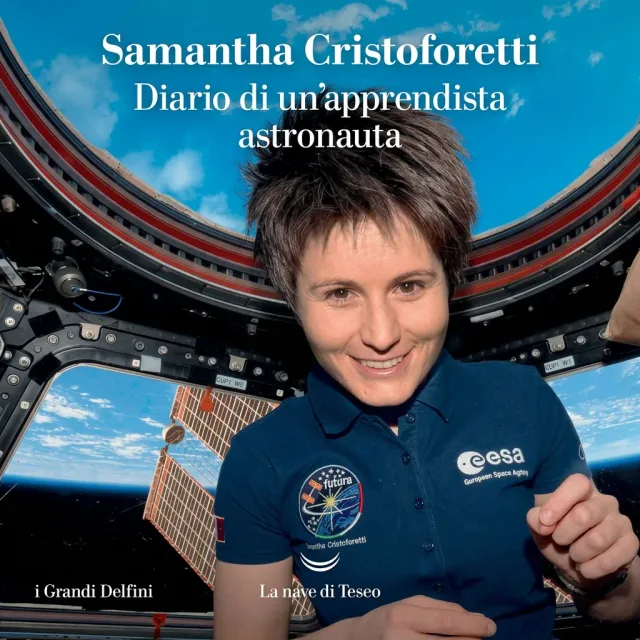
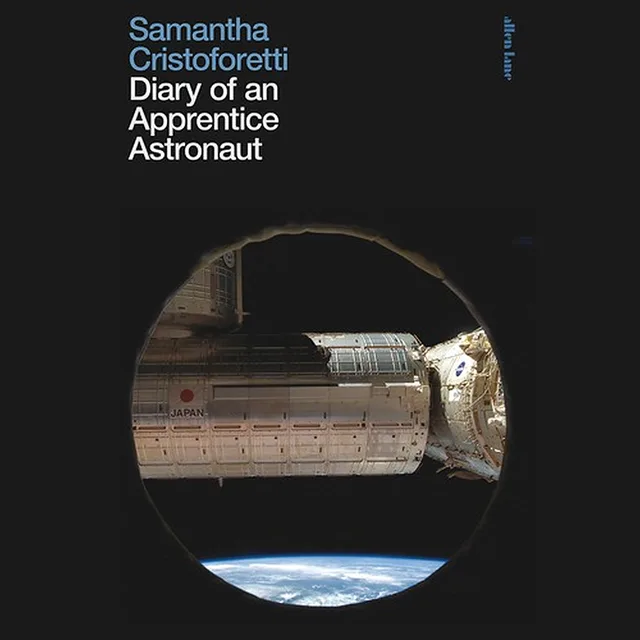
10,000 candidates, 6 places, a dream that lasts a whole lifetime. In 2008 the European Space Agency opens the selection for a new group of astronauts. The last time had been ten years earlier. For many, it's a once-in-a-lifetime opportunity. Samantha Cristoforetti is 31, she's a young military pilot, she doesn't have enough flight hours, and the first step is an online questionnaire. The barrier between her and the dream of a lifetime is an algorithm reading a form. She gets through it, a thousand are left, and then come cognitive tests, group exercises, medical exams. At every stage someone drops out, and at a certain point there are 192 left.
They split them into groups. Nobody takes the initiative. Samantha stands up and leads the group. But the panel doesn't like that attitude. She walks out convinced she's ruined everything. She calls the two months that follow the worst, darkest period of her life. Then an email arrives: dear astronaut candidate, I am pleased to congratulate you.
But the selection is only the beginning. There are years of training, mock-ups underwater, the 8G centrifuge, emergency simulations where a one-degree error in the re-entry angle means dying. A medical problem that, nine months before launch, threatens to compromise everything, and above all the waiting. Months and months without knowing if and when she would fly.
At one point Samantha writes: an astronaut who hasn't yet flown in space wants just one thing, one thing only, with every fibre of their body: the assignment to their first space mission.
Then comes the night of 24 November 2014, and there's a rocket on the launch pad. The countdown is on. Kerosene and liquid oxygen start flowing into the combustion chamber. Ignition. "I no longer know where to put my happiness. It's so big it becomes incongruous. On this perfect night, Samantha Cristoforetti's crew is leaving planet Earth."
Six months later, on her return, she will write: "The weight of matter is oppressive." She already missed floating, she already missed space. But she closes her diary looking at the Moon and allowing herself to dream. Because the human adventure has only just begun. Ladies and gentlemen, this is the incredible and wonderful story of Samantha Cristoforetti, and welcome to In Buona Compagnia. Welcome to In Buona Compagnia, we're Marco and Francesco. Hi. Every month we dive into the story of a person who fascinates and inspires us, and we try to share with you ideas and principles that can be useful to us in our lives and in our work. And this month we're diving into the story of Samantha Cristoforetti.
02 A 0.07% chance of becoming an astronaut
Well, one of the things right from the start of this story, the thing that struck me, is how hard it is to become an astronaut. It's something you don't think about, but it's very, very unlikely: the odds are around 0.07 percent. And here Samantha writes: "One day, when I'm on board the International Space Station, I too will be a little point of light up there. I can hardly believe I've really made it here. With a mix of talent, hard work and a lot, a great deal of luck, I have been able to achieve what is almost impossible. It is in fact a powerful but very insidious dream that life has given me." Because becoming an astronaut is, and she writes these two words, "frighteningly improbable". And it all starts around 1998: she's at the university in Munich, where she was studying mechanical engineering. And already from there you can see how much luck Samantha had, because at that age she thought her dream of going to the Air Force Academy had faded. Because here she writes: "A sadly significant age, 21, because with it a road closed for me that I had often contemplated in those years of long waiting for the armed forces to open to women", because they weren't open to women. So she was past the age limit for entering the academy, and women still weren't admitted to the Italian armed forces. Then, luckily, the next year comes the twist, and here she writes: "In an unexpected and surprising twist, the law established voluntary military service for women", and Samantha calls it the most brazen, lucky circumstance of her life.
03 Becoming a military pilot: the key piece
So she enters the Air Force Academy, becomes a military pilot, and at this point she already has the dream of becoming an astronaut. Becoming a military pilot, on top of an engineering degree, is one of the key pieces for being able, in the future, to become an astronaut.
And when she goes to the Academy, she's training to fly the AMX fighter-bomber.
04 2008: the year ESA opens its selection
Yes, because one of the qualifications that helps enormously in the astronaut selection is the test pilot qualification. It's 2008, the year, let's say, when everything changes, because it's the year the ESA selection opens, but at the same time it's the year she gets her assignment to the AMX fighter-bomber. So it's 2008, she's in the changing room of the pool at Istrana air base when the first messages arrive, the first emails, the first texts about a possible ESA selection, the opening of applications, not yet 100% certain.
That's also a stroke of luck, because the last time ESA had opened applications was 10 years
earlier. It was in 1998, when, as you were saying, she was at university.
Those ten years had gone by, so she too happened to be there at the right moment, at the right age.
But at the same time she was scared, because she was 31, younger than most European or American astronauts when they were selected as astronauts.
Because astronauts are usually selected between 35 and 40.
And at the same time, as I was saying before, she had only just started her career as a military pilot, so she was a long way from the test pilot qualification, and she immediately starts thinking that maybe she needed a few more years. So even though she gets this wonderful news about the possibility, however remote, of becoming an astronaut, at the same time she feels she's running late. What's even more interesting is that while in the United States and Russia selections come one after another much more quickly, a few years apart, in Europe decades go by, like in this case, from 1998 to 2008. So the chance to apply is a once-in-a-lifetime opportunity. At the same time she now decides to go for the application, but she also has to keep up her commitment to the AMX fighter-bomber, and it sounds funny to say, I mean, fighter-bomber, but it's all real, it's not a film. And she's afraid, because she writes: "Maybe ESA would bin my application straight away because I didn't have enough flight hours, or maybe the Air Force wouldn't let me take part precisely because I was just starting out."
05 The first step is a Google Form
So on 19 May the ESA website goes live. To get an access password you had to send in a medical certificate of fitness to fly, a very clever way of avoiding applications that were obviously unsuitable.
And so this is the first step to becoming an astronaut, but what is the first step, really? A blessed Google Form? A questionnaire. A questionnaire asking for information about your schooling, university, career path, flying experience, scientific research, languages, volunteering, hobbies and the sports you play.
And then she writes: "Her daily life was split in two. From Monday to Friday I spent long days in the classroom listening to lectures on the AMX's systems, followed by equally long evenings studying the aircraft's manual. While at the weekend I immersed myself in the ESA questionnaire, with maniacal attention to detail."
And here you wrote, like you said, she thinks about the details, but above all she thinks about answering the form's questions with keywords, precisely because she knows the first phase isn't the most objective: most of the time it's just an algorithm that takes your answers based on keywords. It screens out other people, also because there are 10,000 of them, so that would mean people reading 10,000 answers to the form. And so she writes, this is maybe the nastiest part of the training, as she puts it: "I spent hours filling in the questionnaire, reading, rereading, correcting, clarifying, adding, removing, imagining scores attached to every field, guessing at the existence of keywords in the open answers."
And then the email she was hoping for arrives, with the subject line "Congratulations", signed by Michel Tognini, who was head of the European Astronaut Center, and Samantha had passed the first step. Of the 8,500 initial candidates, about 1,000 were left.
06 "Don't excel at anything, do well at everything"
After getting through this first, super unpredictable part, which is mostly down to chance, there are these aptitude tests where she writes, I didn't know this, interesting: "For astronauts, what mattered wasn't to show peak performance in every test. What mattered was not to drop below a certain threshold in any test." In fact, and this is super interesting in my view, astronauts aren't required to excel at anything in particular, but rather to do well at everything.
The interesting thing she writes afterwards, and you and I talked about it, is that here she writes: "Let's be clear, I had never had an obsessive relationship with my dream of becoming an astronaut, I didn't collect autographs and memorabilia, I didn't follow every little piece of news about the space station, but for me it had always been important", this is beautiful, "it had always been important to focus on the daily commitment, and in recent years my daily life had been training in the Air Force."
Yes, in fact I wrote that maybe we imagine Samantha, the first Italian woman in space, the first Italian woman in space, the first European woman in space, ever since she was little, I don't know, collecting models of the Saturn V, of Apollo, or obsessively following the news; actually no, she had this dream.
Maybe she had this dream, but it wasn't so overwhelming, she wasn't so obsessed.
At the time it was 2008, so not everyone had access to the internet, and so she goes to this little bar in Foggia with a painfully slow internet connection, where little by little she starts catching up on the news, on what was happening in the space world. And then here she writes: "Every weekend I'd sit there devouring all the news on space activity from the last seven years." And, this is lovely, "if I went to the beach I'd take my space propulsion or orbital mechanics book with me." So picture her at the beach: you stroll along and read your orbital mechanics or space propulsion book.
07 The group selection in Cologne (192 candidates)
Good, then the email from ESA arrives with the good news. She was through to the next phase. There were 192 candidates left.
Right, and here I wrote that in my view this is one of the most important parts, because at this point those 192 are split into groups of 6 and sent to ESA's European Astronaut Center in Cologne, in Germany. At this point the selection no longer focused on individual abilities, but on relational skills, communication and group problem-solving. Because on the ISS there might be between 6 and 12 people, and if there's a problem they all have to work together. It's not important for one person to dominate the others and be stronger than the others, what matters is teamwork. They're split into groups, they have to solve a problem in front of a panel and present their solution to that problem. In her group, though, nobody takes the initiative to solve the problem as a group, and she knows that if her group didn't come up with a solution, that group would probably be eliminated, and so she would be eliminated too. So she stands up, takes the initiative, and it's her, Samantha Cristoforetti, who leads the group and presents the solution to the problem. After that, each aspiring astronaut has an interview with the panel. And some members of the panel didn't like her, because they tell her that in their view she'd gone too far, she'd dominated the others, she hadn't left the others room to act. And so she comes out of that interview devastated, because she's afraid that those few minutes had thrown away the whole dream of a lifetime.
08 The two darkest months: when she nearly botched a military flight
And here she writes: "I would relive that interview in my mind hundreds of times in the weeks that followed, hating myself every time for not being able to stop thinking about it."
Now, here I imagine that going from 10,000 to 192, you're very close. Yes. It's a decision that at first seems right to you, perfect, and then it destroys your soul and you feel this anxiety, this fear, just because you decided to do something you thought was right.
And here she writes: "The two months that followed, spent in exhausting waiting, were probably the darkest period of my life. For weeks I had to live with frequent bouts of headache that often went away only in the airplane. On top of that, one Sunday evening I got the news of an imminent bereavement in the family, which plunged me into deep despair. I cried for a long time and didn't even touch the material to prepare for the next day's sortie." And here two important things happen. Then comes a sentence I really liked. The first is that at this moment the right thing to do would have been to give up the flight; she doesn't, and she makes some very serious mistakes. And here she writes: "The right thing to do the next morning would have been to give up the flight. I didn't give up the flight. We were already very behind because of a long spell of bad weather, and I had lost more days to a nasty muscle strain, and so I flew as number four in the formation, and in the range circuit, in limited visibility, I caused a potentially dangerous situation that led to the mission being graded negative. With the aim of making up for this mistake, they put me in another formation that would take off shortly, but again I didn't give up the sortie, making another irresponsible decision, and again I made a bad mistake. Again I got a negative grade: two failed missions in a single day. A worse situation was hard to imagine." And here she goes on: "Years later I can say that that black day was providential. A brutally clear warning that I evidently needed." And here she writes: "I couldn't afford distractions and decisions taken lightly." And here she also writes this, I underlined it, very important: "Nothing is more effective than an immediate danger for imposing a new focus and mobilizing the full power of concentration." I mean, in this case she needs two very serious mistakes to say, OK, hang on, let me think and let me focus, for real.
09 "You seem to have been born to do what you do"
But after those months of waiting, of anxiety, more emails arrive. "Dear astronaut candidate, I am pleased to congratulate you", dot, dot, dot. And she writes: "Coming out of the room I cheered at the sky, unable to contain a joy that was bursting the banks of my self-control. The wait had been too long, and too many times I had imagined a very different outcome." I imagine the release, being able to shout at the sky that she'd passed this selection process too.
And then here she decides to take, because the next step was going to be a final meeting with a panel of senior ESA managers. Here she goes to her commander, the officer in charge of fighter-bomber training, and asked him for a week off. The lovely thing is that this same person, who had then become Samantha's friend, goes to Baikonur to watch Samantha's launch into space in 2014, and a few weeks later he writes to her, he writes this to Samantha: "You seem to have been born to do what you do." And here Samantha writes: "Who knows, maybe he was already thinking it that day in his office when I asked him for a week off." And here I wrote, wow, that's beautiful, maybe everyone carries this sentence inside them. I mean, someone looking at you from the outside and telling you: wow, you were really born to do this. And maybe everyone has that sentence inside them. So let's move on, she goes to the meeting.
She comes out of an interview feeling confident, but it's interesting because she writes: "By now my emotional involvement was such that a negative outcome would have left me stunned."
10 How gravity works on the ISS: 28,000 km/h
Also because there was one step left, just one step: imagine the other people who were eliminated at the end, what a disappointment, because you're so, so, so close. And now the training begins. Here she writes: "On 1 September all five aspiring astronauts report to the European Astronaut Center for their first day of school."
And this is interesting, because the ISS is still a very distant goal. Technically they're now astronauts, they've been selected, but she writes that in the best case the first of them would go to space after four years. In the worst case, the last one would have to wait as long as ten.
Samantha spends the first months of her training in the classroom, which was a raised room overlooking the large training hall dominated by the mock-up of Columbus, the European laboratory of the International Space Station. And here she writes: "We apprentice astronauts were waiting with some excitement to be able to start the lessons on Columbus." So the first part is the foundations; she already can't wait to get onto Columbus and do more hands-on things. The second part is training for weightlessness. But before weightlessness, the thing I didn't know is that the space station itself isn't just sitting there: it's an object that is falling towards the Earth. And this is important: before moving on to her weightlessness training, I think it's important to understand how gravity works in this case. Now, if you think about it, take the space station, OK? You think, look, it's there, it's just sitting there. But it isn't just sitting there: in this case it's an object falling super fast towards the Earth. And the question is: if it's falling so fast towards the Earth, why doesn't it crash into the Earth? And what everyone thinks is that in space, or at least on the space station, there's no gravity.
But actually there is.
There is gravity, in fact, and the space station is 400 km away from the Earth. Gravity is there, and it's only 10% less than on Earth. So the question is: if the space station is falling, first of all, what does it mean that it's falling? Why doesn't it crash into the Earth? And the reason is this, let's try to picture it: you have a ball and you drop it, OK? You drop it. The laws of physics say that in one second that ball falls 5 meters, OK? In one second it falls 5 meters. Anything you throw: it could be a feather, it could be a cushion, anything.
One thing to add is that here we're talking about no air, so the object has no friction with the air.
Good, so keep this number in mind: one second, 5 meters. Now, we know the Earth isn't flat, it's curved. The question is: how much does the Earth curve relative to the ground? If you go one kilometer, how much does the Earth curve? If you go 10, how much does the Earth curve? Well, if you go 8 kilometers, OK, the Earth's surface curves away by 5 meters relative to the ground. So let's suppose: you throw a ball, OK, and this ball travels eight kilometers in one second. Are you with me? OK. If you throw a ball and it travels eight kilometers in one second, what happens to the ball because of gravity?
It falls five meters.
It falls five meters. It falls five meters, but it doesn't crash into the ground, because over those eight kilometers the Earth's curve has dropped away by five meters. So the ball follows the curve of the Earth. The space station and the astronauts do the same thing. Now, how fast, I mean, to travel 8 kilometers in one second, how fast do you have to throw a ball for it to travel 8 kilometers in one second? The answer is 28,000 kilometers an hour. So the space station, like the ball, goes round at 28,000 kilometers an hour and follows the curve of the Earth, like the astronauts, and it will never crash.
11 How the ISS was assembled (and why it will be retired in 2030)
The question is: the station is enormous, it's gigantic, so how did they assemble a hunk of metal of over 400 tonnes in space? Put simply, they sent the various modules into orbit one at a time. And in particular one of them has this robotic arm that, when a new module arrives, literally grabs it and pulls it towards itself, to the docking point.
Let's picture a human arm, a human arm, but gigantic. It has two booms, cylinders about 8 meters long, and three joints: the shoulder, the elbow and the wrist. It has no hand: at each end it has a stubby cylinder that can latch onto any object fitted with a grapple point. But what is this arm for? Track and capture, so catching cargo vehicles, robotic support for spacewalks, and maintenance and repositioning. So it can reposition components and support any work outside the station. And I didn't know, I mean I didn't know, it's crazy that I didn't know, these modules were built by different countries.
Yes.
Exactly, I didn't know. I didn't know that the modules were built in different countries. We have the Russian segment, built of course by Russia, and then we have the international American segment, built by the USA, Europe, Japan and Canada. It includes the American laboratory Destiny, the European laboratory Columbus, the one we were explaining earlier, and the Japanese laboratory.
And it's great because, let's say, there's a lot of Italy on the ISS: I mean, many modules, even ones commissioned by NASA, were built here in Turin, it's a big deal. And it's also interesting precisely because, as you were saying, it was assembled by different member countries, it really is the symbol of what international cooperation can do. I mean, imagine all these countries there together building a human outpost up there at 400 kilometers, going round, orbiting the Earth. I mean, it's beautiful if you think about it, all these countries coming together to build a human outpost in space. The sad thing is that soon that place will disappear.
What do you mean, disappear?
Because it won't be there any more? No. From what I understand, it's by 2030.
And what will happen?
Nothing. Why? It's because it's old now, its time has come, which is very sad, and it'll be replaced by other stations, but private ones.
Like SpaceX, maybe?
Yes, or Jeff Bezos's Blue Origin.
But will there be another one, another space station?
Yes, but this time it'll be around the Moon, with the Artemis program, and it's called Gateway. OK.
But is that certain?
Yes, yes, they'll build it, they'll build it. When there are so many military people who are now about to launch Artemis 2.
But that the space station won't be there any more?
Yes, yes, they're going to crash it into the Earth.
They're going to crash it?
Yes, it'll be destroyed on re-entry, on contact with the atmosphere. Now, "crash it into the Earth" is a pretty blunt way of putting it, but...
Oh wow, I didn't know that! So the space station will orbit around the Moon?
The new one will, yes, the Gateway. And it's interesting, I mean, if the ISS orbits the Earth, right? It falls but it never falls. Yes. How does it crash when it's decommissioned?
It goes faster than 28,000 km an hour. They take it to a higher speed?
Or slower, yes. But how do they do it? It always sounds like science fiction, but in reality the ISS has its own engines too. In one episode Samantha writes that in fact the ISS's course, orbit and speed always have to be corrected. And it's interesting because while the ISS is orbiting it might run into other space debris, maybe from other decommissioned satellites that are up there in orbit, and so it has to move to avoid collisions. So it has its own engines to move, and sometimes it needs a boost or a de-boost, so going faster or going slower, to correct its orbit. There's an episode where she's already on the ISS, on her first mission, where she writes that in that case they have to do a de-boost, so they're going too fast, except the thrusters are only on one side of the ISS. So before doing the de-boost the ISS has to turn around, fire its engines, slow down and then turn back again. I mean, this stuff is science fiction, but it really happens. So with its engines it turns around, fires them, decelerates, then turns back and carries on orbiting. But this stuff is mind-blowing, I mean, that the ISS... Do you remember the film Passengers? Yes, where there's the ship with the huge shield at the front to protect it from asteroids: it looks like this stuff here, I mean, it's science fiction, but above all it's real.
12 The restlessness of an astronaut who hasn't flown
When she finishes basic training, so only basic training, not the training to go to the ISS, just basic training, they receive the diploma certifying that they have officially become astronauts of the European Space Agency. But here Samantha makes an important observation, which is, well, super interesting. "We probably weren't the best, because it isn't reasonable to think that such a long and complex selection was a perfect process, but without a shadow of a doubt, it seems, we were at least adequate. Very soon I began to feel restless. An astronaut who hasn't yet flown in space wants one thing only, with every fibre of her body: the assignment to her first mission." So here I wrote: right, a bit like Marchionne, if we start making connections, Samantha keeps trying to raise the bar higher and higher. So first I become a military pilot, which is already incredibly hard, then I go through the selection, which is already incredibly hard, I get through basic training, and now what's the next closest step: going into orbit and becoming a backup astronaut. But before finding out she could become a backup astronaut, she goes on writing: "As the months went by I felt my impatience growing inside me. I found it hard to live in a situation where I'd find myself telling people about my past, basic training, and my future, a flight to the space station, without knowing when my present would fill up again with interesting, stimulating activities." If you think about it, it's awful.
Yes, it's like, in fact, what's written at the end of all this is what we want: a future that fills up again with interesting, stimulating activities.
She's an astronaut, she has technically achieved her dream. But technically she hasn't even achieved it.
The thing about becoming a backup astronaut is that you do the training as if you were an assigned astronaut, but in reality you aren't an assigned astronaut.
Anyway, she goes to Star City, which is a place near Moscow, and it's incredible because it's an iconic place where the first man in space trained, Yuri Gagarin, during the space race between Russia and America, the Soviet Union. And so she goes there to train at Star City.
She's starting her simulation training on the Soyuz. And first of all let's explain what the Soyuz is, because maybe a lot of people don't know, I didn't know either. First of all, the word Soyuz, as written, refers to two things. The first is the rocket, so the huge launcher that lifts off from the pad, and then the spacecraft, which is the small capsule on top of the rocket where the astronauts are. The rocket itself has just one purpose, which is to take the spacecraft from the Earth, as we said before, up to the orbital speed of 28,000 kilometers an hour.
Once you're in orbit, the rocket isn't needed any more.
Now, what I didn't know: did you know how it's built? I mean, what the top part is, the middle part and the bottom part? Whether there are stages... First of all, we have the orbital module, where they can get changed and go to the toilet. When the Soyuz reaches the space station it docks with its tip, that is the orbital module, and so the astronauts go out directly through the orbital module. Then the second part is the descent module. This descent module is the only part designed to withstand re-entry into the atmosphere, and it's the only part that comes back to Earth with the crew. It's also interesting to see how it's built, because here Samantha says that getting inside is an exercise in patience and contortion, because they're all sitting in the foetal position and it's a really, really tiny space. The interesting thing is that the descent module has a heat shield on its base that protects it from the extreme heat of re-entry.
13 The assignment to Expedition 42/43
At this point she gets another email, whose subject line reads: letter from ESA regarding the assignment of Samantha Cristoforetti to Expedition 42/43, planned for 2014. So at this moment Samantha becomes an assigned astronaut. And here I wrote: even just reading "Expedition 42/43" sounds incredible. An expedition to a remote place, extremely remote, at the edge of humanity. So at this moment everything changes, because a very long countdown begins, about 30 months, until Samantha would finally leave for space. So Samantha trains both on the Soyuz and with all the space training mock-ups that are underwater, with the suits, all American, all Russian... During this training she doesn't just stay in Star City, she travels around the world, mainly between Houston and Star City.
Because in Houston there's the NBL, the Neutral Buoyancy Laboratory, which is the facility where NASA trains astronauts for spacewalks. Now, let's explain for a moment what this NBL is like, because it's interesting. Basically it's a gigantic swimming pool. Samantha describes it like this: "Big enough to submerge a four-storey building, and it holds the water of ten swimming pools." Now, what's inside the pool? On the bottom there are life-size replicas of the non-Russian modules of the space station, and they're faithful reconstructions of the outside of the space station. Now, underwater, as we said, matters because water is the best way on Earth to simulate weightlessness. And here in Houston the first dives in the suit begin, with the EMU suit, which is the same suit astronauts train in on Earth and also the same suit they'll use in space. And so here come her first dives in the suit. Here she writes: "The experience there was one of the most thrilling of my life, the kind you savour slowly, that feed on getting there little by little." This is lovely: those experiences that maybe each of us has or maybe will have in the future, those experiences you savour because you get there little by little, so much so that when they happen they seem inevitable, and only afterwards do you really realize how exceptional they are. Now let's move on: one important thing Samantha is looking for, it's strange, but she's looking for gloves, her own gloves made to measure for her. And I didn't know that the gloves are made exactly to measure. For Samantha it's very important to have these custom gloves, because her hands are particularly different from the others'.
They're smaller.
They're smaller, exactly.
And it's lovely because she describes how it took a year just to get a first prototype, and then, after they take billions of measurements, another couple of years to finally get the actual gloves, so years just to develop a pair of gloves.
14 The difference between a job, a career and a mission
Listening to this story so far, what strikes me is the difference between a job, a career and a mission. Then I wrote: what she's living through doesn't feel like a job, not even a real career; for her it's a true mission, a personal dream coming true brick by brick. And here I wrote, I made a reference to Paul Graham, and we'll also do an episode on him. Anyway, there's an essay called How to Do What You Love, from 2006, where he writes: take this test to find out whether you love what you do. And here he writes, the test is: would you do it even if you weren't paid? Would you do it even if you had to support yourself with another job, or do this in your spare time, for free? And then he writes: "The test of whether people love what they do is whether they'd do it even if they weren't paid for it, even if they had to work at another job to make a living. How many corporate lawyers would do their current work if they had to do it for free, in their spare time, and take day jobs as waiters to support themselves?" And this makes me think strongly of Samantha. If you read how she spends her days, you understand that nobody could live like that just for a monetary exchange. She wakes up at 6 and goes to pick up 12 coffees for the divers and the staff before going into the water. By half past six she's already at the pool, setting up the tools, the work moves. She spends 6 hours underwater in a pressurised suit, then a quick shower, then a debrief with the instructors. She gets home exhausted, with aching muscles she didn't even know she had, her chin swollen from rubbing against the suit's neck ring. And after all that, what does she write? Simply: "Being here today feels like a dream." And here I write: this isn't the life of a so-called worker, someone who gets up, goes to work because they have to, comes home and starts again the next day. This is an adventure. Like being inside a science fiction film. Everything is stimulating, every day is different and there's always something new to learn. You do it because this is the biggest dream of your life, and it's a mission, her personal mission. And I really like this, and she has found exactly that thing where, if you look from the outside, you say: she, this person, was born to do exactly this. And, well, all these things make me think, because I'd like to find it for myself too.
15 The EVA exam: the 5 minutes late that changed everything
So now she takes the exam you were talking about, the EVA one, on 29 August 2012, still about two years before departure, and it's an exam that again simulates an emergency, where she's doing an EVA with another astronaut. They start from the airlock, which is the part of the ISS that EVAs start from; there are several on the ISS.
It's this chamber that gets depressurised: you go into it from the station and then you go out into space.
There's one in the American module and one in the Russian module; I can't remember if there's one somewhere else or in some other part. Anyway, in this simulation her partner gets ill and, in short, she has to grab her and bring her back to the ISS, except she brings her back 5 minutes late. And she writes: "Five minutes, I can't believe it, five damned minutes: I had two and a half hours to complete the mission, and I got to the airlock at two hours and 35 minutes. The EVA Skills exam: not passed." But what I had focused on is that during the EVA she sensed that something wasn't right, that she was doing the exercise the wrong way. And she writes: "If you have the feeling that something is wrong, it's probably because something is wrong."
And she goes on: "It's pointless to force it and try to push on by sheer willpower. It's much smarter and more effective to stop, analyse the situation, solve the problem and then carry on." In short, the tether connecting the two suits
was tangled.
It had passed between her legs without anyone noticing, and from that moment every single movement was an obstacle, and yet she fails by five minutes. "I was doing things fairly well and safely, but I needed to get much faster." She goes on, the best training, this is really lovely: "The best training is the kind in which you make every possible mistake." But here too she's good at analysing and understanding her mistakes: exactly what she did well and what she needs to improve. Afterwards Samantha gets an opportunity that maybe doesn't come along often, which is trying out the Orlan suit. The Orlan is the Russian spacesuit used for EVAs. She tries the Orlan suit, and at a certain point Samantha finds herself in what looks like a dead end: she can't see enough handholds that would let her carry on while following all the rules. And here Samantha writes: "I take a break, I tell myself not to give in to frustration, and I look around again. If nothing else, in the Orlan, looking around is a pleasure. The helmet is very roomy, the field of view is wide. In the end the solution, as often happens, is a change of orientation to make the most of the limited reach of my arms. I don't know if I'll ever do an EVA in space, but underwater training has certainly taught me something. Namely: when it seems there's no way out, stop, breathe and change perspective. A banal lesson, I know, but one I feel I've learned in my limbs, not in my intellect."
16 Why Luca Parmitano nearly drowned in space
So most of the training, and so far Samantha still hasn't left for space, she's only training, only that. And we get to 28 June 2013, almost a year before departure. And most astronaut training is actually emergency situations.
Which may never happen.
She writes: "It's a wish I make for myself, that most of this training for the ISS will never be of any use to me. Because it would mean I'm in an emergency, and so in a situation where my life is in danger." All this time spent training for emergencies: when emergencies do happen, it's exactly that training that saves your life.
And she talks about what happened, with Chris Cassidy.
I don't have that one, I have the example of Luca Parmitano.
OK, because then I have something I want to connect.
The Luca Parmitano example is that during a spacewalk he risks drowning, because the coolant in his suit fails and water starts spurting into his helmet, so he's literally immersed in water inside his helmet, he can't see anything any more. But thanks to his training, because he knew he was on an EVA, he was outside the ISS, and he knew exactly where to put his hands, he knew the steps by heart, he knew how to get back to the airlock. And EVA training, as you were saying earlier, memorizing every step, every movement, is essential: it saves Luca Parmitano's life. And what's interesting, in the aerospace world as in the aviation world, is that it's accidents that then allow progress towards safer operations, because for example Samantha writes that before Luca's accident nobody had ever thought an accident like that could happen. And so after Luca's accident they add a new drill to the training, precisely for a failure with water in the helmet.
17 The 8G centrifuge and ballistic re-entry
Still in the middle of training, so there's still about a year and a half, a bit less, to go before departure. On 24 July 2013, again in Star City, there's a part of the training that I think is super interesting, because it's the centrifuge. We often see the centrifuge in films, this incredible test of strength that only an alien could withstand, so a real centrifuge. Samantha is sitting in there, with this arm and this little capsule spinning round and simulating a force of up to 8G. In reality, in a launch, in a perfect re-entry, which is called nominal, so a perfect re-entry that follows all the rules, with no emergencies, the peaks reach 4G. So four times a human being's weight on Earth. But as we've said so far, astronauts train above all for emergencies, and in this case the centrifuge goes up to 8G precisely because in an emergency re-entry the G-force reaches a maximum of 8, and she calls it ballistic re-entry. It's called ballistic re-entry, so there's nominal re-entry and ballistic re-entry. Nominal re-entry is the re-entry where you follow the computer, follow the trajectory, at the perfect moment, in the perfect place, the exact place where the spacecraft is supposed to land. So they simulate the 8G in case of a ballistic re-entry. So ballistic re-entry is an unguided re-entry, and she tries to make us understand it: the capsule goes through the atmosphere like a thrown stone, so really abruptly. The only goal isn't to give the astronauts a comfortable re-entry too; the goal is to bring them home. And what's interesting is that if there were an emergency on the ISS, the only option is a ballistic re-entry. So, I don't know, it catches fire, something explodes inside the ISS and the astronauts have to abandon it immediately to save themselves: the only option is a ballistic re-entry. Precisely because, if you think about it, the Soyuz on-board computer doesn't have the information it needs for a nominal re-entry. So all the information, trajectory, speed, the angle at which it cuts into the atmosphere, and so the only option is a ballistic re-entry. And technically you can't know where the Soyuz will land, so they're also trained to land and to hold out until rescue arrives. Even though when an astronaut lands, I don't know if you've ever seen the video of them landing, they can't move. So in an emergency I don't know how much... Because, still, they train here on Earth, where the body isn't yet used to weightlessness, and then coming back and taking the full force of gravity again. And what's interesting is that maybe you think the astronauts go up, there's the rocket, there's the computer, it'll handle the trajectory, the exact moment to fire the engine to pick up all that speed. But in this case of ballistic re-entry too, if there were any kind of emergency, the astronauts have to do a manual re-entry. So picture them inside, squashed into the tiny Soyuz, doing a re-entry... But hang on, if the ballistic re-entry...
manual?
No, but in certain emergencies, say a computer error or anything else can happen, where the angle of incidence, let's call it, isn't perfect, because if it's too small...
What's the angle of incidence?
The angle at which... they're projected towards the Earth? Exactly, at which they go through the atmosphere, which has to be, if I remember right, 45 degrees. If it's too small they burn up. If it's too big they bounce off. In fact she writes that if it's too high the capsule bounces off the atmosphere and flies away. Bye bye. Because there's a table called Form 14, and this table is sent every morning from mission control to the ISS. It's a table that gets sent up, and the commander's job is to take this table and put it in every spacecraft docked to the space station. That way, in a ballistic re-entry the astronauts have the table, they know what the computer will say for the ballistic re-entry. So here I wrote: imagine the commander's responsibility, in an emergency, if that table is needed but maybe he got it wrong or didn't swap it; it's surely a situation that will never happen.
And in that case they'd all be dead.
Yes, and in that case the commander would never get it wrong, precisely because they're trained. But, say that, so, the computer... Every day this table arrives, called Form 14, so it's sent every day from mission control, printed out and stored in the airlock. The interesting point is what marks day and night on the ISS, given that they talk about orbital sunrises and sunsets, because the ISS goes round the Earth every 40 minutes, so technically there are many more sunrises and many more sunsets. So it's not that a day lasts 40 minutes, I mean, here's a sunrise and a sunset, that's the day. Basically time is set on the zero meridian, Greenwich, so they're on London time. And there's also something interesting, we were saying earlier, that even though spaceflight is by now, how to put it, well tested, it's no longer in its pioneering phase like it was in the sixties when we went to the Moon, it's still dangerous. You can train as much as you like, the technology can be as advanced as you like, but there are still small odds that something goes wrong. For example, she writes that, as you were explaining earlier, there's the service module and the command module, and before re-entry they have to separate. And there are pyrotechnic charges, which either go off automatically, or, if they didn't go off automatically, can be triggered manually. If they don't go off manually either, everyone dies, because the only part with the heat shield that can withstand the heat of the atmosphere is the descent module. Another example is that when they come back, so they undock from the ISS, separation, so the pyrotechnic charges have gone off, all good so far, the heat shield holds, the parachute has to open, and it opens at 10 km altitude, which is basically where airliners fly. If it doesn't open there's the emergency parachute; if the emergency parachute doesn't open either, everyone dies. Another example is that when the parachute opens, the descent module is coming down and reaching the Earth. The last step is jettisoning the heat shield, and the retrorockets fire, but they fire just a few meters off the ground to give the very last deceleration, so that they don't crash into
Is the parachute still working, or does it stay attached until the end?
Yes, because if the retrorockets didn't fire the impact would be at 30 km an hour. 30 km? Come on, if I think about it, it's not that much, but still, an impact at 30 km an hour is... And then the last emergency system they have is a spring, a shock absorber in the seat, which activates before the spacecraft reaches the ground, in anticipation of a possible emergency where the retrorockets didn't work, so when the spacecraft hits the ground at 30 km an hour, the shock absorber means the astronauts don't get hurt.
18 The cancelled EVA: the gloves that never flew
The final preparations for departure. Something happens that throws Samantha a bit, where another of Samantha's small big dreams fades away: the dream of being able to do an EVA, an extravehicular activity.
And this is interesting, because she's trained for years to do an EVA, and then in this case what happens? On the other side of the world an Antares rocket exploded a few seconds after launch, luckily without any casualties. On board was a Cygnus cargo vehicle with another two tonnes of supplies for the space station, and this cargo vehicle had all of Samantha's personal equipment for doing an EVA. So, as we said before, the custom gloves, the suit, everything. But there was still a chance that this equipment would go up on the Dragon, which is another cargo vehicle. And then what happens: Samantha gets some news that hits her hard. Her gloves and all her personal EVA equipment won't be going up on the Dragon. And here Samantha writes: "The news reached me and left a sticky bitterness on me, traces of which I still carry on my skin. Because of a misunderstanding between continents about who would tell me and when, I found out in a brutally cold way." Think about this too. You spend hours and hours, years and years, to do an EVA, an incredibly difficult thing, hours and hours underwater wearing yourself out. And then the news reaches you as an email attachment. And here she writes: "Highlighted in red, with a brief note in the margin explaining that, for lack of space, the space station management had decided not to launch them and accepted the risk of having only two crew members able to carry out EVAs in the EMU suit." And then here Samantha makes a reflection that I really liked, and she writes: "Obviously I have nothing to be indignant about, nobody has wronged me. Neither the world nor the space station revolves around my personal ambitions. The disappointment burns and will go on burning for a long time. But you can't be lucky all the time, and I have really had a lot of luck in my life." And here is a passage that I think is one of the most beautiful in the book; she writes: "Maybe I was wrong to want an EVA so much, even though many people had warned me against wanting too much something that, even in more favourable circumstances, is completely uncertain. With hindsight it's easy to regret not having kept a more detached attitude. The truth is that if things had gone differently I would have been pleased with myself for my tenacity, I would have been praised for my perseverance." "I don't want to fall into the trap of judging the worth of a commitment by whether or not it succeeds. I don't want to accept that it's success that decides, after the fact, whether pursuing an unlikely goal is determination or naivety, tenacity or obsession." And then this one, the most beautiful part in my view: here Samantha reminds herself of the words she loves to repeat to the boys and girls she meets. "From an ambitious goal", this is beautiful, "from an ambitious goal you draw the motivation to commit yourself fully, to choose the harder road, the one that lets you grow. Having a dream matters because of the journey, not the destination."
19 Launch night: 24 November 2014
So the countdown is finally over, and she writes: "Today I woke up on planet Earth and I'll go to sleep in space." And she writes: "Putting on the suit is the first thing I do tonight as the Soyuz flight engineer. Here we go. I feel calm. However exceptional the journey I'm about to undertake, however undeniable it is that it carries a certain risk of violent death, the truth is that I feel at home." And here I wrote: she's leaving for space after years and years of sacrifice, commitment, exams, study, of longing to go, and that night there's a rocket waiting to take her into space. What a story.
And reading these last parts of the book I wondered whether she was afraid of death, doing something so dangerous after all, even though with the Soyuz nothing has ever happened, no serious accident, but still something very dangerous. I'd like to ask her, but I don't think she thought about death too much, partly because there's an example where she writes that she's more worried about not managing to pee and embarrassing herself, because for many people peeing is very hard when you're on your way to the space station.
So now she's on the rocket, ready to go, and she writes: "I sense... A launcher, a rocket, isn't flown, from the crew's point of view. Either it works or it doesn't. It takes you to orbit or it tries to kill you." And this is interesting because I didn't know it: again, I thought they climb in, everything's already programmed, they just have to wait, the rocket goes. But all the manoeuvres, all the data entries the on-board computer needs to then do the nominal launch, they put them in themselves, by hand. And here I write: if they get it wrong, they're screwed, for real. One wrong number is enough for the rocket to follow a different trajectory, or leave the engine on for longer, so it burns more fuel. I mean, they enter the data themselves. A few seconds before launch the last arm retracts from the launch pad, the last umbilical cord, at a set moment. Kerosene and liquid oxygen start flowing towards the combustion chamber. Ignition. The propellants start to burn, and from there it's a rapid crescendo of noise and vibration as the engines come up to full power. From the bowels of the rocket comes a sharp jolt. At one minute and fourteen seconds past midnight on 24 November 2014, exactly as planned, Samantha Cristoforetti leaves for space. "The rocket lifts us away from the Earth with a firm but gentle grip. Every so often it corrects its attitude to keep us on the planned trajectory, and then we get a dull thud with a bit of swaying. With every second that passes we get a tonne and a half lighter, as the propellants burn and are expelled through the nozzles." "On the control panel we have no indication of speed, acceleration, not even a single piece of telemetry on how the rocket is working. The physical sensations, the noise, the growing force pressing us into our seats, all of this is reassuring, but the only objective information about our ascent comes over the radio." So even the description of the ascent is very technical: for example, they have to look out of the window and work out whether they have an angle of incidence of 45°, because if they decided to abort the mission and come back and the angle wasn't exactly 45°... and they have to judge this by eye, I don't know how that's possible. "After the rocket's automatic separation we'll have 3 minutes to decide, 3 minutes to look out of the window and check that we have a roll angle of less than 45°. Without that condition, if we attempted a controlled re-entry, we'd kill ourselves." When the third stage kicks in they're at about 160 km altitude, and she writes: "Whatever happens from now on, I'm an astronaut." Now, this is another interesting passage, because in the first phase of the ascent they went up vertically, so all the rocket's force went into pulling them away from the force of gravity. Now the last four minutes, so out of a total burn of nine minutes, in the last four the thrust of the third stage is there to give them enough speed, as we were saying earlier, to keep them in orbit. In fact she writes: "Reaching space is easy; what's hard is picking up enough speed to stay there." So then, all this racket, a rocket that's literally exploding, and all of a sudden the third stage shuts off. Boom. "Total stillness, absolute silence. My hands, wrapped in the thick gloves, dangle almost at eye level as if they didn't belong to me, in an immense reversal that denies millions of years of bodily memory, and it takes an effort to keep my body settled." So for the first time she's experiencing weightlessness.
20 The first sunrise in space and docking with the ISS
Now she looks out and sees her first sunrise in space.
And she writes that she looks out and also sees the Milky Way.
I mean, come on, guys, Cassiopeia.
And she writes: "From this metal box, this tangle of technology that isn't even all that cutting-edge, which lets us be here where no, really no, no human being should be, nobody." Now the ISS is 200 km away, and docking is an hour and a half off. And with the last engine burns they'll get closer, gradually reducing their approach speed. Little by little, as this hour and a half goes by, they get closer to the ISS, and during docking she turns towards the porthole. And she writes: "Maybe tiredness is finally getting the better of my self-control, maybe I simply wasn't prepared for such sudden beauty. Oh my God. The space station is out there, imposing and gleaming, wrapped in a warm, vivid orange light in which the big solar panels seem to burn incandescent. I have the absurd feeling that the universe, that universe indifferent to the affairs of all humanity, let alone a single person, wanted to give me an enormous gift tonight." So the Soyuz arrives and docks, and little by little it's drawn in to become one with the ISS. And I thought, well, docking happens, they slowly get closer, they open the hatch and that's it. When they dock they have to wait another two hours for a whole series of checks, to see whether docking really succeeded and to verify the seal of the, let's say, the hatches, to make sure there are no air leaks, especially of oxygen. And when, after going through a series of checks, after equalising the pressure in the Soyuz with the pressure inside the ISS, they can open the hatch. At the spot where they've docked, where they'll come out, there's a camera filming, except it can only stream video for a limited time, that is, while radio coverage is provided by mission control. When the ISS is no longer over mission control and moves over another country, another continent, that coverage is gone. And so she writes: "There's no way we're coming out without the live video that our families, relatives and friends are watching us on." And the problem is that they had to equalise the pressure and time was running out. And so, little by little, they manage to equalise the pressure, and with a valve, she writes that they have to open a valve that lets the air out. And in the end they open the hatch, she goes in first, and now she's finally on the space station.
21 Italy seen from the Cupola
And let's remember that at that moment Samantha is the two hundred and sixteenth person to set foot on the space station.
So after a very quick call with the families, a quick debriefing, she writes: "I finally go to sleep, letting go with a little regret of this long, perfect night." She wakes up, and here begins maybe one of the funniest parts, let's say, because obviously nobody's used to weightlessness, so at first everyone's clumsy, they bump into things, they launch themselves around. I watched an interview where she said that maybe the new rookies go into the kitchen, open things, leave everything open, and there are thousands of little packets floating around, so everyone rushes to collect them. And she writes: "I try to switch on the light but I can't find any reference to guide my hand in the dark. And yet my sleeping quarters are the size of a phone box: how hard can it be to find the switch?" Knowing perfectly well where to find it, because of course she knows everything by heart, where every ventilation duct runs, every pipe; she knows the ISS perfectly. "Fumbling around blindly, I end up accidentally knocking the door with my shoulder, and it unlatches and swings open. It seems incredible to me, given the cramped space, but somehow, while I was asleep, I managed to end up upside down." So she wakes up, she's still a bit awkward, but everyone reassures her that in a couple of weeks she'll learn to move and give herself the right pushes to float. Luckily she doesn't have nausea, but she has a bit of a headache caused by the shifting of fluids, precisely because of weightlessness. And every morning the day starts with a planning session with all the control centers: the European one, the American one, the Russian one, the Japanese one. "I keep moving clumsily, often putting myself on collision courses that are impossible to correct while floating in mid-air, and I end up crashing into things." And here I wrote: even though she has studied her whole life, once again she finds herself facing something she doesn't know how to do yet. Again, for now, see? On 27 November she writes that her vestibular system, the one that regulates balance inside our body, is still playing a few tricks on her. This is interesting because technically right and left, up and down, don't exist on the ISS. So while she floats, in her brain there's involuntarily an up, a down, a right and a left, and lots of times she has to go into a new module and, since there's no up and down, she turns, but she turns the wrong way and maybe ends up in the wrong place, in a dead end, and she still has to learn to find her bearings. Or she writes that very often she eats upside down like a bat, but it's hard to grasp that actually there's no up and down. Little by little she learns to handle the geometry, the pushes to give herself, how to move, even simply how to go to the toilet, how to eat. "And millions of years of evolution and 37 years of life haven't prepared me for weightlessness. However, half a century of spaceflight has taught us that human beings adapt; you just have to be patient."
And it's so true: we adapt to anything, even to the hardest thing you can do, which is being in space.
And little by little she gets used to it, she does her experiments, she spends a lot of time in the Cupola. And there's one particular moment that I've saved in my memory: when she passes over Italy. Because she writes, when she passes, when the ISS passes over Italy and she's in the Cupola at that moment: "The boot is sharply drawn by a dense web of threads of light." And this is beautiful. "If the Earth were an elegant lady in an evening gown, Italy would be her most dazzling jewel." So the activities follow one another quickly; as she said, there's a schedule she looks at every day that tells her what to do. I had watched an interview with Parmitano where he said there are so many things to do that time flies by and you don't even have time to really enjoy the moment. In fact Parmitano said that he too did two missions, and on the first one, he said, he didn't enjoy it at all, and so when he got back to Earth he had the feeling he'd never actually been in space. And when he recovers and does all his activities to regain his balance and return to life on Earth, at first he couldn't even look at the sky in the evening, because he felt he hadn't enjoyed 100% an experience that might have been the only one of its kind in his life. On 17 April 2015 comes another important moment, the day the Dragon spacecraft arrives and Samantha is at the robotic arm. And what's interesting, as we were saying earlier, is that she's now operating the arm. But as you were saying, many people would rather do an EVA than operate the arm, because on an EVA, yes, you're outside, it's dangerous, but you have relatively little responsibility for the ISS, whereas when you control the arm, if you get something wrong and maybe drive the arm towards the station, on a collision course with the station, you can kill everyone. So this arrives, and again, to me it still seems like science fiction; lots of times I can't believe it, it feels like I'm reading a film. The spacecraft arrives, she grabs it with the arm to then bring it towards the ISS and berth it. "One second is enough and the whole mission, with its two tonnes of cargo, would be lost. Today, in that second, I could become famous. Well, today I really don't want to become famous."
22 Star Trek, talent and luck
Famous, meaning for getting it wrong.
Yes, yes, yes, yes. And then there's a lovely moment where she's capturing the Dragon with the arm, and meanwhile orbital night falls, and she writes, so it's even harder, she has to work in the dark. She writes: "Now Dragon stands out against the darkness, lit by the floodlights of the International Space Station but also by its own indicator lights, one red and one green, reflecting off its surface." And here again I wrote: I mean, I picture her with the joystick guiding the arm, with the ISS floodlights lighting up the Dragon and the dark Earth in the background.
But up there she finds it much easier than when she was training on the ground. Because the arm's movement was much smoother.
And in the end she writes: "I didn't become famous today." So here there's a very beautiful, long part, where I looked at three things: Star Trek, talent and luck. So Samantha grows up in a small mountain village and always dreamed of going to the United States in her fourth year of high school, to do the year abroad; at the time it was the country of the Space Shuttle and of Star Trek. And she was a huge Star Trek fan, and here she writes: "I couldn't say how much my passion for Star Trek helped steer my choices. It may seem really excessive and almost childish to credit a TV series with a significant influence on your life. But sometimes a reaction needs a catalyst. And I can't rule out that, in the case of my dream of going into space, the catalyst was precisely the adventures of Captain Kirk and Mr Spock." And then here comes a wonderful, extraordinary reflection on talent, luck and our dreams: "A dream is a concentrate of imagination, with the power to fuel daily motivation, but also the stubborn determination to pursue a distant and unlikely goal. Like every human thing, it also has its risks. Whoever achieves the dream may arrogantly delude themselves that success is solely the result of their own actions, forgetting the favourable circumstances. Those watching from outside may in turn convince themselves that this person has a special talent and an infallible method for succeeding. There's no shortage of books and interviews in which people considered successful hand out advice, but what stays hidden is the great crowd of those who have just as much talent and acted not very differently, without receiving any similar reward." "I don't have to look far", and here she's referring to the luck factor, to fate. "I don't have to look very far to see fate in the face. The 2008 ESA astronaut selection, which I took part in, would almost certainly have opened three years earlier had it not been for the fatal Space Shuttle Columbia accident, which delayed the launch of the European Columbus module to the ISS. Three years earlier I couldn't even have taken part in the selection." "I think it would be a hugely important good if we all went back to recognizing the role that luck inevitably plays in human affairs, if we looked with measured admiration at those who achieve their dreams, and with equally measured admiration at those who pursue them with dignified commitment even when circumstances aren't favourable. The commitment remains, and with it its fruits. Those who are motivated every day to give their best, to choose the most demanding roads knowing they are opportunities to grow, certainly have a better chance of leading a fulfilling life, even if the dream that drove that commitment hasn't come true." "I wish all the boys and girls in the world could grow up without knowing danger, violence, trauma or poverty. And then I wish they had a big dream." So in the middle of this whole beautiful moment of philosophy and poetry that Samantha writes, there's an emergency on the ISS, an ammonia leak, where she happens to read a strange value on the ISS control system and at a certain point she shouts "masks", precisely because ammonia is toxic; they put on their masks and go to the Russian segment. It's a very technical passage, I tried to understand it, but who knows, maybe one day Samantha will be able to explain it to us in her own wonderful words.
23 Coming back to Earth: when the air weighs
From what I understood, what I wrote down here... the space station's cooling system can get rid of up to 70,000 watts of heat. Imagine having 70 electric heaters on at the same time. Now, getting rid of that heat on Earth is easy: you open the door and the heat goes out; in space there's no air and you can't open a window, so it needs a liquid that absorbs a huge amount of heat, but, more importantly, stays liquid at freezing temperatures, is light to transport and doesn't corrode the structures. Ammonia is the only substance that meets all these requirements at the same time. The price to pay is that it's extremely toxic to humans, so if it gets inside it's a very serious problem, because it can kill the whole crew. Luckily for them, this ammonia leak was only a false alarm: a low-level computer had failed.
And on 11 June 2015 the mission, let's say, is over. So before leaving she enjoys one last moment in the Cupola, takes one last tour of the whole ISS, and writes: "When I get to the end of the tour I do a slow cartwheel in the air, just like that, because I can, and soon I won't be able to any more. This is what I want, more than anything, to imprint on my mind, in the fibres of my body: what can't be recorded by a camera. The feeling of floating, the pleasure of moving without any effort and inhabiting space in three dimensions. The freedom to eat upside down on the ceiling for no reason at all, simply because I can." So the hatches are scheduled to close at 7 on 11 June 2015. And it's lovely because, as I was saying earlier, the ISS is by convention on London time, Greenwich, the zero meridian, and when she's in the Soyuz, ready to leave, with 20 minutes to go, she writes: "I haven't left the ISS yet, but I'm already in a different time zone." This final part is beautiful. "Soon I'll fall within the borders of a country. Someone will bring me my passport. At one airport they'll put in an exit visa and at another an entry visa. All over the Earth I'll be a foreigner, everywhere except on a small continent that, up there, you fly over in ten minutes. What a strange thing, when you think about it: I'll have to get used to it again." And at 13:18:30 on 7 June 2015, she manually sends the command to open the hooks, the separation of the spacecraft from the ISS. "When the moment comes I do a short countdown out loud: 3, 2, 1. Command sent. With a tap of a wand I have brought our mission on the International Space Station to an end." The spacecraft moves away ever so slightly, incredibly, at 12 centimetres per second. 12 centimetres per second. And little by little, then, the spacecraft goes back into orbit, and little by little, with the nominal re-entry, programmed and carried out by the on-board computer, the spacecraft sets off on its return to Earth. So several engine burns follow, to bring them back into orbit, and the last burn is the one to slow down. Then come the pyrotechnic charges going off, the separation of the descent module, so the only part with the heat shield, and re-entry. But what's interesting is why, when the spacecraft goes through the atmosphere, which, simplifying, you could think of as just air, why, when a piece of metal goes through the air, there's all this incandescent fire and the need for a heat shield. It's because, as they come back, they transfer to the surrounding air, so to the atmosphere, all the energy that spacecraft stored up six months earlier, when the rocket took them into orbit. So all the energy the spacecraft stored up in those 9 minutes of what she describes as "mighty propulsion".
So it builds up all this energy that it accumulated during the launch on the rocket.
And when it comes back, it transfers it to the air. In fact she writes: "The air resists our intrusion and slows our course with the violence of 100 hands pressing on my chest. Then it heats up to the point of producing sparkling lights. Flames of yellow, orange and vermilion burst out around the heat shield." So after about six minutes, when they've lost most of their speed precisely because of the friction and the force the air exerts to slow the spacecraft down, comes the second-to-last critical event, which, as I said before, is the parachute opening, at an altitude of ten kilometers, where ordinary airliners fly. In fact she writes: "We're below ten kilometers altitude, this is where airliners fly, we've become Earthlings again." So before impact the retrorockets fire, and she writes: "Abrupt but not brutal. The capsule rocks as if it's going to fall onto its side, then it finds its balance again. I take a quick inventory of my physical sensations and find that the only sore part is my nose; nothing serious, I'm sure it isn't bleeding; all things considered, I was expecting much worse." So there's the video of her coming back. As I said before, by now her body is used to weightlessness, so when she comes back and starts to feel even just 0.8 g, she feels enormous pressure on her body, so when she reaches the Earth... Who knows what that must feel like. Then, in my view, it's like when you're on those spinning fairground rides and you struggle to breathe, even just lifting your arm, you can't do it: in that case because there's more G-force pressing on your body, in this case because she's no longer used to it.
I imagine maybe such a heavy weight on your body that you struggle to lift even a finger.
In fact they pick them up in their arms, carry them to a stretcher and then to a helicopter. And when they pick her up, she writes: "In that moment I was there and I wasn't. Part of me was chatting with whoever spoke to me, another part still imagined itself on the ISS. Clinging to the memories of the sensations, the details, the light and measured movements, I already felt I couldn't recall them precisely. The weight of matter was oppressive." So now they take her by helicopter to the first airport, and the destination of this plane was Houston, and her first steps, actually, come relatively early, because it makes a stopover in Scotland, and she starts walking there in Scotland, on the way back to Houston. In fact she writes: "It's incredible how simply existing took effort: my buttocks hurt from sitting, the soles of my feet hurt, and painful blisters formed on my skin." But little by little, as she wrote earlier, the body adapts, and gradually, within a week or two, she manages to regain all the, let's say, basic, essential functions.
24 "The human adventure has only just begun": final thoughts
Good, we've pretty much reached the end of this episode, and we want to close with these final thoughts of Samantha's, which are exactly the last two pages of the book, and which I think are very, very beautiful. "I'm unsure how this extraterrestrial experience has changed the way I think or feel. I'm certainly calmer, but maybe that's simply the contented tranquillity that remains when the restlessness induced by an unfulfilled dream recedes. I certainly feel more deeply convinced of the need for all of us on this planet to live not as quarrelsome, demanding passengers, but as crew members of a single spaceship, ready to roll up our sleeves loyally." "But maybe this too is just a consequence of living in my time, a time when you certainly don't need to go to space to understand how the lives and destinies of seven billion humans, and soon many more, depend on one another." "I didn't expect dazzling insights from my mission in space, and I haven't had any. I know nothing more than before about the meaning of human existence or the presence of life beyond the Earth. However, I can't help thinking, or at least suspecting, that this experience has given me a certain sensitivity, that it has prepared my spirit to understand what others may perhaps put into words."
"Meanwhile, without the restlessness of waiting for the first mission, I'll wait for the next one. And it remains a privilege for me to contribute to space exploration. When the opportunity comes to go again, I'll be ready. With new colleagues, perhaps with a new spaceship. And who knows, maybe one day a new destination too. My gaze rests on the Moon and I allow myself to dream. The human adventure has only just begun."
Good, this is how we want to close this episode. I hope you enjoyed it, and if you did, maybe share it with someone it could help, and sign up for our newsletter, where every month we send out the ten most important reflections we've learned from each episode. You can go to inbuonacompagnia.com and see everything we've prepared for you there. Thank you so much, and see you in the next episode. Bye bye!